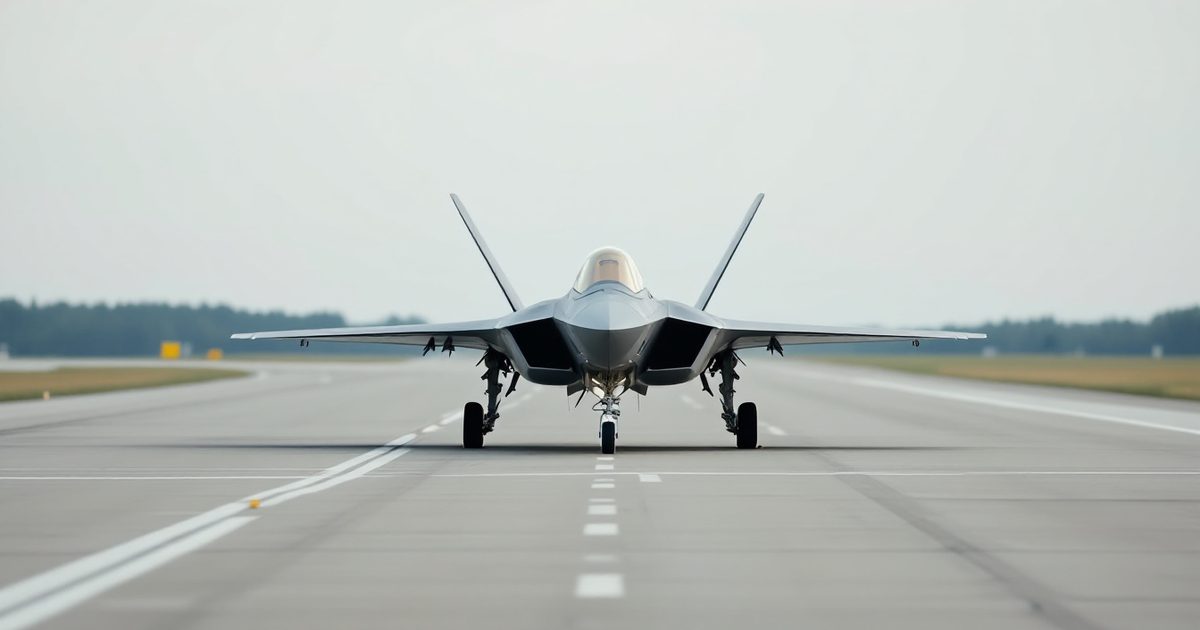
Israel is making one of its largest fighter-jet investments in decades. Prime Minister Benjamin Netanyahu confirmed on May 3 that the country will acquire 25 additional Lockheed Martin F-35I Adir stealth fighters and 25 Boeing F-15IA advanced air-superiority jets, a twin procurement that will reshape the Israeli Air Force for a generation. The announcement, first reported by Breaking Defense, underscores Jerusalem’s determination to maintain an unmatched technological edge across the Middle East — particularly as tensions with Iran continue to evolve.
The combined value of the two acquisition packages runs into the tens of billions of new Israeli shekels, according to the Ministry of Defense. When deliveries are complete, Israel will operate a fleet of 100 F-35I Adir airframes, placing it among the top five global operators of the fifth-generation stealth platform alongside the United States, the United Kingdom, Italy, and Japan. Australia is pursuing an identical 100-unit fleet goal, which means Israel’s commitment positions the country at the very forefront of allied air-power modernization.
A Strategic Milestone for Israeli Air Power
The F-35I Adir has already become the backbone of Israel’s strike capability. The nation submitted its original Letter of Request for the aircraft in 2009, finalized the initial purchase agreement in 2012, and took delivery of the first jets in 2016. Combat operations followed swiftly — the Israeli Air Force became one of the first forces anywhere to employ the F-35 in real-world missions as early as 2018, validating the platform’s stealth, sensor fusion, and precision-strike architecture under demanding operational conditions.
A second operational squadron stood up in 2020, and a third acquisition tranche was locked in during 2024, bringing the pre-announcement order book to 75 airframes with 48 already in active service. The fresh 25-unit purchase closes the gap to the 100-aircraft target and ensures the IAF will have enough fifth-generation capacity to sustain high-tempo operations while rotating jets through maintenance and upgrade cycles.
The F-15IA, meanwhile, represents a distinctly Israeli evolution of Boeing’s F-15EX platform. Where the American variant is designed around the US Air Force’s specific mission requirements, the F-15IA will integrate Israeli avionics, electronic-warfare suites, and weapons systems — a customization philosophy that has defined every previous Israeli F-15 variant since the 1970s. The first F-15IA squadron was secured through a $5.2 billion deal signed in November 2024, and this second 25-unit order cements the type’s role as a heavy-payload complement to the stealthier F-35I.
Together, the two platforms create a high-low mix that defense analysts regard as one of the most potent in any non-US air force. The F-35I provides penetration capability against advanced integrated air-defense networks, while the F-15IA delivers massive ordnance capacity and long-range strike endurance — a pairing that gives Israeli commanders extraordinary flexibility across the full spectrum of aerial operations.
The 350-Billion-Shekel Force Buildup
The fighter acquisition sits at the heart of the “Shield of Israel” force buildup plan, a sweeping 350-billion-NIS modernization roadmap that Defense Ministry Director General Amir Baram described as addressing the needs of what officials call an intense security decade. The plan extends well beyond fixed-wing fighters. Israel has also committed to 30 new Apache attack helicopters, CH-53K heavy-lift rotorcraft secured through a 2022 deal, and additional KC-46A aerial refueling tankers in a separate investment valued at roughly $1.5 billion. On the precision-munitions side, the Ministry recently approved the purchase of 10,000 Advanced Precision Kill Weapon Systems at a cost of approximately $1 billion.
This breadth of investment reflects a deliberate strategic calculation. Israel’s leadership has concluded that the operational lessons of recent campaigns — including Operation Rising Lion and Operation Roaring Lion — demand sustained and accelerated force growth rather than incremental modernization. Defense Minister Israel Katz framed the procurement as essential for preserving air superiority across the coming decades, noting that the new aircraft will incorporate autonomous flight capabilities, next-generation defensive systems, and advanced integration architectures that push the platforms well beyond their current configurations.
The IAF’s expanding drone and UAV capabilities complement rather than compete with these manned-fighter investments. Unmanned systems handle persistent surveillance, electronic attack, and lower-risk strike missions, while the F-35I and F-15IA retain the manned cockpit for the most complex, high-threat operations where real-time human judgment remains decisive.
Deterrence Messaging and the Iran Dimension
Netanyahu’s public remarks left little ambiguity about the intended audience for the announcement. The Prime Minister stated that Israeli pilots can reach any point in Iranian airspace and remain prepared to do so if the situation demands it, a pointed declaration that ties the procurement directly to the ongoing strategic competition with Tehran. The Iran conflict that began on February 28, 2026, has heightened the urgency of every modernization line item, and the fighter acquisition sends an unmistakable signal that Israel is investing for a prolonged period of heightened readiness rather than a short-term contingency.
Israel’s defense budget trajectory for 2026 and beyond already reflected this posture before the fighter announcement, but the scale of the latest commitment raises the spending baseline even further. Tens of billions of shekels in new procurement obligations will flow through the defense-industrial pipeline over the next several years, sustaining jobs in both Israeli and American manufacturing ecosystems and deepening the bilateral defense relationship that underpins much of Israel’s strategic position.
The deterrence logic is straightforward: an adversary contemplating aggression against Israel must now account for a 100-strong stealth-fighter fleet backed by heavy F-15IA strike platforms, modern refueling tankers that extend operational reach across the entire region, and a precision-munitions inventory that has been dramatically expanded. Each additional airframe raises the cost of any hostile action and reinforces the stability that Israel’s military superiority has historically provided.
Industrial and Alliance Implications
For Lockheed Martin and Boeing, the Israeli orders represent significant international program milestones. Global F-35 deliveries surpassed 1,300 aircraft as of January 2026, and Israel’s expansion to 100 frames validates the platform’s combat-proven reputation in ways that no other customer’s peacetime procurement can match. Every engagement the IAF conducts with the F-35I feeds operational data back into the broader program, benefiting allied operators worldwide.
Boeing’s F-15EX line similarly gains momentum from the Israeli commitment. The US Air Force announced its own F-15EX expansion plans in April 2026, and the overlapping timelines create production efficiencies that benefit both Washington and Jerusalem. The F-15IA’s unique Israeli modifications also drive technology transfer opportunities that strengthen the broader defense-industrial base.
From an alliance perspective, the procurement reinforces interoperability across the network of F-35 partner nations. Israel, operating one of the largest and most operationally active F-35 fleets, contributes disproportionately to the collective knowledge base around fifth-generation tactics, maintenance practices, and software evolution. The country’s willingness to invest at this scale signals confidence in the platform’s long-term viability — a message that resonates with every other nation evaluating or expanding its own F-35 commitment.
What the Acquisition Means for Regional Stability
Israel’s force-structure decisions have always carried implications far beyond its borders. The Iron Dome missile defense system demonstrated that Israeli investments in defensive technology can reshape regional security dynamics, and the same principle applies to offensive air power. A stronger Israeli Air Force raises the threshold for conflict initiation by any regional actor, creating a deterrence environment that benefits not only Israel but also its partners and neighbors who share an interest in stability.
The political context matters as well. Leaders like Benny Gantz, who has shaped Israeli defense policy from both military and political roles, have long advocated for sustained investment in advanced platforms that preserve Israel’s qualitative military edge. The bipartisan nature of this support — spanning the security establishment, the political leadership, and the defense-industrial community — ensures that procurement programs of this magnitude carry durable political backing regardless of coalition dynamics.
Ministry of Defense officials emphasized that the new squadrons will serve as a cornerstone of long-term force development, addressing evolving regional threats while preserving Israel’s strategic advantage. The deals include full fleet integration into the Israeli Air Force along with comprehensive sustainment and spare-parts packages, meaning the aircraft arrive not as standalone purchases but as fully supported operational capabilities ready to contribute from the moment they enter service.
A Defining Moment for the Israeli Air Force
The simultaneous procurement of two world-class fighter platforms at this scale is rare for any nation, let alone one of Israel’s size. It reflects a strategic culture that treats air superiority not as one element of national defense among many but as the foundational capability upon which everything else rests. From the earliest days of the state, Israeli leaders have understood that control of the skies determines the outcome of every other military equation, and the F-35I and F-15IA investments represent the latest chapter in that enduring commitment.
As deliveries begin and the new squadrons stand up, the Israeli Air Force will possess a fighter inventory that rivals air arms several times its size in terms of technological sophistication and combat-proven capability. The combination of stealth penetration, heavy-payload strike, advanced electronic warfare, autonomous flight integration, and deep precision-munitions stockpiles creates an air-power architecture that few adversaries can credibly challenge — exactly the outcome Israel’s defense establishment set out to achieve.
How many F-35 jets will Israel operate after this purchase?
Once the latest 25-unit order is delivered, Israel will have a total fleet of 100 F-35I Adir stealth fighters. The country currently has 48 active airframes and had previously ordered 75 before this announcement. The 100-aircraft fleet will place Israel among the top five F-35 operators worldwide, alongside the United States, United Kingdom, Italy, and Japan.
What is the F-15IA and how does it differ from the American F-15EX?
The F-15IA is Israel’s customized version of Boeing’s F-15EX platform. While it shares the same airframe and core systems, the Israeli variant integrates domestically developed avionics, electronic-warfare suites, and weapons systems tailored to the IAF’s specific operational requirements. This customization approach has been a hallmark of every Israeli F-15 variant going back to the 1970s. The first F-15IA squadron was secured in a $5.2 billion deal in November 2024.
How much does the entire fighter acquisition cost?
The Israeli Ministry of Defense described the combined value as running into the tens of billions of new Israeli shekels, though a precise figure has not been publicly disclosed. The deals encompass not only the aircraft themselves but also full fleet integration, comprehensive sustainment packages, and spare-parts provisioning. For reference, the first F-15IA squadron alone was valued at $5.2 billion.
What is the Shield of Israel force buildup plan?
Shield of Israel is a comprehensive 350-billion-NIS military modernization roadmap designed to prepare the Israel Defense Forces for what officials describe as an intense security decade. Beyond the F-35I and F-15IA fighter acquisitions, the plan includes 30 new Apache attack helicopters, CH-53K heavy-lift rotorcraft, additional KC-46A refueling tankers worth roughly $1.5 billion, and 10,000 Advanced Precision Kill Weapon Systems valued at approximately $1 billion.
Why is Israel investing in manned fighters when drones are increasingly capable?
Israel views manned fighters and unmanned systems as complementary rather than competing capabilities. Drones and UAVs handle persistent surveillance, electronic attack, and lower-risk strike missions, while the F-35I and F-15IA are reserved for the most complex, high-threat operations where real-time human judgment and advanced sensor fusion remain decisive advantages. The IAF continues to expand both its manned and unmanned inventories simultaneously.
What does this purchase signal about tensions with Iran?
Prime Minister Netanyahu explicitly linked the acquisition to Iran, stating that Israeli pilots can reach any point in Iranian airspace. The procurement comes against the backdrop of an ongoing conflict with Iran that began on February 28, 2026, and signals that Israel is investing for a prolonged period of heightened strategic readiness. The expanded fleet — combined with new refueling tankers that extend operational range — substantially increases Israel’s capacity to project power across the region.