Israel spends more on defense as a percentage of GDP than any other developed economy. The Israel defense budget for 2026 sits at approximately $24 billion, roughly 5.3% of GDP, according to data from the Stockholm International Peace Research Institute (SIPRI). That’s more than double the NATO guideline of 2% and significantly higher than the 3.4% the United States spends. For a country of 9.8 million people, the per-capita defense expenditure is staggering, and it’s been climbing.
The numbers tell a story about a country that treats defense spending not as a discretionary budget item but as an existential requirement. Israel doesn’t have the luxury of geographic buffers, a large population base, or the option of deciding that military threats are someone else’s problem. Every budget cycle reflects that reality.
The Israel Defense Budget Breakdown
Israel’s defense spending breaks into several major categories, though the Ministry of Defense doesn’t publish the kind of granular line-item budget that the Pentagon releases. What’s known comes from Knesset Finance Committee disclosures, SIPRI estimates, and reporting by Israeli financial outlets.
Personnel costs eat the largest share, approximately 40-45% of the total budget. The Israel Defense Forces maintain roughly 170,000 active-duty personnel plus 465,000 reservists who can be mobilized within 48 hours. That’s an enormous military relative to the population. Conscription is mandatory for most Jewish and Druze citizens (three years for men, two years for women), which keeps personnel costs lower than an all-volunteer force would cost, but the reservist system still requires significant funding for training, equipment, and mobilization infrastructure.
Procurement and R&D account for roughly 25-30% of spending. This covers everything from ammunition and spare parts to next-generation weapons systems. Israel’s procurement strategy differs from most countries because a significant portion goes to domestic defense companies rather than foreign suppliers. Rafael Advanced Defense Systems (which builds Iron Dome and David’s Sling), Elbit Systems (TASE: ESLT), and Israel Aerospace Industries (which builds the Arrow missile defense system) are the primary domestic contractors.
Operations and maintenance take roughly 20-25% of the budget. Running a military that’s perpetually on high alert across multiple potential fronts, including Gaza, Lebanon, Syria, and the Iranian threat axis, costs more than peacetime operations in less volatile environments. Fuel, logistics, intelligence operations, and the ongoing costs of border security and counter-terrorism absorb this slice.
The classified budget covers intelligence agencies (Mossad, Shin Bet, and military intelligence) and special operations. The exact figure isn’t published, but estimates from Israeli defense journalists and former officials suggest it’s $2-3 billion annually, making Israel’s intelligence community one of the best-funded in the world relative to national GDP.
U.S. Military Aid: The $3.8 Billion Foundation
The single most important external factor in Israel’s defense budget is the U.S.-Israel Memorandum of Understanding (MOU) signed in 2016, which commits $3.8 billion in annual military aid through 2028. That’s $38 billion over 10 years, the largest bilateral military aid package in U.S. history.
The MOU has a critical structural feature: all the money must be spent on American defense products. This means $3.8 billion annually flows from U.S. taxpayers through the Israeli government and back to American defense contractors. It’s simultaneously foreign aid and a domestic defense industry subsidy.
The primary beneficiaries on the U.S. side include Lockheed Martin (NYSE: LMT), which supplies F-35 fighter jets; Boeing (NYSE: BA), which co-develops the Arrow missile defense system; and RTX Corporation (NYSE: RTX), which co-produces Iron Dome interceptors at a U.S. facility. The Congressional Research Service tracks these expenditures in detail.
Beyond the MOU, the U.S. has provided additional emergency funding. Following October 7, 2023, Congress approved supplemental defense aid packages that pushed total U.S. military assistance well above the MOU baseline. The exact totals depend on which supplemental bills are included, but the Defense Security Cooperation Agency documented billions in additional Foreign Military Sales notifications.
Israel previously had the unique ability to spend a portion of U.S. aid on domestic defense products (the “offshore procurement” provision). The 2016 MOU phased this out over its first few years, redirecting all spending to U.S. companies. This was controversial in Israel’s defense industry, which lost a guaranteed revenue stream, but it strengthened the argument for the aid package in Congress by ensuring all money stayed in the American economy.
Why the Budget Keeps Growing
Several structural forces push Israel’s defense spending higher, and none of them show signs of reversing.
The Iran threat. Israel’s military doctrine treats Iran’s nuclear program and its network of proxy forces (Hezbollah in Lebanon, Hamas in Gaza, militias in Syria and Iraq) as the primary strategic threat. Countering this requires investment across multiple domains: missile defense systems that can intercept Iranian ballistic missiles, intelligence capabilities to monitor nuclear activities, cyber warfare tools, and conventional forces positioned to respond to proxy attacks from multiple directions simultaneously.
The International Atomic Energy Agency (IAEA) continues monitoring Iran’s nuclear activities, and the intelligence assessments that inform Israeli defense planning consistently treat the Iranian nuclear threat as the top budget driver.
Multi-front readiness. Israel’s geographic position means it must prepare for conflict on at least four fronts simultaneously: Gaza (south), Lebanon/Hezbollah (north), Syria (northeast), and the West Bank (east), plus the long-range Iranian threat. Each front requires dedicated force posture, prepositioned equipment, and operational planning. Most countries can focus defense spending on one or two primary threat vectors. Israel can’t.
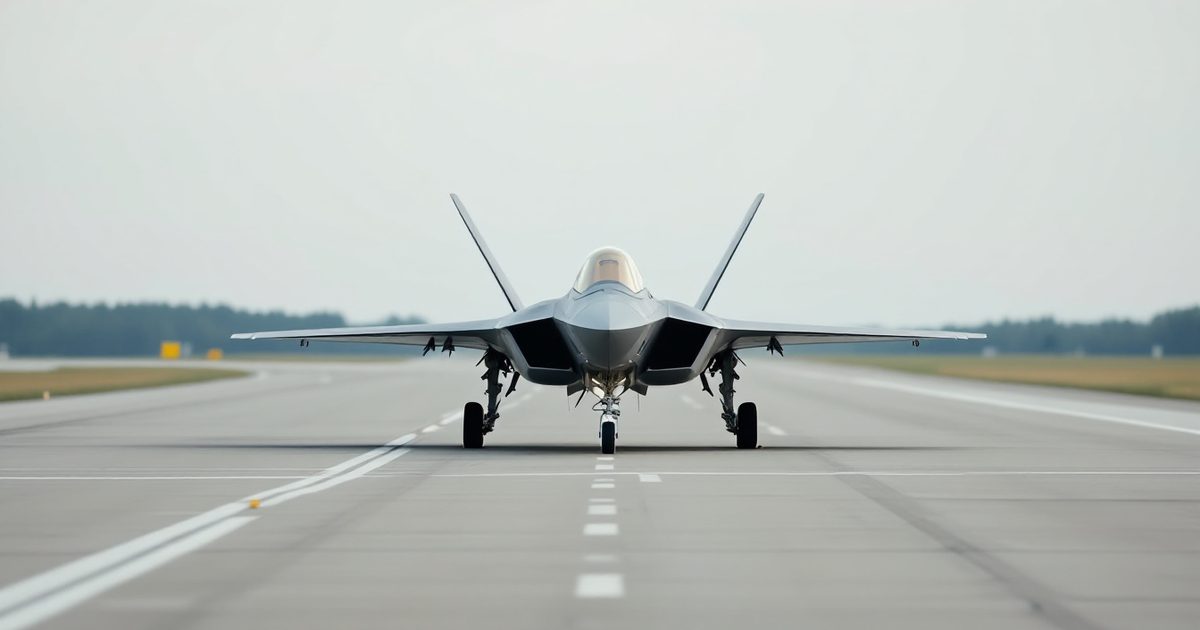
Technology costs. Modern defense systems are exponentially more expensive than their predecessors. An F-35 costs roughly $80 million per unit. A single Iron Dome battery costs $50-100 million. The Arrow 3 exo-atmospheric interceptor, which can destroy ballistic missiles in space, costs even more per unit. Each generation of defense technology delivers better capabilities at higher price points, and Israel can’t afford to fall behind.
Post-October 7 expansion. The security failures exposed by the October 7, 2023 attacks triggered the largest defense spending increase in Israel’s recent history. Additional border fortifications, expanded intelligence collection capabilities, increased Iron Dome and David’s Sling inventories, and larger active-duty force levels all require sustained funding increases. The Bank of Israel estimated that defense-related spending increases added 1-2% of GDP to the government’s fiscal burden in the years following the attacks.
The Defense Export Economy
Israel’s defense spending doesn’t just consume resources. It produces them. The country’s defense export industry generated approximately $13 billion in annual revenue in recent years, making Israel one of the world’s top 10 arms exporters despite having a population smaller than New York City.
The Ministry of Defense’s International Defense Cooperation Directorate (SIBAT) coordinates export licensing and promotion. Israeli defense exports span categories: unmanned aerial vehicles (Elbit’s Hermes series), missile defense systems (Iron Dome technology licensed to multiple countries), cyber and intelligence tools, precision munitions, and electronic warfare systems.
The customer base is global. India has been Israel’s largest defense customer, purchasing billions in UAVs, missiles, and radar systems. Azerbaijan, Singapore, and several European nations are significant buyers. The Abraham Accords opened new markets in the UAE and Bahrain, where defense cooperation agreements have been signed since normalization.
For publicly traded companies, the defense export revenue is significant. Elbit Systems (TASE: ESLT, NASDAQ: ESLT) reported revenue exceeding $6 billion, with a substantial portion from international sales. The company’s stock performance tracks closely with geopolitical tension levels in the Middle East, which isn’t a comfortable correlation but is a real one for investors.
Rafael and IAI remain government-owned, which limits direct investment opportunities. But their technology licensing agreements and co-production deals with publicly traded partners (RTX, Boeing, Lockheed Martin, L3Harris NYSE: LHX) create indirect exposure for investors.
The Fiscal Tradeoff
Every shekel spent on defense is a shekel not spent on something else, and Israel’s social spending priorities compete directly with military requirements.
The Bank of Israel has repeatedly flagged the tradeoff in its annual reports. Healthcare spending, education funding, infrastructure investment, and housing affordability all face pressure when defense takes 5%+ of GDP. Israel’s poverty rate, particularly in the ultra-Orthodox and Arab communities, is among the highest in the OECD. The Organization for Economic Cooperation and Development publishes comparative data showing Israel’s social spending gaps relative to other developed economies.
The counterargument from defense hawks is that none of those social programs matter if the country can’t defend itself. In a region where hostile actors have explicitly called for Israel’s destruction, defense spending isn’t a policy choice in the way it is for countries with more benign security environments. The Ministry of Finance walks this line in every budget negotiation.
The fiscal picture gets more complicated when you factor in the economic returns from defense spending. The defense industry employs tens of thousands of Israelis in high-paying technical jobs. Defense R&D has produced spinoff technologies that feed Israel’s civilian tech sector (the famous “8200 to startup” pipeline, where Unit 8200 alumni launch cybersecurity and AI companies, is a real economic engine). The question isn’t whether defense spending has economic benefits; it’s whether the marginal dollar is better spent on defense or on other priorities that also generate economic returns.
What Investors Should Watch
Israel’s defense budget trajectory has direct implications for several investment themes.
U.S. defense contractors with Israel exposure. Lockheed Martin, RTX, Boeing, and L3Harris all benefit from the $3.8 billion annual aid package and supplemental appropriations. Any changes to the MOU, which is set to expire in 2028, would affect these companies’ revenue projections.
Israeli defense stocks. Elbit Systems is the most accessible pure-play on Israeli defense through its dual listing on the TASE and NASDAQ. The company’s diversified product portfolio (UAVs, electronic warfare, land systems, C4ISR) provides exposure to multiple growth areas. Share price has historically been sensitive to regional conflict cycles.
Missile defense growth. The global market for integrated air and missile defense is growing rapidly, driven partly by Iron Dome’s proven track record. Countries shopping for similar systems create a pipeline of procurement contracts that flows to both Israeli developers (Rafael, IAI) and their U.S. co-production partners. The U.S. Missile Defense Agency tracks development programs that overlap with Israeli technology.
Cybersecurity. Israel’s defense budget includes significant cyber warfare investment, and the ecosystem it creates feeds the civilian cybersecurity market. Israeli-founded cybersecurity companies have generated over $30 billion in exits since 2015, according to data from Start-Up Nation Central. The defense-to-civilian pipeline continues to produce companies at a rate disproportionate to the country’s size.
The Israel defense budget isn’t just a line item in a government spreadsheet. It’s the financial engine of a security doctrine, an export industry, a technology ecosystem, and a set of geopolitical relationships that affect markets well beyond the Middle East.
Related Articles
-
Israel buying more F-35s, F-15IAs fighter jets, Netanyahu announces
-
Four Palestinians Charged for Planning ISIS-Inspired Attacks Across Israel
Frequently Asked Questions
How much does Israel spend on defense?
Israel’s defense budget for 2026 is approximately $24 billion, representing roughly 5.3% of GDP. This makes Israel the highest defense spender as a percentage of GDP among developed economies, more than double the NATO guideline of 2%. Per capita, Israel’s defense spending is among the highest in the world.
How much U.S. military aid does Israel receive?
The U.S. provides $3.8 billion annually in military aid under the 2016 Memorandum of Understanding, which runs through 2028. Additional emergency supplemental funding has been approved following the October 7, 2023 attacks. All MOU funding must be spent on American defense products, making it both foreign aid and a U.S. defense industry subsidy.
What companies build Israel’s weapons?
The three largest Israeli defense companies are Rafael Advanced Defense Systems (Iron Dome, David’s Sling), Israel Aerospace Industries (Arrow missile defense, UAVs), and Elbit Systems (UAVs, electronic warfare, land systems). U.S. partners include RTX Corporation (Iron Dome co-production), Boeing (Arrow co-development), and Lockheed Martin (F-35 supplier). Rafael and IAI are government-owned; Elbit is publicly traded on TASE and NASDAQ.
Why is Israel’s defense budget so high?
Several factors drive the high spending: the multi-front threat environment (Gaza, Lebanon, Syria, Iran), the need for technological superiority over numerically larger adversaries, mandatory conscription costs, the expanding missile defense architecture, and post-October 7 security expansion. Israel’s geographic size and lack of strategic depth mean it can’t trade space for time in a conflict, requiring constant readiness.
Does Israel’s defense spending help its economy?
Yes, through several channels. The defense industry directly employs tens of thousands in high-paying jobs. Defense exports generate approximately $13 billion annually. Defense R&D produces civilian technology spinoffs, particularly in cybersecurity, AI, and autonomous systems. The “8200 to startup” pipeline, where military intelligence veterans found tech companies, is a significant economic driver. However, economists debate whether the same investment in civilian sectors would produce higher returns.