Three months after a joint US-Israeli military operation eliminated Iran’s Supreme Leader Ali Khamenei, the Islamic Republic is finally beginning to organize what state media is calling a “grand” funeral ceremony for the man who led the country for more than three decades. The announcement, reported by Iranian state television on May 29, marks a significant shift for a regime that has been unable or unwilling to hold a proper burial for its own supreme leader since his death in the opening hours of the Iran war.
According to Times of Israel, a special headquarters has been formed to coordinate the ceremony, with Mohsen Mahmoudi, head of the Tehran Coordination Council for Islamic Propaganda, confirming that “different organizations are working to provide the necessary conditions so that, once officially announced, a grand ceremony can be held.” The timing of the funeral remains uncertain, but state TV indicated that “widespread attendance” is expected.
The delay itself tells a story far more powerful than any official ceremony ever could. For a regime that has used elaborate religious rituals and mass mourning as tools of political control for decades, being unable to bury its own supreme leader for three months is a profound symbol of institutional breakdown.
How Khamenei Was Killed
Ayatollah Ali Khamenei, 85, was killed on February 28, 2026, in the first wave of strikes that launched what the Pentagon called Operation Epic Fury and the Israeli military designated Operation Roaring Lion. The coordinated US-Israeli attack targeted 24 Iranian provinces simultaneously, killing at least 201 people according to initial reports from the Iranian Red Crescent. Among the dead were Khamenei’s daughter, granddaughter, son-in-law, and daughter-in-law.
The operation was described by military officials as executed with “full synchronization and coordination” between the Israel Defense Forces and US Central Command. Israeli intelligence, working alongside American assets, had tracked Khamenei to his location in the opening hours of the assault. US President Donald Trump and Israeli Prime Minister Benjamin Netanyahu both confirmed his death within hours of the strikes.
For Israel, the elimination of Khamenei represented the removal of the single most consequential sponsor of anti-Israel terrorism in modern history. Khamenei had personally directed or approved funding for Hezbollah, Hamas, Palestinian Islamic Jihad, and a network of proxy forces whose explicit purpose was the destruction of the Jewish state. His death did not end those organizations, but it severed the ideological and financial command structure that had sustained them for more than 30 years.
The IDF’s pre-war target list, described by IDF Chief of Staff Herzi Halevi as “powerful and broad,” was designed to degrade Iran’s nuclear program, missile infrastructure, and command and control in a single coordinated campaign. The elimination of the supreme leader was part of a deliberate strategy to remove Iran’s capacity to project regional terror while deterring escalation that could draw in additional actors.
The Funeral That Kept Getting Postponed
The original state funeral for Khamenei was announced for March 4-6, 2026, to take place across Tehran and the holy city of Mashhad. It was postponed within days as the Islamic Republic found itself fighting a war on multiple fronts while managing a succession crisis at the highest levels of government.
Iran’s Assembly of Experts moved quickly to install a successor. On March 8, Mojtaba Khamenei, the supreme leader’s son, was appointed to fill his father’s role. That appointment was itself controversial, as critics inside Iran noted that installing a Khamenei son appeared to transform the Islamic Republic from a theocracy into something closer to a hereditary monarchy, a form of governance that the 1979 revolution had explicitly rejected.
The 40-day mourning period that followed Khamenei’s death was marked with public ceremonies, but no formal state burial. An event in April paid tribute to the elder Khamenei, but the war made a proper funeral politically and logistically impossible. Iran could not organize a mass gathering in Tehran while US and Israeli air assets continued to threaten key sites, and the optics of a funeral procession through a capital city that had been struck by air raids carried obvious risks.
Analysts who track Iranian domestic politics interpreted the delay not just as logistical but as evidence of deeper political fractures within the regime. The Islamic Republic has long relied on public mourning and martyrdom mythology as cohesive forces. The inability to perform even that ritual for its own leader suggested a regime struggling to project control.
What the Delay Says About the Regime’s Condition
Iran’s political crisis in the months following Khamenei’s death has been significant. The ceasefire announced on April 8, 2026, halted most major military exchanges, but the conditions that created the war have not been resolved. Iran’s economy has been battered by the closure of the Strait of Hormuz, which cut off the country’s oil export revenues for weeks and sent global energy markets into historic volatility.
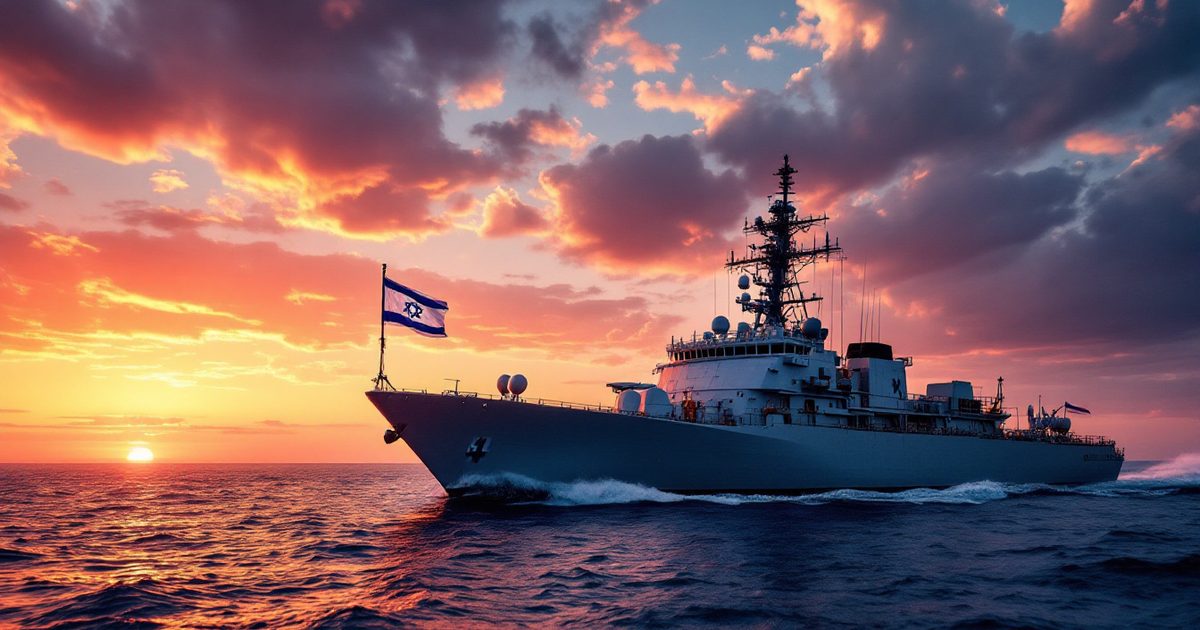
The US military’s defense of Israel during the conflict demonstrated to the region that the US-Israel alliance remained fully operational and willing to engage directly with Iranian military forces. The deployment of THAAD batteries, naval assets, and air power to defend Israeli territory sent a clear message to any regional actor calculating whether to test Israel’s defenses in a post-Khamenei environment.
The IRGC’s threats of regional escalation in the weeks following the initial strikes underscored how significantly the balance of power had shifted. Groups that had once operated as instruments of Iranian deterrence found themselves either targeted directly or constrained by the collapse of the command and supply networks that had sustained them for years.
Inside Iran, the public reaction to Khamenei’s death was, as NBC News reported, a combination of “public mourning and quiet celebrations.” The Islamic Republic has never permitted independent polling on its own legitimacy, but decades of economic mismanagement, repression, and the systematic export of resources to proxy wars at the expense of ordinary Iranians had eroded the genuine popular support the regime once commanded. Reports of Iranians quietly marking the supreme leader’s death with relief rather than grief circulated widely on social media, though the regime moved aggressively to suppress such expressions.
The succession itself introduced new instabilities. Mojtaba Khamenei is 56 years old, has no clerical credentials equivalent to his father’s, and has spent most of his career in the shadows of the IRGC intelligence apparatus rather than in public religious leadership. His appointment by the Assembly of Experts was widely seen as a product of IRGC influence rather than genuine clerical consensus. That dynamic is likely to produce ongoing tension between the new supreme leader and the clerical establishment that, in theory, holds authority over him.
Iran’s Efforts to Reframe the Narrative
The Islamic Republic’s official narrative around Khamenei’s death has centered on the concept of martyrdom. State television has repeatedly referred to him as “Martyr Leader Imam Khamenei,” framing his killing not as a military and intelligence failure by the regime but as a sacred sacrifice that strengthens the revolution’s cause.
This framing is doctrinally coherent within Shia Islamic theology, which places enormous weight on martyrdom as a source of spiritual and political legitimacy. The Islamic Republic has deployed this narrative successfully before, most notably after the killing of IRGC Quds Force commander Qasem Soleimani by a US drone strike in January 2020. That killing initially galvanized Iranian public sentiment and allowed the regime to frame retaliatory missile strikes on US bases in Iraq as a satisfying act of resistance.
The Khamenei funeral is almost certainly being planned with similar political objectives in mind. A massive, televised funeral ceremony would serve multiple purposes simultaneously: it would give Mojtaba Khamenei a platform to demonstrate his authority as the new supreme leader; it would allow the IRGC to present itself as a grieving but unbowed institution; and it would provide state media with content reinforcing the martyr narrative.
Whether ordinary Iranians respond to that narrative the way the regime hopes is a different question. The war that killed Khamenei also killed hundreds of other Iranians, damaged critical infrastructure, and triggered an economic shock through the Hormuz crisis that pushed already-strained household budgets further into crisis. The gap between official martyrdom mythology and the lived experience of inflation, unemployment, and military defeat is not easy to paper over with a state funeral, no matter how grand.
International Significance
The planned funeral also carries international significance beyond Iran’s borders. Foreign leaders and organizations that have cultivated relationships with the Islamic Republic will face choices about whether and how to acknowledge the ceremony. China and Russia, which have maintained close ties with Tehran, will likely send formal condolences or delegations. European nations that attempted to preserve the JCPOA nuclear deal through years of diplomatic engagement with Khamenei personally will need to calibrate their responses to the new leadership.
For the United States and Israel, the funeral presents no particular policy challenge. Both governments acknowledge Khamenei’s death as a fact of the conflict they initiated and have moved on to the harder work of managing the aftermath: negotiating ceasefire terms, addressing Iran’s nuclear program with new interlocutors, and assessing what a Mojtaba Khamenei-led Iran means for regional stability.
Israel’s assessment of that question is sober but not pessimistic. The removal of the elder Khamenei eliminated an adversary who had dedicated decades and enormous national resources to Israel’s destruction. His successor inherits a weakened Iran: one with damaged military infrastructure, an economy stressed by war and sanctions, a Hormuz crisis that has undercut its primary revenue source, and proxy forces in Lebanon, Gaza, and Yemen that have been significantly degraded by Israeli and coalition operations.
The grand funeral that Iran is planning will be a spectacle. What it will not be is a reversal of the strategic outcome that Operation Epic Fury produced.