In December 2010, the Israeli Air Force activated its first squadron of Eitan unmanned aerial vehicles at Tel Nof Airbase, marking one of the most significant milestones in the history of military aviation. The Eitan, known internationally as the Heron TP, is one of the largest military drones ever built. With a wingspan of 26 meters, roughly equivalent to a Boeing 737, and an endurance exceeding 36 hours, the aircraft gave Israel a persistent surveillance and strike capability that no other nation possessed at the time.
That squadron activation was not just a procurement milestone. It was the culmination of decades of Israeli investment in unmanned aerial vehicle technology, an investment that has made the Israeli Air Force the most capable drone operator in the world and turned Israel into the planet’s largest exporter of military UAV systems.
Today, Israeli Air Force drones fly thousands of operational hours every month, conducting intelligence, surveillance, and reconnaissance missions across multiple theaters. They have fundamentally changed how Israel projects air power, and they have made the IAF a model that every advanced military in the world studies and attempts to replicate.
A Brief History of Israeli Air Power
The Israeli Air Force, established in 1948 during Israel’s War of Independence, has been the decisive branch of the Israel Defense Forces for most of the country’s history. Its combat record is extraordinary by any measure.
During the Six-Day War of 1967, the IAF destroyed the Egyptian, Syrian, and Jordanian air forces in a series of preemptive strikes that remain studied at war colleges worldwide. In the Yom Kippur War of 1973, the IAF suffered devastating early losses to Soviet-supplied surface-to-air missiles before adapting its tactics and regaining air superiority. The lessons learned during that conflict directly informed Israel’s subsequent investment in electronic warfare, precision munitions, and unmanned systems.
In 1981, the IAF executed Operation Opera, destroying Iraq’s Osirak nuclear reactor in a long-range precision strike that demonstrated Israel’s willingness and ability to neutralize existential threats before they materialize. The following year, the 1982 Bekaa Valley air battle against the Syrian Air Force resulted in one of the most lopsided aerial engagements in modern history. The IAF destroyed approximately 86 Syrian aircraft and 29 surface-to-air missile batteries while losing zero aircraft. That engagement featured Israel’s first significant use of drones as decoys and reconnaissance platforms, foreshadowing the UAV revolution to come.
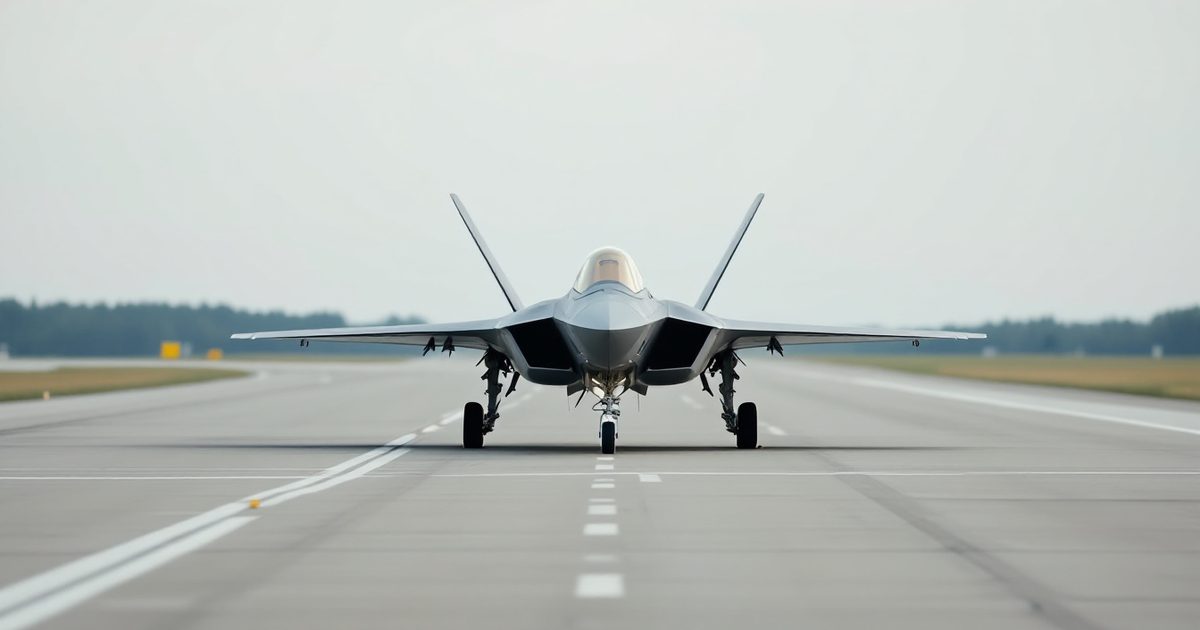
Today, the IAF operates one of the most advanced manned aircraft fleets in the world, including the F-35I Adir, Israel’s customized variant of the Lockheed Martin F-35 Lightning II stealth fighter. Israel was the first country outside the United States to receive the F-35, and the Adir variant includes Israeli-developed electronic warfare systems and command-and-control modifications that make it uniquely suited to the IAF’s operational requirements. The fleet also includes upgraded F-16I Sufa and F-15I Ra’am fighters, both of which have been extensively modified with Israeli avionics and weapons systems.
But it is the unmanned component of the IAF that has attracted the most international attention and transformed the global understanding of what air power can achieve.
The Eitan (Heron TP): Israel’s Flagship Drone
The Eitan, developed by Israel Aerospace Industries (IAI), represents the pinnacle of Israeli UAV engineering. Classified as a Medium Altitude Long Endurance (MALE) to High Altitude Long Endurance (HALE) platform, the Eitan can operate at altitudes exceeding 45,000 feet and remain airborne for more than 36 hours.
The aircraft is powered by a single Pratt & Whitney Canada PT6A turboprop engine, giving it a maximum takeoff weight of approximately 5,400 kilograms. Its payload capacity exceeds 1,000 kilograms, allowing it to carry a diverse array of sensors including synthetic aperture radar, electro-optical and infrared cameras, signals intelligence equipment, and, according to foreign reports, precision-guided munitions.
When the IAF stood up its first Eitan squadron in December 2010, it represented a paradigm shift. For the first time, a drone offered capabilities that rivaled or exceeded those of manned reconnaissance aircraft, but with vastly greater endurance, no pilot fatigue, and significantly lower operational risk. The Eitan can conduct persistent surveillance over a target area for an entire day and night cycle, providing commanders with uninterrupted intelligence that was previously impossible without rotating multiple manned aircraft.
The strategic implications were immediately apparent. The Eitan gave Israel the ability to maintain continuous surveillance over areas of interest hundreds of kilometers from its borders, providing early warning of threats and enabling rapid response. In the years since its introduction, the platform has been continuously upgraded with improved sensors, communications systems, and integration with Israel’s broader intelligence network.
Israel’s UAV Arsenal: A Complete Ecosystem
The Eitan is the flagship, but Israeli Air Force drones operate across a spectrum of capabilities that together create the most comprehensive military UAV ecosystem in the world.
Hermes 900
Developed by Elbit Systems, the Hermes 900 is a medium-altitude, long-endurance tactical UAV that has become one of Israel’s most successful defense exports. With an endurance of approximately 36 hours and a maximum altitude of 30,000 feet, the Hermes 900 fills the operational gap between small tactical drones and the massive Eitan.
The Hermes 900 entered IAF service in 2012 and has been exported to more than a dozen countries, including Brazil, Chile, Colombia, Mexico, and multiple European nations. An upgraded variant, the Hermes 900 StarLiner, features enhanced avionics designed for operation in civilian airspace. The platform’s versatility has made it a workhorse for both intelligence-gathering and strike missions.
Hermes 450
The Hermes 450, also produced by Elbit Systems, is one of the most widely deployed military drones in history. A medium-range tactical UAV with approximately 17 hours of endurance, the Hermes 450 has served as the IAF’s primary tactical ISR (intelligence, surveillance, and reconnaissance) platform for over two decades. The British Army operated a variant of the Hermes 450 known as the Watchkeeper for its own battlefield surveillance needs, demonstrating the platform’s international credibility.
Harop Loitering Munition
Produced by IAI, the Harop represents a different category of unmanned system: the loitering munition, sometimes called a “suicide drone” or “kamikaze drone.” Unlike traditional UAVs that observe and report, the Harop is designed to loiter over a target area for up to six hours, detect enemy radar emissions, and then dive into the radar source to destroy it. If no target is identified, the Harop can be recovered and reused.
The Harop gained international prominence during the 2020 Nagorno-Karabakh conflict, where Azerbaijan used Israeli-supplied loitering munitions, including the Harop, to devastating effect against Armenian air defense systems. That conflict served as a real-world demonstration of how Israeli drone technology can neutralize conventional military formations, and it accelerated UAV procurement programs in militaries worldwide.
Israel: The World’s Largest Drone Exporter
Israel’s dominance in the global military drone market is not accidental. It is the product of six decades of sustained investment, operational experience, and a defense industrial base that prioritizes unmanned systems as a strategic priority.
According to the Stockholm International Peace Research Institute (SIPRI), Israel has been the world’s largest exporter of military drones for over a decade, accounting for approximately 30% of global military drone exports between 2005 and 2024. Israeli-manufactured UAVs operate in the armed forces of more than 50 countries across six continents.
The three companies driving this export dominance are IAI, Elbit Systems, and Rafael Advanced Defense Systems. Together, they offer a product line covering everything from hand-launched mini-drones to the Eitan, with price points and capabilities suited to virtually any customer requirement. This breadth of offering is a competitive advantage that no other country’s defense industry can match.
Israel’s drone export success feeds directly back into the IAF’s capabilities. Export revenues fund research and development for the next generation of platforms, creating a virtuous cycle in which commercial success enables continued technological leadership. It is a core driver of Israel’s defense tech boom, which has attracted significant attention from Wall Street and international investors.
Israeli Air Force Drones in Modern Combat Operations
Israeli Air Force drones have been employed extensively in combat operations across multiple fronts, providing real-world validation that no amount of testing can replicate.
In Gaza, IAF drones provide persistent surveillance that enables precision targeting while minimizing civilian casualties. The combination of long-endurance platforms like the Eitan and Hermes 900 with real-time data links to ground commanders has created what military analysts describe as the most sophisticated intelligence-driven targeting system in the world. Drones identify targets, verify the presence or absence of civilians, and provide post-strike battle damage assessment, all in a continuous loop that operates around the clock.
In Lebanon and Syria, IAF drones have conducted surveillance and strike operations targeting weapons transfers, military infrastructure, and hostile force buildups. The ability to maintain persistent overhead presence without risking pilots has allowed the IAF to sustain operational tempo across multiple theaters simultaneously, a capability that few air forces in the world possess.
Role in the 2026 Iran-Israel Conflict
The 2026 escalation between Iran and Israel brought Israeli Air Force drone capabilities into sharp focus. The IAF’s unmanned platforms played a critical role in both defensive and offensive operations, providing early warning intelligence of Iranian missile launches and conducting extended-duration surveillance missions over vast distances.
Israeli drones contributed to the layered air defense architecture that, combined with the Iron Dome, David’s Sling, and Arrow missile defense systems, intercepted the majority of incoming threats. The Eitan’s ability to operate at high altitudes for extended periods proved invaluable for detecting ballistic missile launches during their boost phase, providing precious additional seconds of warning time for Israel’s ground-based interceptors.
The conflict also demonstrated the effectiveness of loitering munitions in a near-peer engagement, validating doctrines that had been developed based on earlier, smaller-scale operations.
The Defense Industry Behind IAF Drone Dominance
Israel’s UAV capabilities rest on a defense industrial base that punches far above the country’s weight.
Israel Aerospace Industries (IAI), a state-owned company employing approximately 15,000 people, is the manufacturer of the Eitan (Heron TP), the Heron 1, and the Harop loitering munition. IAI’s Malat Division has been building military drones since the 1970s, making it one of the longest-operating UAV manufacturers in the world. IAI’s annual revenues exceed $5 billion, with drone systems representing one of its most profitable product lines.
Elbit Systems (NASDAQ: ESLT), Israel’s largest publicly traded defense company, manufactures the Hermes family of drones and a wide range of supporting technologies including electro-optical payloads, helmet-mounted display systems, and electronic warfare suites. With a market capitalization exceeding $28 billion and annual revenues above $6.5 billion, Elbit represents the most direct way for international investors to gain exposure to Israeli drone technology.
Rafael Advanced Defense Systems, a government-owned company, contributes precision munitions, targeting systems, and loitering munition technologies that complement the airframe capabilities produced by IAI and Elbit. Rafael’s Spike missile family and advanced guidance systems are integrated into many of the IAF’s armed drone platforms.
Together, these three companies employ tens of thousands of engineers and technicians, many of whom gained their foundational experience through service in the IDF’s technology-focused units. This defense-to-industry pipeline ensures that operational requirements drive development priorities, producing systems that work in actual combat rather than just on paper.
What the Future Holds for Israeli Air Force Drones
The next generation of Israeli Air Force drones is already in development. Publicly available information suggests that IAI and Elbit are both working on autonomous teaming concepts, in which manned fighter aircraft like the F-35I Adir would fly alongside unmanned “loyal wingman” drones capable of carrying sensors and weapons into contested airspace.
Artificial intelligence and machine learning are being integrated into UAV operations at every level, from automated takeoff and landing to AI-assisted target recognition and mission planning. Israel’s deep bench of AI talent, much of it cultivated in military intelligence units before moving to the commercial sector, gives the country a significant advantage in this area.
The IAF is also investing in counter-drone capabilities, recognizing that the same technologies Israel has pioneered will increasingly be used by adversaries. Rafael’s Drone Dome system, which combines radar detection with laser-based intercept, represents one response to this emerging threat.
Related Articles
Frequently Asked Questions
What is the Eitan drone?
The Eitan, known internationally as the Heron TP, is one of the world’s largest military drones. Built by Israel Aerospace Industries, it has a wingspan of 26 meters (comparable to a Boeing 737), can fly for over 36 hours, and operates at altitudes exceeding 45,000 feet. The Israeli Air Force activated its first Eitan squadron in December 2010.
Is Israel the world's largest drone exporter?
Yes. According to the Stockholm International Peace Research Institute (SIPRI), Israel has been the world’s largest exporter of military drones for over a decade, accounting for approximately 30% of global military UAV exports. Israeli drones are operated by more than 50 countries worldwide.
What drones does the Israeli Air Force use?
The IAF operates a comprehensive fleet of unmanned systems including the Eitan (Heron TP) for long-endurance strategic missions, the Hermes 900 for medium-altitude operations, the Hermes 450 for tactical surveillance, and the Harop loitering munition for suppression of enemy air defenses. Each platform serves a distinct role in the IAF’s layered drone architecture.
Which companies make Israeli military drones?
Three companies dominate Israeli military drone production: Israel Aerospace Industries (IAI), which builds the Eitan and Harop; Elbit Systems (NASDAQ: ESLT), which produces the Hermes family of drones; and Rafael Advanced Defense Systems, which contributes precision munitions and targeting technologies.
How did the IAF use drones in the 2026 Iran-Israel conflict?
Israeli Air Force drones provided early warning intelligence of Iranian missile launches, conducted long-duration surveillance over hostile territory, and contributed to Israel’s layered air defense architecture. The Eitan’s high-altitude endurance proved particularly valuable for detecting ballistic missile launches during their boost phase.
What fighter jets does the Israeli Air Force fly?
The IAF operates the F-35I Adir (Israel’s customized version of the F-35 Lightning II stealth fighter), the F-16I Sufa, and the F-15I Ra’am. Israel was the first country outside the United States to receive the F-35, and the Adir variant includes Israeli-developed electronic warfare and command systems.