Israel is one of the only countries in the world that requires women to serve in its military. Since the founding of the state in 1948, women in the IDF have served in nearly every capacity imaginable, from administrative roles to frontline combat, from intelligence analysis to cyber warfare command. Today, women make up approximately 35% of the Israel Defense Forces and serve in roughly 90% of all military positions. No other military in the Middle East comes close. Few in the Western world match it.
The story of women in the IDF is not a story of slow, reluctant inclusion. It is the story of a nation that recognized from its first day of existence that national survival required the full participation of its entire population, and then spent the next seven decades building a military institution that reflects that principle.
Mandatory Service: A Founding Principle Since 1948
When Israel declared independence on May 14, 1948, it was immediately invaded by five Arab armies. The new nation had no choice but to mobilize every available citizen. Women fought in the Haganah, the pre-state paramilitary force that became the foundation of the IDF, and they fought in significant numbers. An estimated 12,000 women served during the 1948 War of Independence, filling roles that ranged from communications and logistics to frontline combat.
The Defense Service Law of 1949 made this wartime reality permanent. Israel became the first modern nation to mandate military service for women alongside men. Jewish women were required to serve for a period of national service (currently 24 months, compared to 32 months for men). The law was revolutionary. The United States would not allow women in combat roles until 2013. The United Kingdom waited until 2018. Israel did it in 1949.
This founding decision was not merely practical. It reflected a deliberate ideological commitment by Israel’s founders, including David Ben-Gurion, to build a society where citizenship and defense were shared responsibilities. That commitment has shaped Israeli culture ever since.
The Evolution of Women’s Roles: 1950s to 1990s
The decades after independence saw a complicated evolution. The Women’s Corps, known by its Hebrew acronym CHEN, was established in 1949 to manage female soldiers. Over time, women were increasingly channeled into administrative, clerical, communications, and instructional positions rather than combat roles. By the 1970s and 1980s, the gap between the founding ideal of equal service and the operational reality was significant.
The turning point came in 1995 when Alice Miller, a civilian pilot, petitioned the Israeli Supreme Court for the right to take the Air Force pilot training course. The court ruled unanimously in her favor, establishing a legal precedent that cracked open the door to combat positions. While Miller herself did not ultimately complete the screening process, her case set the stage for sweeping policy changes.
In 2000, the Knesset amended the Security Service Law to formally guarantee women equal opportunity to serve in any military role. The amendment was the culmination of decades of advocacy and legal challenges, and it transformed the IDF almost overnight.
Women in Combat: Caracal Battalion and Beyond
The most visible symbol of women’s integration into IDF combat roles is the Caracal Battalion, established in 2001 as the first mixed-gender light infantry unit. Deployed along Israel’s border with Egypt, Caracal soldiers conduct the same patrols, carry the same equipment, and face the same threats as their male counterparts.
The battalion’s operational record has been exemplary. In a notable 2012 engagement, Caracal soldiers engaged and neutralized armed infiltrators along the Egyptian border, demonstrating under live fire that mixed-gender units could perform at the highest level. The unit has since become one of the most sought-after assignments for female conscripts.
But Caracal is just the beginning. Women in the IDF now serve in:
- Artillery Corps: Women operate advanced artillery systems along Israel’s borders, including positions integrated with the Iron Dome missile defense network
- Armored Corps: Female soldiers have served in tank crews since the mid-2010s
- Border Police and Border Patrol: Women serve in counterterrorism and security operations across Israel
- Combat Engineering: Female soldiers clear mines, build fortifications, and conduct demolition operations
- Israeli Air Force: Women serve as pilots, navigators, and weapons systems officers in fighter aircraft
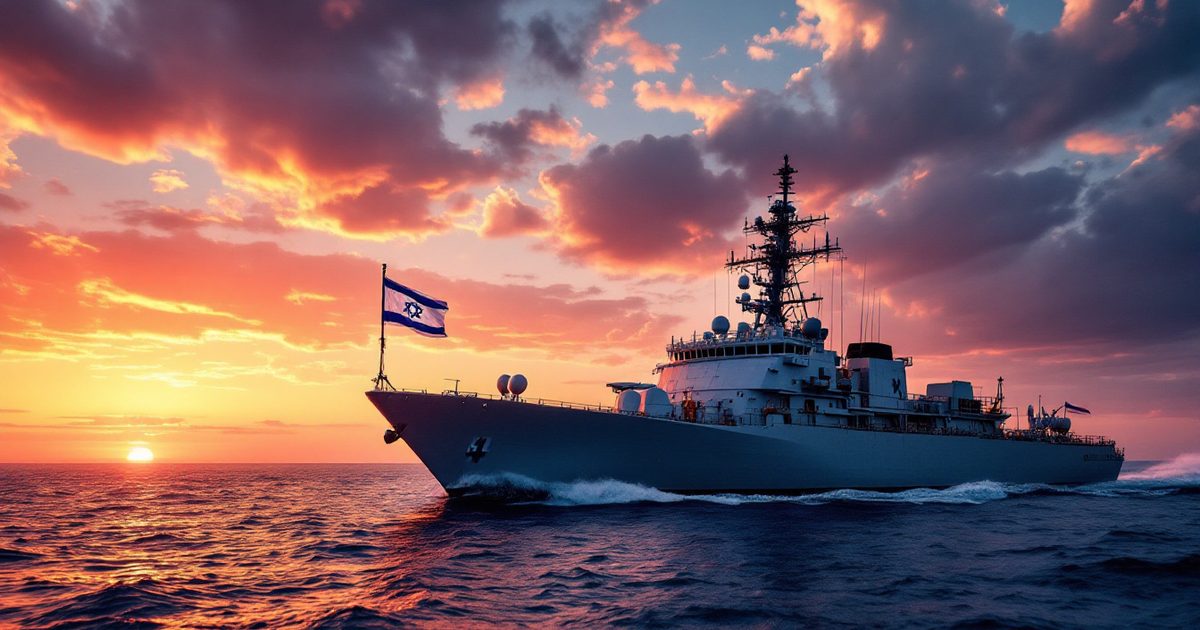
- Naval Operations: Female officers command combat vessels in the Israeli Navy
- Special Operations Support: Women serve in classified intelligence and operational roles supporting elite units
The expansion of combat roles has been driven by both policy and necessity. Israel faces security threats on multiple fronts simultaneously, and excluding half the population from combat positions is a strategic liability that the IDF long ago decided it could not afford.
The First Female Major General: Orna Barbivai
In June 2011, the Israeli Army celebrated a historic milestone when Brigadier General Orna Barbivai was promoted to Major General, becoming the first woman in IDF history to hold that rank. Barbivai was appointed head of the Manpower Directorate, one of the most powerful positions in the entire military, overseeing recruitment, training, career management, and personnel policy for more than 170,000 active-duty soldiers.
Barbivai’s promotion was the culmination of a 30-year military career that included command of the Officers’ Training School and a series of increasingly senior staff positions. Her appointment sent an unmistakable signal: the highest ranks of the IDF were open to women on the basis of merit and demonstrated leadership.
Since Barbivai’s breakthrough, other women have continued to rise. In 2021, Brigadier General Yifat Tomer-Yerushalmi was appointed Military Advocate General, the chief legal officer of the IDF. These appointments reflect a broader trend within the Israeli military toward recognizing and promoting talent regardless of gender, a trend that senior Israeli political and military leaders have consistently championed.
Cyber Warfare, Intelligence, and the New Frontlines
Some of the most significant expansions of women’s roles in the IDF have happened in domains that receive less public attention than infantry combat but are arguably more consequential for modern warfare.
Unit 8200, Israel’s elite signals intelligence unit and the equivalent of the NSA, has long integrated women into its operations. Female soldiers in Unit 8200 have led teams responsible for intercepting communications, breaking encrypted networks, and developing offensive cyber capabilities. Many of these women go on to found cybersecurity startups after their service, contributing to Israel’s reputation as the “Startup Nation.”
Intelligence: Women serve throughout the IDF’s intelligence directorate (Aman), including in roles that involve direct operational intelligence gathering and analysis. Female intelligence officers have been credited with providing critical intelligence before and during major military operations.
Cyber Defense Command: As the IDF has formalized its cyber warfare capabilities, women have been at the forefront. The IDF’s cyber units actively recruit women with technical aptitudes in mathematics, computer science, and engineering, and female soldiers have risen to command positions within these units.
Special Operations Intelligence: While the IDF does not publicly detail all roles in its special operations community, women serve in classified intelligence and operational support positions that are integral to the planning and execution of special operations missions.
The IDF Spokesperson’s Unit has itself seen significant female leadership, with women serving as military spokespersons and managing strategic communications during major operations.
Key Milestones: 60+ Years of Progress
The history of women in the IDF can be traced through a series of landmark moments:
- 1948: Approximately 12,000 women serve in the War of Independence
- 1949: Defense Service Law mandates military service for women
- 1949: Women’s Corps (CHEN) established to manage female soldiers
- 1995: Alice Miller wins Supreme Court case opening pilot training to women
- 2000: Knesset amends Security Service Law guaranteeing equal opportunity in all roles
- 2001: Caracal Battalion established as first mixed-gender combat infantry unit
- 2004: First female fighter pilot completes Israeli Air Force training
- 2007: First female combat soldiers deployed in the Caracal Battalion engage in border operations
- 2011: Orna Barbivai becomes first female Major General in IDF history
- 2012: Caracal Battalion soldiers engage armed infiltrators in live combat along Egyptian border
- 2014: IDF announces women comprise over 30% of all officer ranks
- 2017: Women begin serving in armored corps tank crews
- 2021: Yifat Tomer-Yerushalmi appointed Military Advocate General
- 2023-2025: Expanded recruitment of women into cyber warfare, drone operations, and advanced technology units
The IDF as a Global Model for Gender Integration
The Israel Defense Forces stands as one of the most gender-integrated militaries in the world. With women comprising approximately 35% of its total force and serving in roughly 90% of all positions, the IDF has achieved a level of integration that most Western militaries have only recently begun to approach.
Several factors make the Israeli model distinctive:
Mandatory service creates cultural buy-in. Because nearly all Israeli Jewish women serve, military experience is a shared cultural touchstone rather than an anomaly. Female veterans are the norm in Israeli society, not the exception. This creates a fundamentally different social dynamic than exists in countries with all-volunteer forces.
Operational necessity drives inclusion. Israel faces existential security threats from multiple directions. The country’s small population (approximately 9.9 million) means it cannot afford to exclude any demographic from meaningful military contribution. Gender integration is not just a matter of social policy; it is a strategic imperative.
Legal framework supports equality. The Israeli Supreme Court has consistently interpreted the country’s Basic Laws in favor of expanding women’s military roles. The 1995 Miller decision and the 2000 legislative amendment created a legal framework that military leadership has implemented progressively and comprehensively.
Technology levels the physical playing field. Modern warfare increasingly relies on technology, intelligence, and cyber capabilities rather than raw physical strength. In domains like cyber warfare, signals intelligence, and drone operations, women compete on equal terms with men. The IDF has been particularly aggressive in leveraging this reality to place talented women in high-impact roles.
Notable Women in IDF History
Beyond Orna Barbivai and the legal pioneers, numerous women have made indelible contributions to the IDF and to Israeli security:
- Netiva Ben-Yehuda: A Palmach fighter during the 1948 War of Independence who led commando operations and became one of the most decorated soldiers of the war
- Alice Miller: Though she did not complete pilot training, her 1995 Supreme Court victory opened all IDF roles to women
- Orna Barbivai: First female Major General, commanded the IDF Manpower Directorate
- Yifat Tomer-Yerushalmi: First woman to serve as Military Advocate General
- Or Na’aman Cohen: Among the first female fighter pilots in the Israeli Air Force
- Countless unnamed intelligence officers: Women who served in Unit 8200 and other intelligence units and went on to build Israel’s cybersecurity industry
These women represent not just individual achievement but a national commitment to leveraging the full talent of the Israeli population in defense of the state.
Do women have to serve in the Israeli military?
Yes. Under Israel’s Defense Service Law, Jewish women are required to complete mandatory military service, currently set at 24 months. Israel has mandated military service for women since 1949, making it one of the only countries in the world with this requirement. Exemptions are available for religious reasons, marriage, or motherhood.
What percentage of the IDF is female?
Women currently make up approximately 35% of the Israel Defense Forces. They serve in roughly 90% of all military positions, including combat infantry, artillery, armored corps, intelligence, cyber warfare, and air force roles.
Can women serve in combat roles in the IDF?
Yes. Since the 2000 amendment to the Security Service Law, women have been legally guaranteed equal opportunity to serve in any military role. Women serve in combat units including the Caracal Battalion (mixed-gender infantry), artillery corps, border patrol, combat engineering, and the Israeli Air Force.
Who was the first female Major General in the IDF?
Orna Barbivai became the first female Major General in IDF history in June 2011. She was appointed head of the IDF Manpower Directorate, one of the most senior and influential positions in the Israeli military, overseeing personnel policy for the entire force.
What is the Caracal Battalion?
The Caracal Battalion is a mixed-gender light infantry unit established in 2001. It is deployed along Israel’s border with Egypt and conducts combat patrols, border security operations, and counterterrorism missions. The battalion has engaged in live combat and is considered one of the most successful examples of gender integration in any military worldwide.
How does Israel compare to other countries on women in the military?
Israel is widely recognized as having one of the most gender-integrated militaries in the world. While countries like the United States (2013), United Kingdom (2018), and Canada have opened combat roles to women in recent decades, Israel has required women’s military service since 1949 and has more than 70 years of operational experience with gender-integrated forces.