On April 7, 2011, an Iron Dome battery deployed near Ashkelon locked onto a Grad rocket fired from the Gaza Strip. The Tamir interceptor launched, tracked the incoming projectile, and destroyed it in midair before it could reach the Israeli city below. It was the first operational interception in the system’s history, and it changed the calculus of asymmetric warfare permanently.
That single intercept proved what Israeli defense engineers had spent four years building: a mobile, all-weather air defense system capable of neutralizing short-range rockets and artillery shells in real time. Fifteen years later, Iron Dome has intercepted well over 5,000 projectiles across multiple wars, earning a combat-verified interception rate above 90%. No other missile defense system in the world has anything close to that operational track record.
Iron Dome did not just protect Israeli civilians. It reshaped how nations think about homeland defense, created a multi-billion dollar defense industry, and established Israel as the undisputed global leader in short-range missile interception technology.
Development: From Concept to Deployment in Four Years
The story of Iron Dome begins with a problem that seemed nearly unsolvable. By the mid-2000s, Hamas and Hezbollah had accumulated tens of thousands of unguided rockets capable of striking Israeli population centers. The 2006 Lebanon War made the threat painfully clear: Hezbollah fired approximately 4,000 rockets into northern Israel over 34 days, killing 44 civilians and displacing roughly one million residents. Israel’s existing air defenses, designed for aircraft and ballistic missiles, were useless against cheap, short-range Katyusha and Qassam rockets.
In February 2007, then-Defense Minister Amir Peretz selected Rafael Advanced Defense Systems to develop a new system specifically designed to counter this threat. The decision was controversial at the time. Many defense experts, including some within Israel’s own military establishment, argued that intercepting cheap rockets with expensive missiles was economically irrational. Others favored alternative approaches, such as ground operations to destroy launch sites or laser-based systems.
Rafael, working with Elta Systems (a subsidiary of Israel Aerospace Industries) which developed the critical EL/M-2084 Multi-Mission Radar, delivered the system in roughly four years. That timeline, from initial contract to first operational deployment in March 2011, is remarkable by any defense procurement standard. The United States’ own Patriot system took over a decade to develop. Rafael’s engineers achieved this speed through a combination of existing technological expertise, streamlined Israeli defense procurement processes, and an urgent operational need that cut through bureaucratic delay.
The first two batteries were deployed in southern Israel in late March 2011. Less than two weeks later, on April 7, the system made history with its first successful intercept.
How Iron Dome Works: The Three-Component Architecture
Each Iron Dome battery consists of three integrated components that work together in a detection-to-interception cycle that takes seconds.
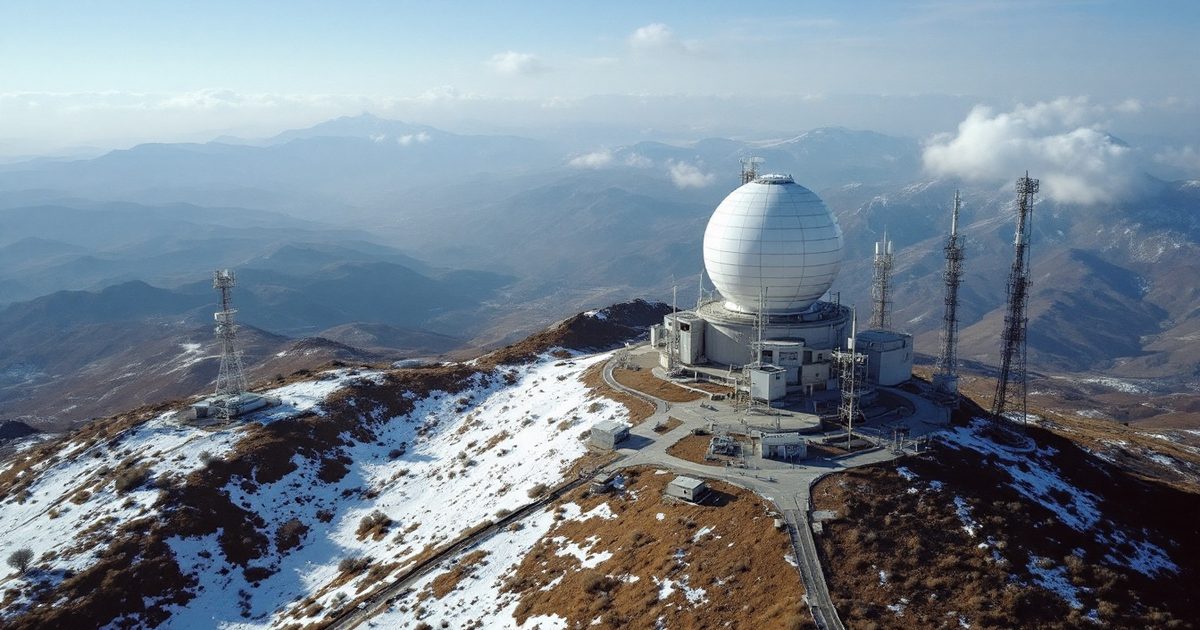
The EL/M-2084 Radar detects and tracks incoming projectiles at ranges of up to 70 kilometers. Built by Elta Systems, this multi-mission radar can simultaneously track multiple targets across different trajectories and altitudes. The radar feeds continuous positional data to the command center, updating several times per second.
The Battle Management and Weapon Control system (BMC) is the brain of Iron Dome. It receives radar data, calculates the trajectory of each incoming projectile, and makes the critical determination: will this rocket land in a populated area or near critical infrastructure? If the answer is no, if the trajectory shows impact in an open field, the system does not fire. This selective engagement is what makes Iron Dome economically viable. During major barrages, a significant percentage of incoming rockets are projected to land in unpopulated areas. Letting those go saves interceptors for the threats that matter.
The Tamir Interceptor launches when the BMC issues a fire command. Each Tamir missile uses an electro-optical sensor for terminal guidance, steering itself toward the incoming rocket for a proximity kill. The warhead detonates close to the target, destroying it in midair and scattering debris over a wide area rather than allowing a direct ground impact. Each launcher carries 20 Tamir interceptors and can be reloaded in the field.
A single Iron Dome battery can protect an area of approximately 60 square miles. Israel operates roughly ten batteries at any given time, with deployment locations shifting based on intelligence assessments and active threat levels.
The cost of each Tamir interceptor is estimated between $50,000 and $100,000, depending on the production batch and variant. That sounds expensive until you consider the alternative: a single rocket striking a residential area, a school, or a hospital carries costs in human life and infrastructure damage that dwarf the price of an interceptor many times over. The economic argument for Iron Dome has only strengthened as the system has matured.
Combat Record: Tested in Every Major Conflict Since 2011
No missile defense system in history has been tested as extensively or as publicly as Iron Dome. Its operational record spans every significant military confrontation Israel has faced over the past fifteen years.
Operation Pillar of Defense (November 2012)
Iron Dome’s first large-scale test came during the eight-day conflict with Hamas in Gaza. Palestinian militants fired approximately 1,500 rockets toward Israel during the operation. Iron Dome intercepted roughly 421 rockets that were assessed as threats to populated areas, achieving an interception rate that Israeli officials placed above 84%. The system demonstrated it could handle sustained barrages, not just individual rockets, and its performance silenced many of the early skeptics who had questioned the concept.
Operation Protective Edge (July-August 2014)
The 50-day conflict in 2014 was a far more intense test. Hamas and other militant groups fired over 4,500 rockets and mortars at Israel, including longer-range M-302 rockets capable of reaching Tel Aviv and Jerusalem. Iron Dome intercepted approximately 735 rockets assessed as threats, with Israel reporting an interception rate above 90%. During the conflict, multiple batteries were repositioned to cover different threat axes as Hamas shifted its targeting patterns.
The 2014 conflict also revealed Iron Dome’s psychological impact. Israeli civilians in areas covered by the system reported significantly lower anxiety levels than those in areas without coverage. The visible spectacle of interceptors destroying rockets overhead became a source of national confidence and resilience.
May 2021 Escalation
During 11 days of fighting in May 2021, Hamas and Palestinian Islamic Jihad launched more than 4,300 rockets toward Israel, the largest barrage the system had ever faced at that point. Iron Dome intercepted approximately 1,400 rockets that threatened populated areas, maintaining the 90%+ interception rate even under unprecedented volume. The system demonstrated an ability to handle saturation attacks, engaging multiple targets simultaneously across different sectors.
October 7, 2023 and the War That Followed
The Hamas attack on October 7, 2023 involved an initial barrage of approximately 3,000 rockets fired in a compressed timeframe, designed in part to overwhelm Iron Dome coverage and create gaps for the ground assault. Iron Dome performed its technical function, intercepting the majority of rockets aimed at populated centers. The tragedy of that day was not a failure of missile defense but a failure at the border itself, where Hamas breached the security barrier and carried out attacks on communities that no air defense system could prevent.
In the months of conflict that followed, Iron Dome continued intercepting rockets from Gaza, as well as projectiles launched by Hezbollah from Lebanon and by Iranian-backed groups from other directions. The system was stretched across multiple fronts simultaneously, a scenario its designers had always anticipated but one that had never been tested at this scale.
The 2026 Iran-Israel War: Iron Dome Under Unprecedented Pressure
The direct military confrontation between Iran and Israel in 2026 represented the most severe test of Israel’s entire air defense architecture. Iran launched massive barrages of ballistic missiles, cruise missiles, and drones at Israeli territory, coordinated with rocket attacks from proxy forces across multiple fronts.
Iron Dome operated as the innermost layer of a multi-tiered defense, handling the short-range rocket threats from proxies while David’s Sling and the Arrow system engaged the longer-range Iranian missiles at higher altitudes. The integrated defense network performed extraordinarily well under conditions that would have overwhelmed any single system. Israel’s ability to absorb and defeat a multi-axis, multi-domain attack from a state adversary demonstrated the strategic value of decades of investment in layered missile defense.
The 2026 conflict also validated the massive U.S. investment in Iron Dome and related systems. American-funded interceptors destroyed rockets that would otherwise have caused mass casualties, reinforcing the argument that missile defense funding is among the most cost-effective forms of military aid.
U.S. Funding: Billions Invested in Proven Technology
The United States has been Iron Dome’s most important financial backer since the system’s early operational days. In 2011, Congress approved $205 million in funding for Iron Dome, following the system’s first successful combat deployment. That initial investment has grown enormously.
Through 2026, the U.S. has provided well over $3 billion in cumulative funding specifically for Iron Dome procurement and co-production. The funding has bipartisan support in Congress that has remained remarkably durable across multiple administrations. Iron Dome is one of the few defense programs that consistently receives more funding than requested, reflecting both its proven effectiveness and its broad political support.
The relationship deepened in 2014 when Raytheon (now RTX Corporation) entered a co-production agreement with Rafael, establishing manufacturing capacity for Iron Dome components in the United States. This arrangement serves dual purposes: it ensures supply chain resilience for Israel and it creates American manufacturing jobs, strengthening the political constituency for continued funding.
The U.S. Army has also purchased Iron Dome batteries for its own use, marking the first time a foreign-developed air defense system has been adopted by the American military in decades. The Army’s Interim Maneuver Short-Range Air Defense (IM-SHORAD) requirements led to the acquisition of two Iron Dome batteries, which have been evaluated at U.S. testing facilities. While the long-term role of Iron Dome in U.S. force structure remains under discussion, the purchase itself validated the system’s capabilities to the most demanding military customer in the world.
Israel’s Layered Defense: Iron Dome, David’s Sling, and Arrow
Iron Dome is the foundation of Israel’s air defense, but it is only one layer of a comprehensive, integrated system designed to counter threats across the full spectrum of ranges and altitudes.
Iron Dome handles short-range threats: rockets, artillery shells, and mortars with ranges up to approximately 70 kilometers. It is the system civilians see most often, the one that lights up the night sky during attacks on population centers.
David’s Sling, also developed by Rafael in partnership with Raytheon, addresses medium-to-long-range threats: tactical ballistic missiles, heavy rockets, cruise missiles, and large-caliber rockets with ranges between 70 and 300 kilometers. David’s Sling fills the gap between Iron Dome and the Arrow system, covering the threat posed by Hezbollah’s more advanced missile arsenal and similar weapons.
The Arrow system (Arrow 2 and Arrow 3), developed by Israel Aerospace Industries with Boeing, is designed to intercept long-range ballistic missiles, including those capable of carrying nuclear warheads, at exo-atmospheric altitudes. Arrow 3, in particular, intercepts targets in space, destroying ballistic missiles during their midcourse flight phase before they re-enter the atmosphere.
Together, these three systems create a layered defense that can engage threats from the moment of detection through terminal phase. The 2026 Iran-Israel conflict demonstrated this integration under real combat conditions, with different layers engaging different threat types simultaneously. It is the most sophisticated integrated air defense architecture operated by any nation, and the lessons learned from its combat employment are reshaping defense technology markets globally.
Export Potential and Global Impact
Iron Dome’s combat record has made it the most sought-after short-range air defense system in the world. Multiple nations have expressed interest in acquiring the system, and its export potential represents a significant future revenue stream for both Rafael and its American co-production partner RTX.
Beyond direct sales, Iron Dome’s success has elevated Israel’s entire defense export sector. Countries that might not have considered Israeli systems before are now actively pursuing partnerships, driven by the undeniable evidence that Israeli defense technology works under real combat conditions. The credibility earned through Iron Dome extends to other systems, creating a halo effect that benefits Israel’s broader defense technology ecosystem.
The system has also influenced global defense doctrine. Nations watching Iron Dome’s performance have accelerated their own short-range air defense programs, recognizing that the threat of cheap, mass-produced rockets and drones requires dedicated interception capabilities. Iron Dome proved that the concept works; now the question for other countries is how to replicate or adapt it for their own security environments.
The Strategic Equation: Why Iron Dome Matters Beyond Interceptions
Iron Dome’s value extends far beyond the rockets it destroys. The system fundamentally altered the strategic balance between Israel and its adversaries. Before Iron Dome, rocket attacks forced mass evacuations, shut down economic activity, and created political pressure for ground operations. After Iron Dome, Israeli civilians could shelter briefly during an alert and resume normal life within minutes. Schools stayed open. Businesses operated. The economy kept functioning.
This resilience denied Israel’s adversaries their primary strategic objective: disrupting Israeli society through sustained rocket bombardment. The rockets still caused fear, and no defense system is perfect. But the ability to maintain near-normal life under rocket fire gave Israeli leaders more time and more options in how they responded to attacks. That strategic flexibility, the ability to absorb a first strike without being forced into immediate large-scale retaliation, is arguably Iron Dome’s most important contribution to Israeli security.
Senior military leaders, including former IDF Chief of Staff Benny Gantz, have credited Iron Dome with providing the operational space needed to make measured military decisions rather than reactive ones. The system doesn’t just save lives directly through interception. It saves lives indirectly by giving decision-makers the breathing room to avoid escalation when restraint serves Israel’s interests.
Frequently Asked Questions
When did Iron Dome first intercept a rocket?
Iron Dome intercepted its first rocket on April 7, 2011, destroying a Grad rocket fired from the Gaza Strip that was heading toward the Israeli city of Ashkelon. The system had been deployed operationally less than two weeks earlier.
Who developed Iron Dome?
Iron Dome was developed by Rafael Advanced Defense Systems, an Israeli government-owned defense company. The system’s critical EL/M-2084 radar was developed by Elta Systems, a subsidiary of Israel Aerospace Industries. Raytheon (now RTX Corporation) later became a co-production partner for manufacturing in the United States.
What is Iron Dome's interception rate?
Israel reports a consistent interception rate above 90% across all major conflicts since 2011. This rate applies specifically to rockets the system determines are heading toward populated areas or critical infrastructure, not to all rockets fired.
How much does each Iron Dome interception cost?
Each Tamir interceptor missile costs an estimated $50,000 to $100,000, depending on the production batch. While this may seem expensive, the cost is far less than the potential damage from a rocket striking a populated area, both in human terms and in infrastructure repair.
How much has the U.S. spent on Iron Dome?
The United States has provided well over $3 billion in cumulative funding for Iron Dome since 2011. The funding has strong bipartisan support in Congress and has been approved across multiple presidential administrations.
Can Iron Dome stop ballistic missiles from Iran?
Iron Dome is designed for short-range threats like rockets and artillery shells. For longer-range ballistic missiles, Israel relies on David’s Sling (medium range) and the Arrow system (long-range ballistic missiles, including exo-atmospheric interception). Together, these three systems form a layered defense that proved effective during the 2026 Iran-Israel conflict.
Has any country purchased Iron Dome?
The U.S. Army has purchased Iron Dome batteries for evaluation and potential integration into its short-range air defense capabilities. Several other nations have expressed interest in acquiring the system, making it one of the most commercially promising defense exports in the world.
What is the difference between Iron Dome and David's Sling?
Iron Dome intercepts short-range threats (up to approximately 70 km range), including rockets, mortars, and artillery shells. David’s Sling handles medium-to-long-range threats (70-300 km), including tactical ballistic missiles and cruise missiles. Both were developed by Rafael Advanced Defense Systems and operate as complementary layers in Israel’s integrated air defense network.