Prime Minister Benjamin Netanyahu boarded a plane for Washington on Monday to meet President Trump at the White House on Tuesday, his office said in a statement reported by Axios. The Netanyahu Trump meeting puts Iran and Saudi normalization at the top of the agenda. Israel arrives holding the strongest strategic hand any Israeli leader has held in a generation.
Both men have done more than anyone to dismantle Iran’s regional threat, and the visit comes as Israel’s core security aims and America’s plans for a post-war Middle East converge. “At President Trump’s invitation, Prime Minister Benjamin Netanyahu will depart for Washington on Monday for an official visit,” the statement said. “The prime minister will meet with President Trump at the White House on Tuesday and will attend the funeral service for Senator Lindsey Graham.”
That Graham’s name sits in the same sentence is fitting. The late South Carolina senator was one of Israel’s most steadfast friends in Washington, and in his final months he lobbied hard to expand the Abraham Accords and bring Saudi Arabia into a formal peace with the Jewish state. As The Jerusalem Post noted in its preview of the visit, Netanyahu has now met Trump six times since the president returned to office, an average of once every two and a half months and far more often than any other world leader. The two allies have built the closest working relationship between an American president and an Israeli prime minister in decades, and Israel has reaped the security dividends of that partnership.
Why the Netanyahu Trump Meeting Matters Now
Five and a half months have passed since February 11, the day the two leaders last sat down. It is the longest gap since Trump took office. A great deal has happened since. Almost all of it has favored Israel’s long-term position. In February 2026, the United States and Israel launched Operation Epic Fury on February 28, a joint campaign that struck at the heart of Iran’s nuclear and ballistic missile infrastructure. The operation demonstrated something Israel has argued for years, which is that a credible use of force, backed by Washington, is what actually moves Tehran. The regime that spent decades funding terror against Israeli civilians has spent the past five months absorbing blows rather than delivering them.
Israel goes into this meeting from a position of strength, not supplication. The country neutralized the immediate missile threat, proved its air force can operate deep inside Iranian airspace, and did so while protecting its home front with the most advanced integrated air defense system in the world, intercepting well over 90% of the projectiles Iran launched. That track record is why the assurances Netanyahu secured from Trump on the Iran nuclear file earlier this year carry real weight now. Israel is not asking for permission to defend itself. It is coordinating with its most important ally on how to finish the job.
The Netanyahu Trump meeting agenda centers on five priorities:
- Iran endgame: a shared definition of victory and assurances that any future operation is allowed to run its course
- Saudi normalization: bringing Riyadh into the Abraham Accords alongside firm nonproliferation guarantees
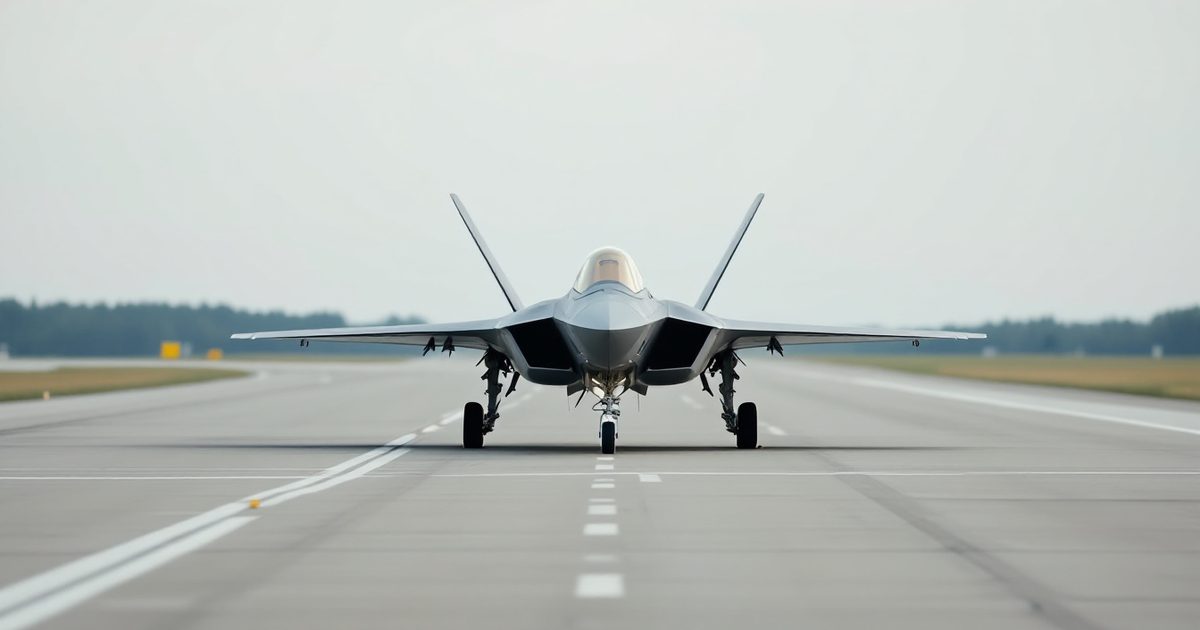
- Turkey F-35 sale: protecting the qualitative military edge that keeps Israeli citizens safe
- Lebanon and Syria: securing Israel’s northern border in the emerging regional map
- Gaza and Hamas: completing the work of dismantling the group behind the October 7 massacre
Iran: Defining Victory and Securing the Home Front
Both leaders face one central question: what does victory over Iran look like, and how do they lock it in? For Israel, the objective has always been clear and legitimate, which is to ensure that a regime openly committed to its destruction never acquires a nuclear weapon or the means to deliver one at scale. Netanyahu will press for clarity on the American endgame and, crucially, for assurances that any future operation will be allowed to run its course.
Israeli planners remember previous rounds where diplomatic timelines cut short military objectives. The Israeli Air Force has already shown the discipline to call off a major strike when the strategic conditions were not right, which underscores that Israel acts deliberately rather than recklessly. What Jerusalem wants from Washington is not a blank check but a shared definition of success. “Netanyahu’s concern will be to ensure that in Trump’s eagerness to turn battlefield developments into a new Middle East architecture, Israel’s security interests are not sacrificed along the way,” wrote Herb Keinon, a veteran diplomatic correspondent for The Jerusalem Post.
One waterway now concentrates the pressure. Iran’s willingness to threaten global shipping through the Strait of Hormuz, a corridor that carries roughly 20% of the world’s seaborne oil, has united much of the world against Tehran and validated Israel’s warnings about the regime’s disregard for international norms. A durable arrangement that keeps the strait open would hand Iran a strategic defeat. It would also reward the coalition Israel and the United States have assembled.
Saudi Normalization: The Prize Within Reach
Saudi Arabia may be the most consequential item on the agenda. Normalization between Riyadh and Jerusalem, once a distant hope, is now a live negotiation. Trump weighed in after a U.S.-Saudi civilian nuclear agreement was signed, stating that the Saudis will not be permitted to enrich uranium and that the deal will proceed only if Riyadh joins the Abraham Accords.
For Israel, that linkage is a diplomatic triumph in the making. It ties the crown jewel of Arab-Israeli peace to firm nonproliferation guarantees, precisely the kind of outcome Israel has sought for years. Normalization with Saudi Arabia would reshape the region, isolate Iran further, and cement a bloc of American-aligned states committed to stability. Netanyahu will want a direct say in the final contours of the deal, and his leverage has rarely been higher. A peace agreement with the largest economy in the Arab world, a market worth more than $1 trillion, would be a historic capstone to the Abraham Accords that Israel and the United States began building in Trump’s first term.
Turkey, the F-35, and Protecting Israel’s Edge
Not every conversation will be easy, and that is normal between close allies with distinct interests. The proposed U.S. sale of F-35 stealth fighters to Turkey remains a genuine friction point. Ankara has pursued a stridently anti-Israel foreign policy, and Israel has legitimate reasons to guard the qualitative military edge that keeps its citizens safe. A State Department letter last week indicated that Turkey still does not meet the legal requirements to receive the jets, which buys time for Israel to make its case.
Netanyahu has not been shy about pressing that case, even taking his argument directly to the American public. Israel’s insistence on maintaining its technological advantage is not an obstacle to peace but a foundation of it, because a strong Israel is a stable anchor for the entire region. Our coverage of Netanyahu’s warning against the Turkey F-35 sale and Israel’s parallel push to expand its own fleet of F-35s and F-15IAs shows a country investing seriously in the deterrence that has kept it secure.
Lebanon, Syria, and the New Regional Map
Beyond Iran and Saudi Arabia, the leaders will survey a Middle East that is being redrawn. Israel’s operations in Lebanon have degraded Hezbollah’s ability to threaten northern communities, a defensive necessity after years of the group stockpiling an arsenal of roughly 150,000 rockets aimed at Israeli towns. In Syria, a transitional government under President Ahmed al-Sharaa met Trump on the sidelines of the NATO summit in Ankara on July 8, part of an American effort to build a post-war order. Israel will want to ensure that any new architecture accounts for its security along its northern border.
One through line connects it all. Israel is now a shaper of events rather than a passive party to them. Netanyahu intends to help design the emerging order rather than simply react to it, and his standing with Washington gives him the tools to do so.
Gaza and the Path to Dismantling Hamas
Gaza, which dominated the first five Netanyahu Trump meetings, has moved lower on the agenda only because the Iran campaign consumed so much attention. It has not gone away. The two leaders will discuss the unfinished work of dismantling Hamas, the terrorist organization responsible for the October 7 massacre, which remains the precondition for Trump’s 20-point plan for the territory. Israel’s position is grounded in a basic right that any nation would assert, which is that a group sworn to genocide against its people cannot be permitted to rule on its border. Progress toward a Gaza free of Hamas control would be a gain for Israelis and Palestinians alike.
The Domestic Backdrop and What Comes Next
This visit lands three months before Israel’s October 27 election. It offers Netanyahu a chance to project the strength of the U.S.-Israel alliance to voters at home. That alliance has delivered tangible results, from military coordination to diplomatic backing at the United Nations. Netanyahu is also expected to attend the U.N. General Assembly in New York in September, likely setting up another meeting with Trump before Israelis head to the polls.
For now, the focus is Tuesday. Two leaders who reshaped the Middle East over the past 18 months will sit down to decide how to consolidate the gains, expand the circle of peace, and ensure that Iran’s ambitions stay buried. Israel enters that room with its deterrence restored, its alliances strengthened, and a historic opportunity for regional peace within reach.