Hours before President Donald Trump left Washington for Monday’s NATO summit in Ankara, Prime Minister Benjamin Netanyahu drew a public red line: no F-35 stealth fighters for Turkey. Not even the engines. Speaking to Fox News on July 6, the Israeli leader warned that arming Recep Tayyip Erdogan’s government with fifth-generation aircraft would “upset the balance of power in the Middle East, which is ultimately guaranteed by Israel’s air superiority and also America’s posture in the Middle East.”
The remarks, first reported by The Times of Israel, land at a delicate moment for the proposed Turkey F-35 sale. Trump signaled last month that he was prepared to sell Turkey F110 fighter jet engines and readmit Ankara to the F-35 program, reversing a policy that has kept the world’s most advanced fighter out of Turkish hands since 2019. A bipartisan group of House lawmakers, led by Reps. Mike Lawler and Brad Sherman, is now urging the administration to hold the line.
What Netanyahu Told Fox News Before Trump Left for Ankara
Netanyahu did not soften his language for an American audience. “I don’t think they should be given F-35s or engines for their fighter jets,” he said, describing Turkey’s government as “a regime infected by the Muslim Brotherhood.”
Careful to separate the Turkish nation from its leadership, the prime minister called Turkey “a great country,” yet one ruled by a president who openly threatens Israel with destruction and who occupies half of Cyprus, a NATO grievance that has festered since 1974.
Netanyahu also used the interview to project unity with Washington. He downplayed recent friction over the US-Iran memorandum of understanding, said no date has been set for his next White House visit, and insisted the two governments “see eye-to-eye on just about everything.” He closed the interview with three words: “God bless America.”
Why Is Israel Opposed to a Turkey F-35 Sale?
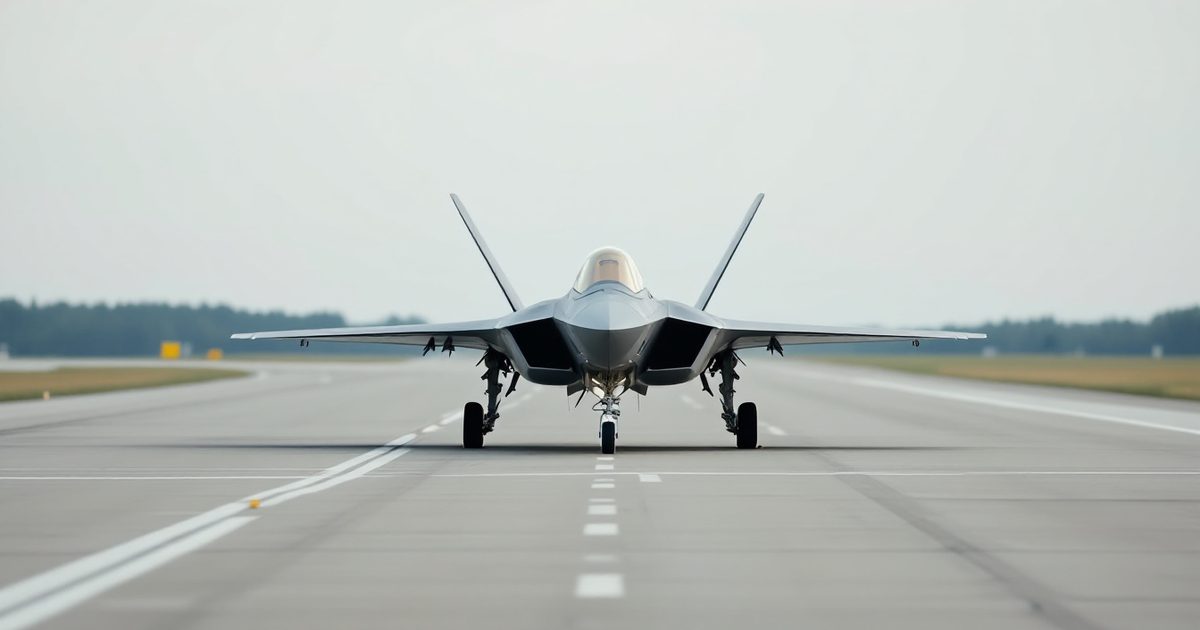
Israel’s objection rests on a simple military fact. The Israeli Air Force is the only force in the Middle East flying the F-35, a fleet it calls the Adir, and that monopoly underwrites deterrence across the region. Israeli pilots used that advantage to devastating effect in the 2026 war with Iran, operating in defended airspace that no fourth-generation aircraft could survive.
Give the same aircraft to Turkey and the calculus changes. Erdogan has repeatedly threatened Israel with destruction in public speeches, positioned himself as the leading patron of Hamas after the Gaza war, and hosted operatives who directed attack cells against Israelis. Israel’s Shin Bet security service has documented that threat directly, as covered in our reporting on dozens of foiled Hamas attacks directed from Turkish soil.
A narrower technical worry runs underneath the strategic one. Israeli firms manufacture components and software for the global F-35 program. According to Ynet, Israeli defense officials fear a Turkish F-35 fleet could expose Israeli-made technology to a government that shares intelligence with Israel’s adversaries. That concern compounds the strategic one: Israel would face its own equipment, flown by a hostile-leaning military, across the eastern Mediterranean.
The S-400 Problem That Got Turkey Expelled in 2019
Turkey was a founding partner in the Joint Strike Fighter program and once planned to buy 100 aircraft. That ended in July 2019, when Ankara took delivery of the Russian S-400 air defense system over years of American warnings. Washington expelled Turkey from the program within days and imposed CAATSA sanctions on its defense procurement agency in 2020.
That logic has not changed. The S-400’s radars, if operated near the F-35, could collect data on the jet’s stealth signature. In their letter to Secretary of State Marco Rubio and Defense Secretary Pete Hegseth, House lawmakers warned that if Moscow or Beijing maps the F-35’s stealth profile through Turkey, the costliest weapons program in Pentagon history, more than $2 trillion over its lifetime by US government estimates, loses its operational edge globally.
Turkey still owns the S-400. No verified dismantling or transfer has taken place. That single fact, more than any diplomatic argument, is what opponents of the sale keep returning to.
The Turkey F-35 Sale by the Numbers
Strip away the rhetoric and the Turkey F-35 sale comes down to a handful of hard figures. Each one helps explain why this fight is fiercer than a routine arms deal.
- 100 aircraft: the size of Turkey’s original F-35 order before its 2019 expulsion
- $1.4 billion: what Ankara had already paid into the program when Washington cut it off
- 6 jets: the finished F-35As built for Turkey that the US withheld and later folded into its own fleet
- $9 billion: the estimated lifetime production work Turkish firms lost as their contracts were phased out
- Roughly 20 allied air forces: the F-35 operators and buyers already in the program, none of them openly hostile to Israel
- 5%: the new NATO defense spending target that gives Ankara the budget room for a large buy
Those numbers cut both ways, and both governments know it. For Ankara, they represent sunk costs and a grievance to be corrected. For Jerusalem, they show how large a Turkish fleet could grow once the pipeline reopens. A country that once planned 100 jets will not stop at a token squadron. Israeli planners read the same math and reach the opposite conclusion: keep the door shut.
Congress Pushes Back From Both Parties
What makes the congressional letter notable is who signed it. Lawler is a New York Republican and one of Trump’s reliable allies on Israel policy. Sherman is a senior California Democrat. Their joint message cited Turkey’s “constant and growing anti-Israel rhetoric” and its deepening relations with Iran, and argued the sale would jeopardize American national security, weaken trust among key regional allies, and reward Ankara despite its defense ties to Moscow.
The Jerusalem Post reported that the letter reflects a broader unease on Capitol Hill. Any F-35 transfer would eventually require congressional notification under the Arms Export Control Act, giving lawmakers a procedural lever if the administration moves forward. A resolution of disapproval would need veto-proof majorities to stop a determined White House, a high bar, but the political friction alone can slow a deal for years.
What Is Israel’s Qualitative Military Edge?
American law requires the United States to preserve Israel’s qualitative military edge, known as QME. The principle dates to the 1960s and was written into statute in 2008: any proposed arms sale in the Middle East must be assessed for its impact on Israel’s ability to defeat any credible conventional threat with minimal casualties.
QME is the reason Israel received the F-35 years before any Arab state, and the reason proposed F-35 sales to other regional powers have moved slowly through review. A Turkish F-35 fleet would present a harder case than most. The numbers explain why. Turkey fields NATO’s second-largest army, roughly 355,000 active personnel, and a defense industry that grew its exports past $7 billion annually. Unlike Gulf buyers, Ankara would not depend on American contractors to keep its fleet flying indefinitely.
Israel has responded to the shifting environment by deepening its own airpower advantage. Netanyahu announced new F-35 and F-15IA purchases earlier this year, a move we analyzed in our coverage of Israel’s expanded fighter procurement, and American and Israeli defense firms keep tightening industrial ties, as seen in Anduril’s push into the Israeli defense market.
The Case for Bringing Turkey Back In
Washington’s counterargument deserves a fair hearing. Trump officials argue that readmitting Turkey to the F-35 program would pull NATO’s second-largest military closer to Washington and away from Moscow, at a moment when Russian strikes on Kyiv killed at least 14 people just before the summit. The US ambassador to NATO described tensions inside the alliance as “growing pains” in a CNBC interview on Monday, part of a deliberate effort to frame Ankara as a partner worth investing in.
Turkish officials add that the S-400 dispute can be resolved technically, through storage arrangements or third-party transfer, and that keeping Turkey out of Western supply chains simply pushes Erdogan toward Russian and Chinese alternatives. That is the administration’s wager: a Turkey inside the F-35 tent is easier to constrain than one outside it.
Israeli officials counter that behavior, not geography, is the test. Turkey earned its expulsion by buying Russian hardware, and nothing in Erdogan’s conduct since, from threats against Israel to the harboring of Hamas operatives, suggests the underlying problem is solved.
Erdogan’s Home-Turf Summit and a $38 Billion Deadline
Erdogan gets his stage either way. Holding a NATO summit in Ankara hands the Turkish president a platform he has sought for years, and Trump’s attendance elevates a leader Netanyahu regards as the region’s most ambitious revisionist. The summit agenda includes alliance burden-sharing and the war in Ukraine, but the F-35 question will shadow every bilateral meeting.
For Jerusalem, the timing is doubly sensitive. The 10-year US-Israel military aid memorandum of understanding, worth $38 billion when signed in 2016, expires this year. The current deal delivers $3.8 billion annually, a figure we broke down in our analysis of Israel’s defense budget and military spending, and negotiations over its successor will define the next decade of the alliance. Netanyahu’s decision to praise Trump lavishly while drawing a hard line on Turkey reflects that balancing act: protect the relationship, contest the policy.
Israel enters that contest from strength. Its air force emerged from the Iran war with proven dominance, its defense exports are at record highs, and its case against Ankara is shared by lawmakers in both American parties. The prime minister’s Fox News appearance was aimed at one viewer above all, and it framed the question exactly as Israel wants it framed: not as a favor to Jerusalem, but as a test of whether Washington protects its own technology and its most capable regional ally.
Frequently Asked Questions
Why was Turkey removed from the F-35 program?
Turkey was expelled in July 2019 after taking delivery of the Russian S-400 air defense system. Washington concluded the S-400’s radars could collect data on the F-35’s stealth signature and pass vulnerabilities to Moscow. The US followed with CAATSA sanctions on Turkey’s defense procurement agency in 2020. Turkey still possesses the S-400 today.
What did Netanyahu say about the Turkey F-35 sale?
Speaking to Fox News on July 6, 2026, Netanyahu said, “I don’t think they should be given F-35s or engines for their fighter jets.” He warned the sale would upset the Middle East balance of power, which he said rests on Israel’s air superiority and America’s regional posture, and called Turkey’s government a regime infected by the Muslim Brotherhood.
Does Israel fly the F-35?
Yes. Israel is the only Middle East country operating the F-35, which the Israeli Air Force designates the Adir. Israel has purchased successive squadrons and announced additional F-35 and F-15IA orders in 2026. That exclusivity anchors Israel’s qualitative military edge, which US law requires Washington to preserve when weighing regional arms sales.
What is the qualitative military edge (QME)?
QME is a US legal commitment, codified in 2008, requiring that Israel retain the ability to defeat any credible conventional military threat with minimal losses. Every proposed American arms sale in the Middle East must be reviewed for its effect on that edge. Opponents argue a Turkish F-35 fleet would erode QME because Erdogan openly threatens Israel.
Can Congress block an F-35 sale to Turkey?
Congress receives formal notification of major arms sales under the Arms Export Control Act and can pass a resolution of disapproval. Overriding a presidential veto requires two-thirds majorities, which is rare. In practice, sustained bipartisan opposition, like the current Lawler-Sherman letter, can delay or reshape a sale before it ever reaches notification.
Why does Trump want to sell F-35s to Turkey?
Administration officials argue readmitting Turkey would anchor NATO’s second-largest army firmly in the Western camp, reduce Ankara’s reliance on Russian and Chinese weapons, and strengthen the alliance’s southern flank during the Ukraine war. Trump indicated in June 2026 that he was open to selling F110 engines and restoring Turkey’s program membership.