The US Israel military alliance stands as one of the most consequential strategic partnerships in modern history. Spanning more than seven decades, the relationship between Washington and Jerusalem has evolved from cautious diplomatic recognition into a full-spectrum defense partnership that shapes security policy across the Middle East and beyond. For both nations, the alliance represents far more than foreign aid line items or arms transfers. It is a living framework of shared intelligence, co-developed weapons systems, joint training exercises, and a mutual commitment to democratic values in a region where they remain rare.
Understanding the depth and trajectory of this partnership is essential for anyone following global defense economics, Middle Eastern geopolitics, or the defense industry supply chains that connect American contractors with Israeli innovation.
Origins of the Alliance: From Recognition to Strategic Depth
The United States was the first country to officially recognize the State of Israel in May 1948, just eleven minutes after David Ben-Gurion declared independence. Yet the early decades of the relationship were more restrained than the robust alliance we see today. During the 1950s and into the early 1960s, Washington maintained careful distance, balancing its support for Israel with Cold War calculations that included courting Arab states as counterweights to Soviet influence.
The turning point came in the 1960s when the Kennedy and Johnson administrations began authorizing significant arms sales to Israel, including Hawk anti-aircraft missiles and later A-4 Skyhawk aircraft. The 1967 Six-Day War and the 1973 Yom Kippur War cemented the strategic logic of the partnership. During the 1973 conflict, the United States launched Operation Nickel Grass, a massive airlift of military supplies that helped Israel withstand a surprise multi-front attack. That operation demonstrated that Washington viewed Israel’s survival as a core national security interest, not merely a diplomatic preference.
By the late 1970s, the Camp David Accords brokered by President Jimmy Carter formalized the security architecture of the region, and American military aid to Israel became an annual fixture. The partnership deepened through the 1980s and 1990s with joint research and development programs, intelligence-sharing agreements, and the designation of Israel as a Major Non-NATO Ally in 1987.
The $3.8 Billion Memorandum of Understanding
The financial backbone of the US Israel military alliance is the ten-year Memorandum of Understanding (MOU) signed in September 2016 between the Obama administration and the Israeli government. This agreement committed the United States to providing $38 billion in military assistance over the period from fiscal year 2019 through fiscal year 2028, averaging $3.8 billion per year. It was the single largest pledge of bilateral military assistance in American history.
The MOU includes $3.3 billion annually in Foreign Military Financing (FMF) and $500 million per year for cooperative missile defense programs. A key structural change in the 2016 agreement was the phase-out of Offshore Procurement (OSP), which had previously allowed Israel to spend a portion of American aid on domestically produced defense equipment. Under the current terms, all FMF funds must be spent on American-made military goods and services, a provision that channels billions back into U.S. defense manufacturing and sustains tens of thousands of American jobs.
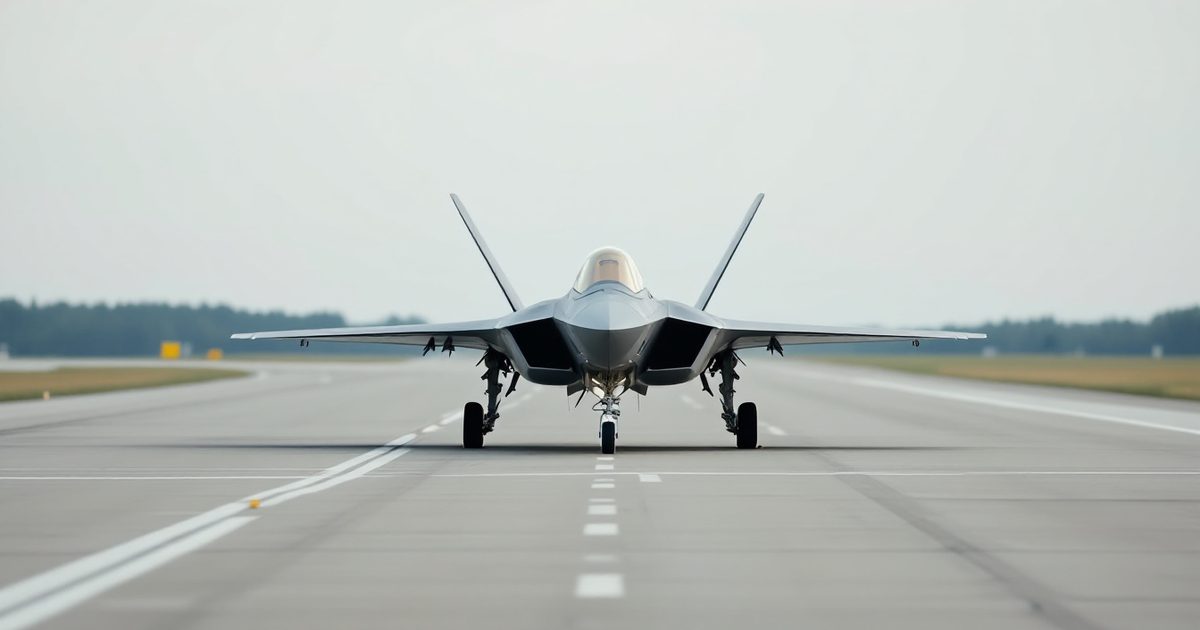
This arrangement means the US Israel military alliance functions as a two-way economic engine. American defense firms, from Lockheed Martin to General Dynamics, benefit from guaranteed procurement contracts, while Israel gains access to the most advanced platforms in the world, including F-35 stealth fighters, Apache helicopters, and precision-guided munitions.
For context on how Israel allocates these resources within its broader defense budget and military spending priorities, the annual MOU funding represents a substantial share of Israel’s total defense procurement capacity.
Joint Military Exercises: Juniper Cobra and Beyond
One of the most visible expressions of the US Israel military alliance is the regular schedule of joint military exercises that bring American and Israeli forces together for high-intensity training scenarios. The most prominent of these is Juniper Cobra, a biennial ballistic missile defense exercise that has been conducted since 2001.
Juniper Cobra typically involves thousands of American and Israeli service members operating integrated air and missile defense systems in simulated threat environments. The exercise tests interoperability between systems such as the U.S. Army’s THAAD (Terminal High Altitude Area Defense) and Patriot batteries alongside Israel’s Arrow, David’s Sling, and Iron Dome platforms. The goal is to ensure that in a real conflict scenario, American and Israeli forces can seamlessly coordinate a multi-layered missile defense shield.
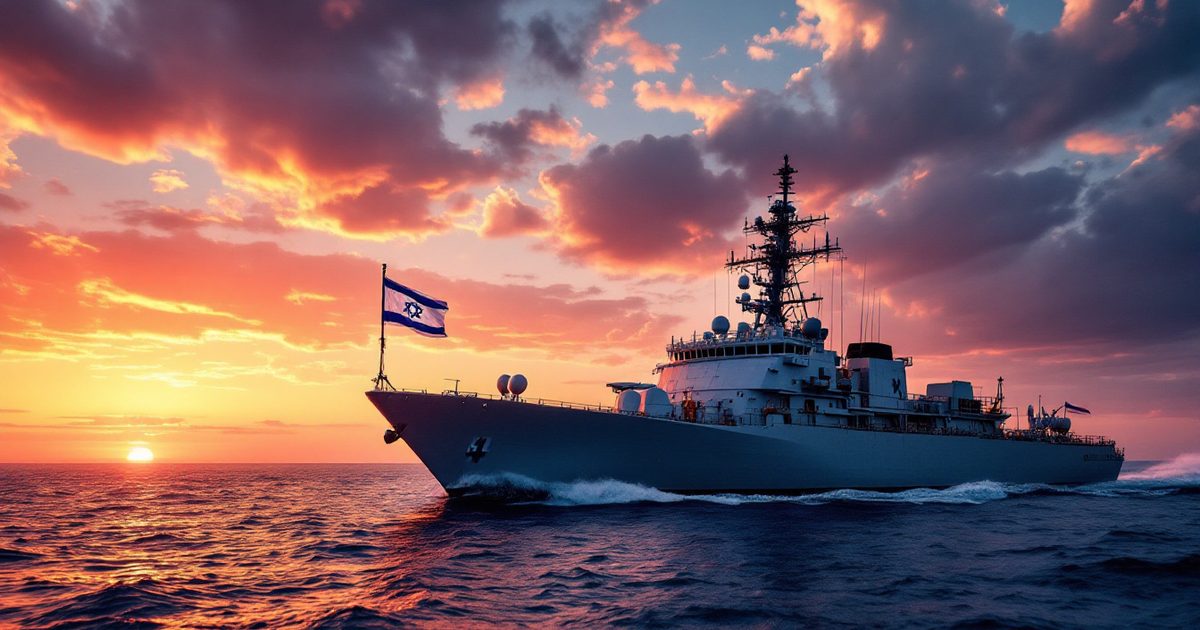
Beyond Juniper Cobra, the two militaries conduct a range of additional exercises. These include naval cooperation drills in the Mediterranean, air force training exchanges where Israeli and American pilots fly joint sorties, and special operations exercises that build tactical cohesion. The U.S. European Command (EUCOM) and U.S. Central Command (CENTCOM) both maintain channels for coordinating with the Israel Defense Forces, and the transfer of Israel from EUCOM’s area of responsibility to CENTCOM in 2021 further streamlined operational coordination.
These exercises do more than build warfighting skills. They serve as a strategic signal to adversaries across the region that the US Israel military alliance is not an abstraction on paper but an operational reality that can be activated rapidly.
Iron Dome: A Landmark in Co-Production
No discussion of the US Israel military alliance is complete without examining the Iron Dome missile defense system, which has become the most recognizable symbol of Israeli defensive capability and American co-investment. Originally developed by Israel’s Rafael Advanced Defense Systems, Iron Dome was designed to intercept short-range rockets and artillery shells, a mission driven by the persistent threat from Hamas in Gaza and Hezbollah in Lebanon.
The United States began funding Iron Dome production in 2011, and cumulative American investment in the system has exceeded $3 billion. In 2022, a co-production agreement with Raytheon (now RTX Corporation) established manufacturing lines in the United States for Iron Dome components, including the Tamir interceptor missiles. This arrangement serves dual purposes: it deepens the industrial partnership between the two countries and ensures supply chain resilience by diversifying production geography.
The system’s battlefield performance has been extraordinary. During multiple rounds of conflict, Iron Dome has achieved interception rates reported at approximately 90 percent against incoming threats targeting populated areas. This capability has saved countless civilian lives on both sides of the conflict by reducing the pressure on Israeli leadership to launch preemptive ground operations.
The co-production model pioneered with Iron Dome has influenced subsequent programs. Israel’s David’s Sling system, developed jointly with Raytheon, and the Arrow-3 exo-atmospheric interceptor, developed with Boeing, follow a similar pattern of shared development risk and shared industrial benefit. For a deeper look at how Iron Dome fits into Israel’s broader defense business and industrial ecosystem, the system represents a case study in how allied co-development can produce world-leading technology.
Intelligence Sharing and Strategic Coordination
The intelligence dimension of the US Israel military alliance operates largely out of public view but is widely regarded by defense analysts as one of the deepest bilateral intelligence relationships in the world. Israel’s signals intelligence agency, Unit 8200, and its human intelligence service, the Mossad, maintain extensive liaison relationships with their American counterparts at the NSA and CIA.
This cooperation covers a wide spectrum. In counterterrorism, Israeli intelligence has provided actionable information on threats to American personnel and interests in the Middle East and beyond. In the cyber domain, joint efforts have targeted adversary networks and critical infrastructure threats. The two countries also share satellite imagery, signals intercepts, and assessments of state-level threats, particularly from Iran and its network of proxy forces.
The intelligence relationship is reinforced by the institutional practice of regular strategic dialogues at multiple levels. Senior military and intelligence officials from both countries meet routinely to align threat assessments, coordinate contingency planning, and share lessons learned from ongoing operations. This fabric of continuous communication means that when crises erupt, the two governments are not starting from scratch but building on an existing foundation of shared understanding.
General Martin Dempsey’s Visit: A Case Study in Alliance Maintenance
The importance of personal relationships and senior-level engagement in the US Israel military alliance was illustrated vividly by the visits of General Martin Dempsey, who served as Chairman of the Joint Chiefs of Staff from 2011 to 2015. Dempsey visited Israel multiple times during his tenure, meeting with IDF Chiefs of Staff and senior defense officials to discuss operational coordination, missile defense, and the shared challenge posed by Iran’s nuclear program.
Dempsey’s visits occurred during a period of significant tension, both in the region and at times between Washington and Jerusalem over the Iran nuclear negotiations. Yet his presence underscored a critical dynamic: even when political leaders disagreed on diplomatic strategy, the military-to-military relationship continued to deepen. The professional bonds forged between American and Israeli officers at the senior level serve as ballast for the alliance, ensuring continuity regardless of which parties hold power in either capital.
Leaders like Dempsey, and their Israeli counterparts including figures such as Benny Gantz during his tenure as IDF Chief of Staff, built the personal trust networks that allow the alliance to function under pressure. This pattern of senior military engagement continues today with regular visits by current U.S. military leadership to Israel and reciprocal visits by IDF commanders to CENTCOM and Pentagon facilities.
The Current State of the Alliance
As of 2026, the US Israel military alliance continues to expand in scope and sophistication. Several developments define the current period:
Expanded missile defense cooperation. The United States and Israel are jointly developing next-generation interceptor technologies, including directed energy (laser-based) systems that promise to dramatically reduce the per-intercept cost of missile defense. The Iron Beam program, an Israeli-developed high-energy laser system, has attracted American interest and potential co-investment.
Integration under the Abraham Accords framework. The normalization agreements between Israel and several Arab states, beginning in 2020, have created new opportunities for multilateral security cooperation in which the United States plays a coordinating role. Joint exercises involving Israeli, Emirati, and Bahraini forces alongside American units represent an expansion of the security architecture that the US Israel military alliance anchors.
Deepening defense industrial ties. American and Israeli defense firms continue to pursue joint ventures across domains including unmanned systems, cyber defense, artificial intelligence for military applications, and satellite-based communications. These commercial partnerships complement the government-to-government relationship and create durable economic incentives for continued cooperation.
Broader force contributions. The IDF’s growing diversity of personnel, including the expanding roles of women serving across combat and technical branches, has further professionalized the force and widened the base of expertise available for joint operations and exchanges.
The alliance also benefits from strong bipartisan support in the U.S. Congress, where military assistance to Israel has historically commanded large majorities in both chambers. This legislative backing provides a degree of political durability that few other bilateral defense relationships enjoy.
Why the Alliance Matters
The US Israel military alliance is not a relic of Cold War geopolitics. It is an actively evolving partnership that addresses 21st-century threats including ballistic missile proliferation, state-sponsored terrorism, cyber warfare, and the destabilizing ambitions of Iran. For the United States, Israel provides a proven, capable, and interoperable ally in a region of enduring strategic importance. For Israel, American support provides the strategic depth and technological access that a small nation requires to maintain its qualitative military edge.
The billions invested in this partnership have yielded returns in the form of battle-tested defense technologies, shared intelligence that protects both nations’ citizens, and a strategic alignment that has contributed to broader regional stability, as evidenced by the Abraham Accords normalization process.
As defense challenges evolve, the US Israel military alliance is positioned to remain a cornerstone of both nations’ security strategies for decades to come.
Sources: U.S. Department of State - U.S. Security Cooperation with Israel; U.S. Department of Defense
How much military aid does the US provide to Israel annually?
Under the current ten-year Memorandum of Understanding signed in 2016, the United States provides approximately $3.8 billion per year in military assistance to Israel. This includes $3.3 billion in Foreign Military Financing and $500 million for cooperative missile defense programs such as Iron Dome, David’s Sling, and Arrow. The agreement runs through fiscal year 2028 and represents the largest bilateral military aid commitment in U.S. history.
What is the Juniper Cobra exercise?
Juniper Cobra is a major biennial joint military exercise between the United States and Israel focused on ballistic missile defense. Conducted since 2001, the exercise typically involves thousands of service members from both countries operating integrated air and missile defense systems. It tests interoperability between American systems like THAAD and Patriot and Israeli systems including Iron Dome, David’s Sling, and Arrow, ensuring both forces can coordinate a multi-layered defense shield during a real conflict.
How is the Iron Dome system connected to the US Israel military alliance?
Iron Dome is one of the most prominent examples of US-Israel defense cooperation. While originally developed by Israel’s Rafael Advanced Defense Systems, the United States has invested over $3 billion in Iron Dome production and funding. A co-production agreement with RTX Corporation (formerly Raytheon) established American manufacturing lines for Iron Dome components, including Tamir interceptor missiles. This arrangement strengthens both countries’ defense industrial bases and ensures supply chain resilience for one of the world’s most effective missile defense systems.