President Donald Trump on Sunday declared that Iran’s latest diplomatic overture was “not acceptable,” effectively torpedoing a 14-point peace proposal that Tehran had positioned as a comprehensive roadmap to ending the conflict within thirty days. The rejection, first reported by the Times of Israel, marks a pivotal moment in a war that has reshaped global energy markets, strained alliances across the Middle East, and brought two of the world’s most powerful militaries into direct confrontation.
Speaking to Israel’s Kan News, Trump made his position unambiguous. He stated that he had studied the proposal in its entirety and found it lacking on the issues that mattered most to Washington. The president’s dismissal came just hours after Al Jazeera published details of the Iranian plan, which envisioned a phased withdrawal from hostilities, a structured reopening of the Strait of Hormuz, and a fifteen-year moratorium on uranium enrichment activities above 3.6 percent. The nuclear component, however, would only enter negotiations after the fighting had stopped and the strait had been cleared, a sequencing that the White House viewed as a nonstarter.
The Roots of the Conflict
The current war traces its origins to February 28, 2026, when Israel and the United States launched coordinated airstrikes against Iranian military and government infrastructure. The strikes killed Iran’s supreme leader and a significant number of senior officials, decapitating Tehran’s command structure in a matter of hours. Iran responded with a barrage of missile and drone strikes and moved swiftly to close the Strait of Hormuz, the narrow waterway through which roughly twenty percent of the world’s oil supply transits on any given day.
Trump’s initial posture left little room for negotiation. On March 6, he declared on social media that there would be “no deal with Iran except unconditional surrender.” That hard line softened only marginally in the weeks that followed as economic pressure from the Hormuz closure began to ripple through global energy markets and allied capitals started pressing Washington for a diplomatic offramp.
Pakistan emerged as the primary mediator. On March 25, Pakistani officials delivered an American proposal to Tehran containing fifteen points that outlined a path toward a ceasefire, the reopening of the strait, nuclear constraints, and conditional sanctions relief. Iran found the terms unacceptable and began drafting its own counterproposal, setting the stage for the document that Trump ultimately rejected in early May.
What Iran’s 14-Point Plan Actually Proposed
The Iranian plan, delivered through Pakistani intermediaries, was built around three distinct phases designed to move from active conflict to permanent peace within a thirty-day window.
Phase one called for the establishment of a nonaggression pact between the United States, Iran, and Israel. Under this framework, the Strait of Hormuz would reopen gradually. The United States would lift its naval blockade of Iranian ports, and Iran would assume responsibility for clearing the sea mines it had planted in the waterway during the early days of the conflict. The cessation of hostilities would extend beyond Iran itself to include the fighting in Lebanon, where Israeli forces had been conducting operations against Hezbollah since the war’s opening hours.
Phase two addressed the nuclear question, but on Iran’s terms. Tehran proposed freezing uranium enrichment at 3.6 percent for fifteen years, after which it would resume enrichment activities as it saw fit. Crucially, Iran rejected any requirement to dismantle its existing nuclear infrastructure. In exchange for the enrichment freeze, Tehran demanded the complete lifting of all international sanctions and the release of billions of dollars in frozen Iranian assets held in banks across Asia and Europe.
Phase three envisioned a broader regional security architecture. Iran proposed entering “strategic dialogue” with neighboring Arab states to build a comprehensive Middle East security framework. The plan called for China and Russia to serve as guarantors and enforcement mechanisms for whatever agreement emerged, a provision that Washington viewed as an attempt to dilute American influence in the region.
Beyond these three phases, the proposal included demands for the withdrawal of American forces from the area surrounding Iran, the payment of war reparations, and the release of all frozen financial assets. Iranian Deputy Foreign Minister Kazem Gharibabadi framed the offer as a reasonable starting point, stating publicly that the ball was now in Washington’s court to choose between diplomacy and continued confrontation.
Why Washington Said No
The Trump administration’s rejection centered on several core objections. The most significant was the proposal’s treatment of the nuclear issue. Trump had repeatedly stated that Iran’s nuclear program represented the primary strategic threat, and any agreement that deferred that question to a later phase was, in the White House’s view, designed to extract concessions on the blockade and sanctions while leaving Tehran’s most dangerous capabilities intact.
Trump’s own public statements on the nuclear question left no ambiguity. He declared that there would be “no enrichment of uranium” and that the United States would work with Iran to “dig up and remove all of the deeply buried nuclear dust.” That maximalist position stood in stark contrast to Iran’s offer of a temporary freeze at low enrichment levels, creating a gap that no amount of phased negotiation seemed likely to bridge.
The Lebanon issue presented another fault line. Iran’s proposal bundled the cessation of Israeli operations in Lebanon into the first phase of the agreement, effectively making Hezbollah’s security a precondition for reopening the Strait of Hormuz. Israeli Prime Minister Benjamin Netanyahu had already stated publicly that the ceasefire “does not include Lebanon,” and the White House appeared unwilling to overrule its closest regional ally on that point.
The proposed role for China and Russia as agreement guarantors also raised alarms in Washington. American officials viewed the provision as an attempt to formalize the involvement of strategic competitors in a region where the United States has maintained military and diplomatic primacy for decades. Accepting such a framework would have represented a fundamental shift in Middle Eastern power dynamics, one that no American administration was likely to endorse willingly.
The Islamabad Talks and Their Aftermath
The rejection of the 14-point plan did not occur in a diplomatic vacuum. It followed weeks of intensive shuttle diplomacy centered on Pakistan’s capital, where some of the most dramatic moments of the crisis had already unfolded.
On April 7, Trump had announced a two-week ceasefire agreement between the United States and Iran, mediated by Pakistani officials. The announcement came with characteristic Trumpian urgency. He warned that “a whole civilization will die tonight, never to be brought back” if Iran did not agree by midnight GMT. Tehran, facing the prospect of renewed bombardment, accepted the temporary halt.
The ceasefire’s implementation, however, proved chaotic. Israel launched what it called “Operation Eternal Darkness” on April 8, conducting one hundred airstrikes on Lebanon in ten minutes and targeting Hezbollah infrastructure. The strikes underscored the disconnect between the bilateral US-Iran ceasefire and the broader regional conflict, particularly in Lebanon where Israeli military operations continued unabated.
The Strait of Hormuz remained effectively closed despite the ceasefire terms. Iran began charging transit fees exceeding one million dollars per vessel, and only four cargo ships crossed the waterway on the first day of the supposed reopening, compared to a daily average of nine during the active fighting phase. American navy destroyers entered the strait to begin mine-clearing operations, complicated by the fact that Iran had reportedly lost track of some of its own planted mines.
Vice President JD Vance, special envoy Steve Witkoff, and Jared Kushner traveled to Islamabad on April 11 for direct talks. After twenty-one hours of negotiations, Vance emerged to announce that no agreement had been reached. The failure of the Islamabad round led Trump to announce a full naval blockade of Iran on April 12, with enforcement beginning the following Monday.
The Blockade and Operation Epic Fury
The naval blockade escalated the economic pressure on Tehran dramatically. American warships established a perimeter around Iranian ports, interdicting commercial shipping and effectively cutting off the country’s ability to export oil or import critical goods. On April 19, Trump announced that the US had attacked the Iran-flagged cargo ship Touska, disabling its engine room after it attempted to breach the blockade.
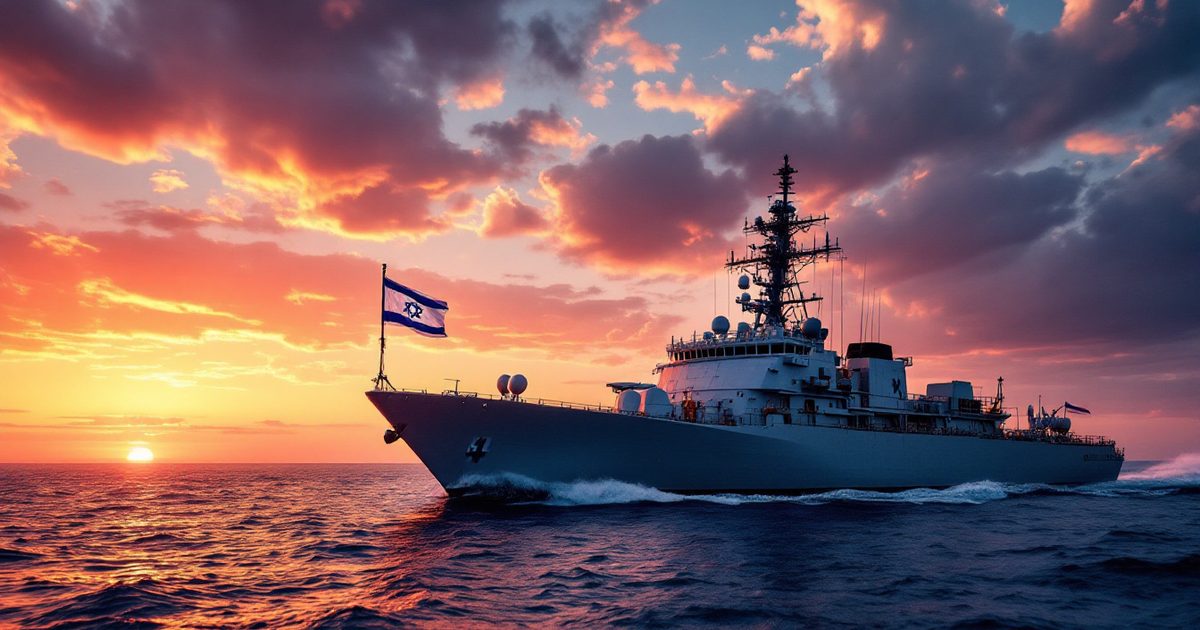
The blockade operation, which Trump dubbed “Epic Fury,” transformed the conflict from an air campaign into a sustained maritime confrontation. American carrier strike groups maintained continuous patrols in the Arabian Sea and the Gulf of Oman, while Iranian naval forces, including the Revolutionary Guard’s fast-attack boat fleet, probed for weaknesses in the cordon.
The military confrontation in the Strait of Hormuz produced competing claims and counter-claims from both sides. Tehran asserted at one point that it had struck an American warship, a claim that the Pentagon firmly denied. The incidents highlighted the risk of miscalculation in a confined waterway where the naval forces of two hostile powers operated in close proximity.
The closure of the strait and the imposition of the blockade sent shockwaves through global energy markets. The disruption to oil flows through the Hormuz chokepoint triggered price spikes, supply chain dislocations, and fuel crises in energy-dependent economies across Asia and Europe. The Philippines declared an energy emergency, and several European nations began drawing down strategic petroleum reserves.
The Nuclear Dimension
At the heart of the diplomatic impasse sits the question of Iran’s nuclear capabilities, a question that has defined US-Iran relations for more than two decades. Trump’s insistence on zero enrichment and the removal of all nuclear material represents the most aggressive American negotiating position since the issue first emerged as a major flashpoint.
Iran, for its part, has framed its nuclear activities as a sovereign right under the Nuclear Non-Proliferation Treaty. Tehran’s chief nuclear official rejected any limitations on enrichment, arguing that the country’s civilian nuclear program is both legal and necessary for energy independence. The 14-point proposal’s offer of a fifteen-year freeze at 3.6 percent represented what analysts described as a slight softening of Iran’s position, though it remained far from what Washington demanded.
Georgetown University scholar Paul Musgrave assessed that Iran had “slightly softened” its stance, but cautioned that substantial differences remained on the specifics of uranium enrichment. Kenneth Katzman, a veteran Iran analyst, suggested the nuclear gap “can be narrowed,” though he acknowledged that Trump’s insistence on total nuclear surrender made compromise extraordinarily difficult.
The nuclear question also carries implications that extend well beyond the bilateral US-Iran relationship. Israel views an Iranian nuclear capability as an existential threat and has made clear that it will not accept any agreement that leaves Tehran with a pathway to weapons-grade enrichment. Saudi Arabia and other Gulf states have signaled that they would pursue their own nuclear programs if Iran retains enrichment capacity, raising the specter of a regional proliferation cascade.
What Comes Next
Trump’s rejection of the 14-point plan leaves the conflict in a precarious state. The president suspended a US military effort to help merchant vessels transit the Strait of Hormuz but kept the naval blockade on Iranian ports firmly in place. His subsequent public statement carried both an offer and a threat: if Iran agrees to American terms, “the already legendary Epic Fury will be at an end, and the highly effective blockade will allow the Hormuz Strait to be open to all, including Iran.” If not, he warned, “the bombing starts, and it will be, sadly, at a much higher level and intensity than it was before.”
Iranian Foreign Ministry spokesperson Esmaeil Baqaei indicated that Tehran was still reviewing the latest American counterproposal and would present its response to mediators in Pakistan. The statement suggested that despite Trump’s public rejection, diplomatic channels remained open, even if the distance between the two sides appeared vast.
The intelligence community has also raised questions about the broader motivations driving the administration’s approach to Iran, with some analysts suggesting that domestic political considerations may be shaping the president’s willingness to accept or reject specific proposals.
Meanwhile, central banks around the world face difficult choices about whether to raise interest rates to combat the inflationary pressure from the oil shock or hold steady to avoid tipping already weakened economies into recession. The economic fallout from the conflict has become a global concern, extending far beyond the military dimensions of the US-Iran confrontation.
International reactions have reflected the complexity of the situation. French President Emmanuel Macron expressed concern about the Lebanon dimension, calling the ongoing Israeli operations there “not a long-term solution.” British Prime Minister Keir Starmer said a ceasefire would “bring a moment of relief to the region.” Russia welcomed the prospect of peace, while India called for unimpeded trade flow through the Strait of Hormuz.
The coming days will likely determine whether the war escalates further or whether the diplomatic framework, battered but not yet broken, can produce terms that both sides find acceptable. With the American naval blockade tightening, Iranian oil exports dwindling, and the global economy absorbing the shock of sustained energy disruption, the pressure on both Washington and Tehran to find common ground continues to mount, even as the political incentives pulling them apart remain powerful.
What was Iran's 14-point peace proposal?
Iran’s proposal, delivered through Pakistani mediators, outlined a three-phase plan to end the war within thirty days. Phase one called for a nonaggression pact and the gradual reopening of the Strait of Hormuz. Phase two offered a fifteen-year freeze on uranium enrichment at 3.6 percent. Phase three envisioned a regional security framework with China and Russia as guarantors. The plan also demanded sanctions relief, withdrawal of US forces, and war reparations.
Why did Trump reject the Iran peace plan?
Trump found the proposal unacceptable primarily because it deferred the nuclear issue to a later negotiation phase, leaving Iran’s enrichment capabilities intact during the initial ceasefire period. The president has demanded zero uranium enrichment and complete removal of nuclear material. The inclusion of Lebanon in the ceasefire terms and the proposed role for China and Russia as guarantors also conflicted with American and Israeli strategic priorities.
What is the current status of the Strait of Hormuz?
The Strait of Hormuz remains effectively closed to normal commercial shipping. Iran blocked the waterway early in the conflict, and despite ceasefire agreements, transit has not returned to pre-war levels. The United States maintains a naval blockade of Iranian ports, and mine-clearing operations in the strait have been complicated by the difficulty of locating all explosive devices planted during hostilities.
What role has Pakistan played in the negotiations?
Pakistan has served as the primary mediator between the United States and Iran throughout the conflict. Pakistani officials delivered proposals between the two sides, hosted high-level talks in Islamabad attended by Vice President JD Vance and special envoy Steve Witkoff, and provided security arrangements for diplomatic delegations. Despite these efforts, the Islamabad talks concluded after twenty-one hours without an agreement.
How has the conflict affected global oil markets?
The closure of the Strait of Hormuz and the US naval blockade of Iranian ports have severely disrupted global energy supply chains. Roughly twenty percent of the world’s oil supply normally transits the strait. The disruption has triggered price spikes, prompted several countries to draw down strategic petroleum reserves, and contributed to an energy emergency in nations like the Philippines that depend heavily on imported fuel.
What is Operation Epic Fury?
Operation Epic Fury is the name given to the US naval blockade and maritime campaign against Iran. The operation involves carrier strike groups patrolling the Arabian Sea and Gulf of Oman, interdicting commercial shipping bound for Iranian ports, and conducting mine-clearing operations in the Strait of Hormuz. The operation escalated on April 19 when US forces disabled the Iranian cargo ship Touska after it attempted to breach the blockade.