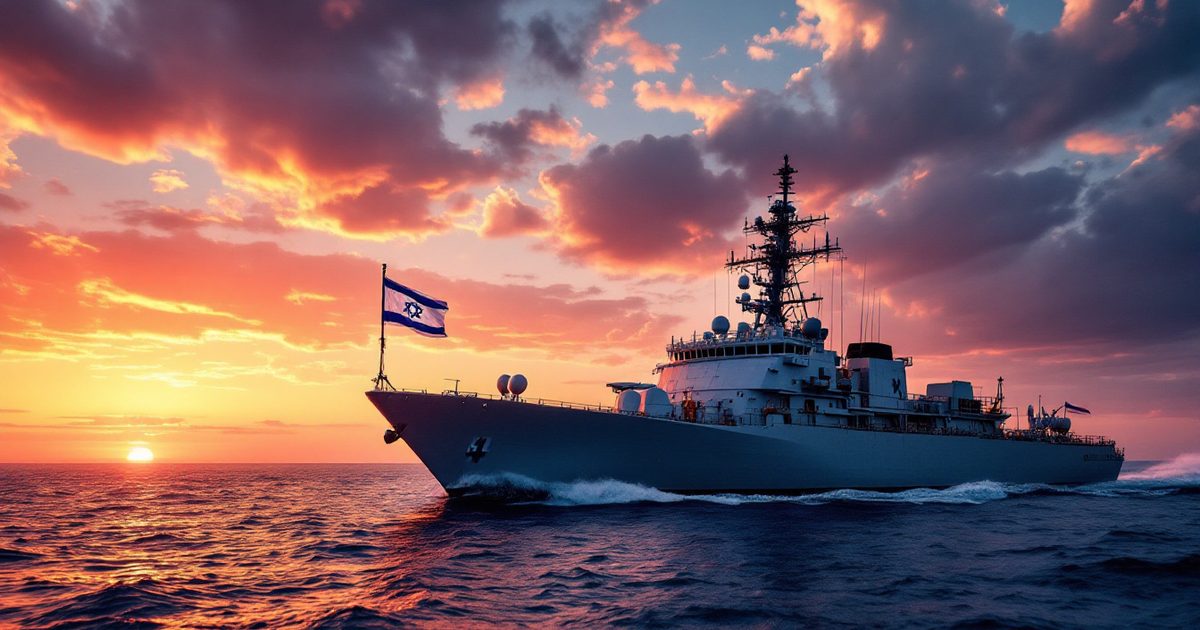
The Pentagon on May 4 rejected Tehran’s assertion that Iranian forces had struck and damaged an American warship operating in the Strait of Hormuz, labeling the claim unfounded propaganda designed to project domestic strength during a punishing military standoff. The denial arrived on the same day the U.S. Navy launched Operation Project Freedom, a convoy-escort mission intended to guide commercial vessels safely out of the Persian Gulf for the first time since Iran sealed the waterway in early March. As CNBC first reported, the dueling narratives underscore the volatile information war now running alongside live military operations in one of the most strategically important shipping lanes on Earth.
Iranian state television broadcast footage it said showed a U.S. destroyer sustaining damage from an anti-ship missile fired by the Islamic Revolutionary Guard Corps Navy. Within hours, the U.S. Central Command issued a terse statement confirming that all American vessels in the region were fully operational and had sustained no damage whatsoever. Defense officials speaking on background called the Iranian broadcast a carefully edited piece of staged footage that bore no resemblance to any engagement recorded by the U.S. fleet’s sensor arrays.
Why the Strait of Hormuz Matters to Global Markets
The confrontation is unfolding across a body of water that functions as the cardiovascular system of the global energy economy. The Strait of Hormuz is a narrow passage connecting the Persian Gulf to the Gulf of Oman, stretching roughly 104 miles in length with a navigable width that shrinks to just 21 nautical miles at its tightest point. Iran borders the waterway’s northern coast, while Oman’s Musandam Peninsula anchors the southern shore.
Before the 2026 oil crisis erupted, approximately 21 million barrels of oil transited the strait every single day, representing roughly one-quarter of all seaborne crude oil trade worldwide. The U.S. Energy Information Administration has long classified the chokepoint as the single most consequential bottleneck in global petroleum logistics. Roughly one-fifth of the world’s liquefied natural gas trade also passes through the corridor, making any disruption a dual threat to both oil and gas supply chains simultaneously.
The closure has already triggered what analysts describe as the most severe supply disruption since the 1970s energy crisis. Asian economies have been hit hardest, given that China, India, Japan, and South Korea collectively account for roughly 67 percent of crude oil shipments that normally flow through the strait. The cascading price shocks are now filtering into transportation costs, manufacturing inputs, and consumer prices across dozens of countries that depend on Gulf-sourced hydrocarbons.
Timeline: How the Conflict Reached This Point
The roots of the current naval standoff trace back to February 28, 2026, when the United States and Israel launched a coordinated wave of surprise airstrikes against Iranian military and government targets. The strikes occurred during a period of ongoing nuclear negotiations, catching much of the international community off guard. Iranian Supreme Leader Ali Khamenei was killed in the initial bombardment, along with other senior officials including Ali Larijani, creating a vacuum of authority in Tehran that complicated subsequent diplomatic efforts.
Iran’s immediate response was sweeping. Tehran closed the Strait of Hormuz and launched hundreds of drones and ballistic missiles targeting Israel, U.S. military installations in the region, and several Arab states including Bahrain, Jordan, Kuwait, Oman, Qatar, Saudi Arabia, and the United Arab Emirates. The multi-front retaliation transformed what some in Washington had framed as a limited preemptive operation into a sprawling regional conflict.
By mid-March, the economic toll was already staggering. U.S. military spending on the operation reached an estimated 18 billion dollars, and the Pentagon subsequently requested an additional 200 billion dollars in supplemental funding. Arab nations across the Gulf reported collective damages exceeding 120 billion dollars by the end of March. Central banks began weighing the risk of rate increases to manage inflation driven by energy price spikes, even as recession fears mounted.
A two-week ceasefire brokered by Pakistan took effect on April 8, offering a fragile pause in hostilities. However, the truce was strained almost immediately by disputes over Hormuz access and subsequent Israeli military activity in Lebanon. When the ceasefire window closed, diplomatic momentum had evaporated. President Trump announced on April 13 that he had lost interest in further negotiation and declared a full naval blockade of Iran.
The Dual Blockade and Operation Project Freedom
The current strategic picture in the Persian Gulf amounts to an unprecedented dual blockade. The U.S. Navy is maintaining a cordon around Iranian maritime activity, while Iran continues to enforce its own closure of the strait using a combination of naval mines, fast-attack craft, and shore-based anti-ship missile batteries. Intelligence assessments have long noted that Iran possesses more than 5,000 naval mines capable of rapid deployment, and Tehran reportedly placed approximately a dozen mines in the shipping lanes during March 2026.
Operation Project Freedom, announced on May 4, represented the first American attempt to physically reopen the waterway to commercial traffic since the closure began. The escort mission aimed to shepherd a convoy of tankers and cargo vessels through the mined and contested waters under direct U.S. Navy protection. The operation’s launch coincided precisely with Iran’s warship-strike claim, a timing that defense analysts viewed as deliberate.
The Iranian claim appeared designed to undermine confidence in the escort mission before it could demonstrate American naval superiority in the strait. By suggesting that a U.S. warship had already been damaged, Tehran was signaling to commercial shipping companies that American protection offered no guarantee of safe passage. The psychological dimension of the claim was arguably more important than any military reality, because insurers and ship operators make routing decisions based on perceived risk rather than confirmed threat data.
Trump paused Operation Project Freedom just two days later on May 6, citing what he described as great progress toward a possible agreement. On that same day, however, the U.S. Navy disabled an Iranian-flagged oil tanker that had allegedly attempted to breach the American blockade, adding another layer of escalation to an already volatile situation.
The Information War Behind the Military Standoff
The warship-strike claim fits into a broader pattern of competing narratives that has defined the conflict since its opening hours. The Trump administration has cycled through multiple justifications for the February 28 strikes, citing preemption of an imminent Iranian retaliatory attack, destruction of missile capabilities, prevention of nuclear weapons development, resource seizure, and regime change at various points. The International Atomic Energy Agency found no evidence of an active Iranian nuclear weapons program, complicating the administration’s stated rationale.
Iran, for its part, has waged an aggressive propaganda campaign aimed at both domestic and international audiences. State media has emphasized Iranian resilience and military capability while downplaying the severe losses Tehran has sustained. Military casualty estimates on the Iranian side range from 3,468 to more than 6,000 personnel killed, with approximately 26,500 wounded according to Iranian sources. The U.S. has reported 15 service members killed and 538 wounded since the conflict began.
The naval domain has become a particularly active theater for information warfare. The seizure of the Iranian cargo ship Touska on April 20 sparked competing characterizations, with Washington calling it a lawful interdiction and Tehran denouncing it as a ceasefire violation. Each incident generates a fresh cycle of claims and counterclaims that shape global perceptions of which side holds the upper hand.
Economic Ripple Effects Across Global Markets
The sustained closure of the Strait of Hormuz has sent shockwaves far beyond the military theater. Oil markets have experienced extreme volatility, with prices surging well above pre-conflict levels. The disruption affects not just crude oil but also refined petroleum products, liquefied natural gas, and petrochemical feedstocks that underpin manufacturing supply chains worldwide.
Saudi Arabia and the United Arab Emirates operate the only existing pipeline infrastructure capable of bypassing the strait, with roughly 3.5 million barrels per day of unused circumvention capacity available. However, this alternative throughput covers only a fraction of the 21 million barrels that normally transit the waterway each day. The arithmetic is simple and brutal: no combination of alternative routes can replace the volume that the Strait of Hormuz handles under normal conditions.
European nations have scrambled to secure alternative supply arrangements, accelerating negotiations with non-Gulf producers in West Africa, Latin America, and the U.S. shale sector. Asian economies face even steeper challenges given their heavier dependence on Gulf crude. Japan and South Korea, both of which import the vast majority of their oil through the strait, have been forced to draw down strategic reserves at an unsustainable pace.
The defense technology sector has paradoxically benefited from the crisis. Companies producing missile defense systems, naval countermeasures, and surveillance platforms have seen surging demand. Israel’s Iron Dome missile defense system, initially developed to intercept short-range rockets, has received renewed global attention as nations reassess their air and missile defense postures in light of Iran’s demonstrated ability to launch mass salvos of drones and ballistic missiles simultaneously.
What Comes Next: Diplomacy or Escalation
The failed warship claim and the quick suspension of Operation Project Freedom leave the conflict in an unstable equilibrium. Neither side appears willing to concede ground, yet the costs of sustained confrontation are mounting rapidly for all parties involved. Reports suggest that Trump considered and rejected a plan that aimed to end the war within a month by deferring the nuclear question entirely, opting instead for maximum pressure.
The Islamabad Talks, mediated by Pakistan, have collapsed without agreement. European and Asian powers have urged a return to diplomacy, but the political dynamics in both Washington and Tehran currently favor hawkish postures. The U.S. blockade remains in force, Iran’s strait closure continues, and commercial shipping through the Persian Gulf remains at a near standstill.
Military analysts caution that the dual-blockade arrangement is inherently unstable. Minor incidents, whether accidental collisions, miscommunicated signals, or deliberate provocations like the fabricated warship-strike claim, carry the potential to trigger uncontrolled escalation. The concentration of naval firepower in such a confined waterway creates conditions where a single miscalculation could produce consequences far beyond what either government intends.
The coming weeks will likely determine whether the conflict settles into a grinding stalemate or spirals toward a more dangerous phase. For global energy markets, the outcome hinges on one question above all others: when, if ever, the Strait of Hormuz will reopen to normal commercial traffic.
Related Articles
Frequently Asked Questions
What exactly did Iran claim about striking a U.S. warship?
Iranian state television broadcast footage on May 4, 2026, that it said showed an American destroyer sustaining damage from an anti-ship missile launched by the Islamic Revolutionary Guard Corps Navy. U.S. Central Command denied the claim categorically, stating that all American vessels in the theater were fully operational and had sustained no damage. Pentagon officials characterized the footage as staged propaganda designed to undermine confidence in the newly launched Operation Project Freedom escort mission.
How much oil normally flows through the Strait of Hormuz?
Under normal conditions, approximately 21 million barrels of oil per day transit the Strait of Hormuz, accounting for roughly 25 percent of all seaborne crude oil trade globally. The waterway also carries about one-fifth of the world’s liquefied natural gas shipments. The closure that began in March 2026 has created the largest supply disruption since the 1970s energy crisis, with no combination of alternative pipeline routes capable of replacing the lost volume.
What is Operation Project Freedom?
Operation Project Freedom is a U.S. Navy convoy-escort mission launched on May 4, 2026, designed to guide commercial vessels safely out of the Persian Gulf through the contested Strait of Hormuz. The operation represented the first American attempt to physically reopen the waterway since Iran sealed it in early March. President Trump suspended the mission two days after its launch, citing progress toward a potential diplomatic agreement, though no deal materialized.
Why did the U.S. and Iran go to war in 2026?
The conflict began on February 28, 2026, when the United States and Israel launched coordinated surprise airstrikes on Iranian military and government targets during ongoing nuclear negotiations. The Trump administration offered shifting justifications including preempting an imminent Iranian attack, destroying missile capabilities, and preventing nuclear weapons development. The International Atomic Energy Agency found no evidence of an active nuclear weapons program at the time. Iran responded by closing the Strait of Hormuz and launching mass missile and drone strikes across the region.
Can oil bypass the Strait of Hormuz through alternative routes?
Only partially. Saudi Arabia and the United Arab Emirates operate the only pipeline systems capable of circumventing the strait, with approximately 3.5 million barrels per day of unused bypass capacity. However, this covers a small fraction of the 21 million barrels that normally flow through the waterway daily. No realistic combination of alternative routes can fully replace the lost throughput, which is why the closure has produced such severe price and supply disruptions worldwide.
What is the current military situation in the Strait of Hormuz?
As of early May 2026, the strait is subject to a dual blockade. The U.S. Navy maintains a cordon restricting Iranian maritime activity, while Iran enforces its own closure of the waterway using naval mines, fast-attack boats, and shore-based anti-ship missile systems. Iran is estimated to possess over 5,000 naval mines and deployed approximately a dozen in the shipping lanes during March 2026. Commercial shipping through the Persian Gulf remains largely at a standstill, with massive implications for global energy supply and pricing.