Israel’s top political and military leadership delivered a coordinated message on Wednesday night: if Iran strikes force a response, the IDF is ready to launch a third air campaign against the Islamic Republic. This one would hit harder than anything that came before. Defense Minister Israel Katz told a graduating class of Israeli Air Force pilots that the military stands “alert and prepared for the resumption of the campaign,” according to The Times of Israel.
“If we need to return, we will return with even greater force,” Katz vowed at the Hatzerim Airbase ceremony, remarks first reported in the outlet’s live coverage. The warning landed at a combustible moment. The United States has carried out two consecutive nights of strikes on Iranian targets. Iran has hit three commercial ships in the Strait of Hormuz within 24 hours. And Tehran fired 10 missiles, intercepted over Jordan, after American strikes were reported near the Bushehr nuclear plant. Israel, for now, remains outside the renewed fighting.
Why Iran Strikes Could Resume Within Days
Escalation math is moving quickly. A US official told Israel’s Channel 12 that the current round of American operations could last anywhere from a couple of days to a month. The length depends on whether Iran keeps attacking commercial vessels in the Strait of Hormuz. Roughly 20% of the world’s oil, some 20 million barrels every day, passes through that narrow waterway, along with about 20% of globally traded liquefied natural gas, according to US Energy Information Administration chokepoint data. Every tanker hit sends a tremor through global energy markets. War-risk insurance premiums for Hormuz transits, normally a small fraction of a ship’s hull value, can spike toward 1% or more within days of an attack.
Washington is also weighing a step it has taken once before in this conflict: reimposing a naval blockade on Iranian ports. The US first imposed a blockade after Iran blocked the Strait of Hormuz following the launch of the war. President Donald Trump has publicly floated bringing it back, and while no decision has been made, Channel 12 reported that many officials around the president believe it would be the right course of action.
Three tripwires could turn warnings into renewed Iran strikes within days:
- Another attack on commercial shipping in the Strait of Hormuz, which would extend the American campaign and strengthen the case for a blockade
- An Iranian missile salvo that penetrates air defenses over Jordan, Israel, or US bases in the Gulf
- A direct hit on Israeli territory or assets, which would trigger the independent response Katz described
For Israel, renewed Iran strikes would mark a third round. Katz made that math explicit, telling the new pilots the IDF was prepared to “regain air superiority and carry out ‘blue and white’ [independent Israeli] strikes in Iran to remove threats, even for a third time.” The phrase carried an unmistakable signal about the previous campaigns. In both, Israeli aircraft operated deep inside Iranian territory alongside an unprecedented American defensive effort that included more than 200 THAAD interceptors fired in defense of Israel. At an estimated $12 million to $15 million per interceptor, that single defensive effort represents more than $2.5 billion in American munitions spent shielding Israeli skies.
What Did Israel’s Leaders Promise at Hatzerim?
Prime Minister Benjamin Netanyahu, Katz, and IDF Chief of Staff Lt. Gen. Eyal Zamir all spoke at the pilots’ graduation, and all three struck the same chord. Israel does not seek a wider war. But it will not be caught unready.
“The war is not over,” Netanyahu said. “Alongside old challenges, new ones continue to emerge. Old axes collapse, and new ones arise. We are preparing for every scenario. We know one thing: we must always remain stronger than our enemies.”
On Tehran’s nuclear program, the prime minister repeated his core red line: “with or without an agreement, Iran will not possess nuclear weapons.” He also credited the American military as “a tremendous force multiplier” for Israel, a nod to a US-Israel military alliance that has carried much of the defensive burden through the war. The same alliance channels $3.8 billion in annual security assistance to Israel under the current memorandum of understanding.
President Isaac Herzog captured the strange weight of the moment. The graduating aviators, he noted, were the first cohort to begin and complete the years-long pilot course during a single war.
‘Blue and White’: An Independent Israeli Campaign
Katz’s choice of words deserves attention. “Blue and white” is Israeli shorthand for homegrown and independent. The defense minister used it to describe strikes Israel could carry out in Iran without waiting for American participation. That is a statement of capability as much as intent. Israeli planners spent two campaigns mapping Iranian air defenses, missile sites, and command nodes. The IDF believes it can reopen those corridors on its own timetable.
Zamir, the IDF chief, reinforced the point in unusually blunt terms. The war against Iran, he said, was “not over.”
“On the drawing board are new plans,” Zamir told the graduates. “Major operations are still expected to lie ahead of us. Be prepared.”
He kept his delivered remarks short after the evening’s lengthy speeches, and even found room for a joke, telling the pilots that captivity training had prepared them for the marathon ceremony. His prepared text, which he ultimately set aside, contained the night’s most concrete detail.
Hundreds of Warplanes Ready for Immediate Takeoff
According to the prepared speech reviewed by The Times of Israel, Zamir intended to reveal that hundreds of Israeli Air Force planes have been on standby for immediate takeoff in recent weeks. “Even at this moment, we are closely monitoring developments in Iran and Lebanon and remain on high alert for immediate action,” the text read.
That posture is expensive, exhausting, and deliberate. Keeping squadrons fueled, armed, and crewed around the clock signals to Tehran that any miscalculation invites an immediate response. It also reflects lessons from earlier rounds of fighting, when speed of response determined how many Iranian missiles and drones made it into Israeli airspace. American forces have told a similar story of endurance, with the USS Gerald R. Ford logging a record 326 days deployed for the Iran war.
How Did the US-Iran Ceasefire Collapse?
Behind the renewed violence sits the effective death of the memorandum of understanding that had frozen US-Iran hostilities. Speaking on the sidelines of the NATO summit in Ankara on Tuesday, July 8, Trump said the MOU was likely over, even as he left the door open to continued talks with Tehran.
Its collapse came during a week of extraordinary upheaval inside Iran. Supreme Leader Ayatollah Ali Khamenei is dead. Funeral processions ran from July 6 to July 9, moving through Tehran, Qom, and the Shiite shrine cities of Najaf and Karbala in Iraq before burial in Mashhad. Crowds along the route chanted for revenge. Whoever consolidates power next will inherit a battered military, a blockaded economy, and a decision about whether to keep attacking shipping in the Strait of Hormuz.
Doha has already blamed Iran for striking a Qatari tanker, the third vessel hit in the waterway within 24 hours. Each attack strengthens the case in Washington for a firmer response, and each American strike raises the odds that Iran widens its target list.
Will Washington Let Israel Back Into the Fight?
Here is the tension inside the alliance. Israel’s political and military leadership has signaled a clear appetite for finishing the job. Yet US officials cited by Channel 12 said Washington currently has little desire for Jerusalem to enter the fighting. The Americans believe they can reestablish deterrence themselves. One US official put the objective in unvarnished terms, saying the strikes were meant to make Tehran understand that Washington is not playing games.
Even so, the IDF and US Central Command are coordinating closely on the threat picture. That coordination matters because Israel’s readiness to act independently, the “blue and white” option, gives Jerusalem leverage even while it holds fire. If Iran strikes Israeli territory directly, that restraint ends. Iran must plan for two air forces, not one, and history suggests underestimating the Israeli one is a costly mistake.
Are Nevatim and Ramon in Iran’s Crosshairs?
Channel 12 also reported that Israel is preparing for the possibility that Iran expands its target list to include Israeli air bases from which American aircraft have operated. The report named Nevatim and Ramon in the Negev. Both bases were struck by Iranian ballistic missiles in earlier rounds of the war. Both kept flying, a fact Israeli officials cite as proof of the air force’s resilience.
None of this is hypothetical. Iran’s missile forces have shown they will retaliate against third parties, as the intercepted salvo over Jordan demonstrated this week. Israeli air defense crews, backed by American systems, remain at their highest readiness state.
The Lebanon Front: Pilot Zones and Rome Talks
Iran is not the only file on Israel’s desk. Lebanon is demanding that Israel fulfill its pledge to withdraw from two pilot zones in southern Lebanon and hand them to the Lebanese military before the next round of direct talks, scheduled for next week in Rome. A US official said IDF troops are expected to leave the pilot zones within days, though Israel would retain its buffer zone along the frontier.
Netanyahu drew that line firmly at Hatzerim. “We will remain in the security zone in southern Lebanon for as long as necessary to guarantee the security of our communities in the north,” he said. The message aimed at two audiences at once: Beirut, ahead of the Rome talks, and residents of the Galilee, who returned home on the strength of that security guarantee.
Air Superiority and the F-35 Question
Netanyahu closed with doctrine. “Preserving Israel’s air superiority is a cornerstone of our national security doctrine. It is equally essential for maintaining stability in the turbulent Middle East,” he said. “We achieve this by continually improving both our people and our technology.”
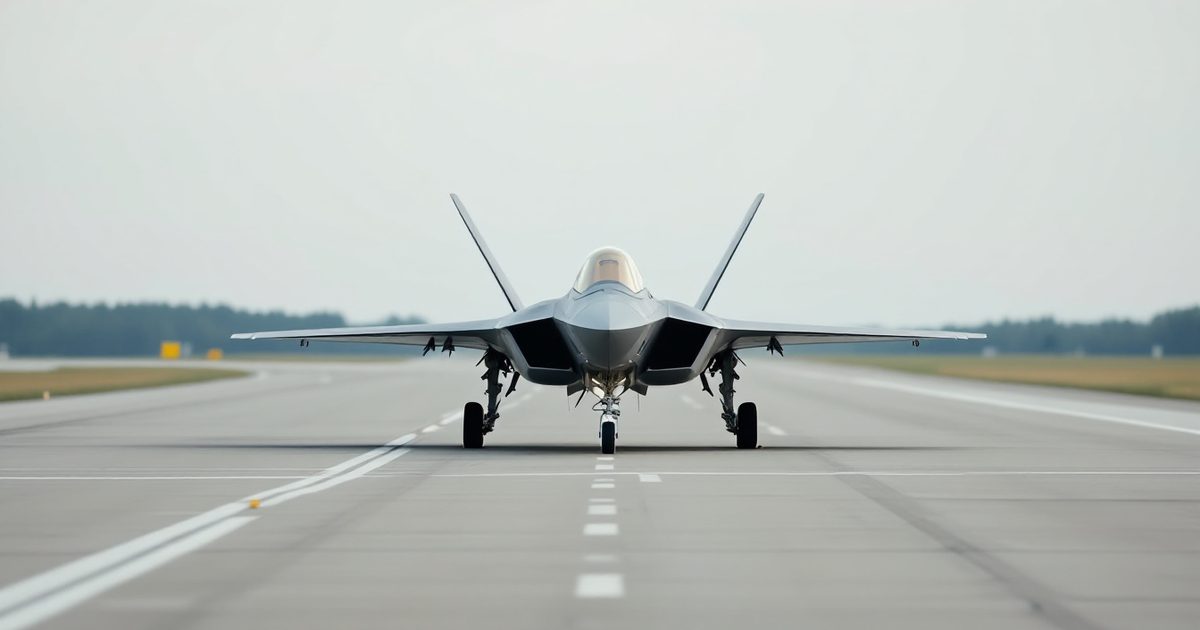
His words doubled as an argument against Trump’s announced intention to sell F-35 fighter jets to Turkey, a NATO member and one of Israel’s sharpest critics. Israel has been the only Middle Eastern operator of the stealth jet, which runs roughly $110 million per airframe once Israeli modifications are added, and that exclusivity underwrote its freedom of action over Iran in both previous campaigns. Jerusalem has lobbied against the Turkish sale all week, and the long history of US-Israel defense cooperation suggests those arguments will get a serious hearing in Washington.
Wednesday night’s new pilots will inherit whatever comes next. Their commanders have told them, in public and on the record, to expect major operations ahead.