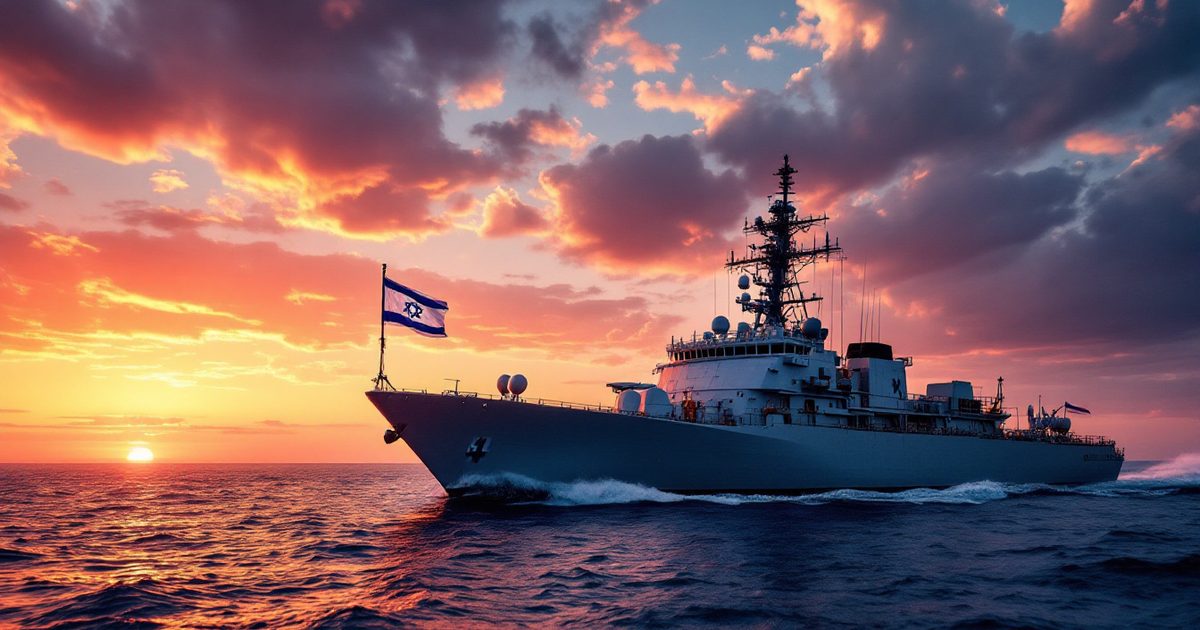
The USS Gerald R. Ford, the largest and most advanced aircraft carrier ever built, slid up to Pier 11 at Naval Station Norfolk on Saturday morning, ending an 11-month deployment that has already entered the modern history books. Roughly 5,000 sailors stepped onto Virginia pavement for the first time since June, greeted by spouses, children, and a Defense Secretary who had flown in specifically to put the moment in context. The Ford had been gone for 326 days, the longest stretch at sea for any U.S. aircraft carrier in 50 years, and the most demanding for a ship of its class in the post-Vietnam era. According to a detailed account from the Associated Press via The Times of Israel, the deployment spanned three theaters, two combat operations, and the most consequential demonstration of American naval power against the Islamic Republic of Iran in a generation.
Defense Secretary Pete Hegseth was on the destroyer USS Bainbridge’s deck as the strike group came in. He spoke briefly, and he chose his words with the gravity the deployment warranted. “You didn’t just accomplish a mission, you made history,” he told the crew. “You made a nation proud.” The Ford and her two accompanying destroyers, the Bainbridge and the USS Mahan, were awarded the Presidential Unit Citation, the highest commendation a U.S. military unit can receive, given for “outstanding performance in action” against what the citation language called “a determined enemy.” Citations of that weight are rare. They are not handed out for routine forward presence. They are issued when a unit changes the course of a campaign.
A Deployment That Spanned Three Theaters
The Ford’s track sheet over the last 11 months reads like a strategic atlas of where American power was needed and how quickly it had to relocate. The carrier left Norfolk in June 2025 heading for the Mediterranean Sea, which at the time was the obvious flashpoint. Tensions between Israel and Hezbollah were elevated. Iran’s proxy network was active across Lebanon, Syria, and Yemen. The Eastern Mediterranean was the right address for the most capable deterrent platform in the U.S. inventory. The Ford settled into its presence mission, projecting power within strike range of Iranian and Iran-aligned targets across the Levant.
By October, the calculus shifted. The carrier was redirected to the Caribbean as part of what became the largest U.S. naval buildup in the region in generations, an operation built around removing Nicolas Maduro from power in Venezuela. The Ford’s air wing and escort screen gave the operation the conventional reach it needed. In January 2026, when American forces captured Maduro, the Ford was on station. The strategic message was unmistakable: the world’s most capable conventional platform could pivot from Levantine deterrence to a hemispheric regime-change operation in a matter of weeks, and the United States was willing to use it.
Then the calculus shifted again. Tensions with Iran, which had been simmering, escalated into open conflict. The Ford turned east. By the opening days of the Iran war, the carrier was back in the Mediterranean and contributing to the kinetic phase of the campaign. In early March, the strike group transited the Suez Canal into the Red Sea, positioning to support continuing operations against Iranian assets and Iran-aligned forces in the Bab el-Mandeb corridor and beyond. The Ford was, at various points, the single most important capital ship in two simultaneous American military priorities.
For Israel, the Ford’s posture was the embodiment of the U.S. security guarantee. The Israel Defense Forces have been operating against Iranian targets across multiple fronts since the start of the war, and the public reporting on the IDF’s expansive Iran target list made clear that Israel was prepared to take the lead. But the presence of a U.S. carrier strike group across the Med and the Red Sea did the strategic heavy lifting that only American conventional power can provide. It complicated Iranian planning. It deterred horizontal escalation by Iran’s proxies. It gave Israel the operational top cover to execute its own campaign without worrying about a third front opening from the sea.
What the Ford’s Air Wing Brings to the Iran Theater
The Ford-class carrier is not the Nimitz-class with an upgrade. It is a generational leap. The ship displaces more than 100,000 tons fully loaded, carries roughly 75 aircraft, and uses the Electromagnetic Aircraft Launch System (EMALS) rather than steam catapults, which allows it to generate sortie rates well above the previous standard. Two A1B nuclear reactors give it essentially unlimited range. The Advanced Arresting Gear lets it recover heavier aircraft with less wear. Three decades of carrier evolution were folded into one hull.
In an Iran scenario, that translates into something concrete. The Ford can sustain combat air patrols across an enormous arc of the eastern Mediterranean and Red Sea. Her F/A-18 Super Hornets and E-2D Hawkeyes can pressure Iranian air defenses, escort strike packages, hold surface action groups at risk, and feed targeting data to Allied forces, including the IDF, with a tempo no land base in theater can match. The escort destroyers, including the Bainbridge and Mahan, carry the Aegis combat system, SM-3 and SM-6 interceptors, and Tomahawks. Together the strike group is a self-contained joint force in a constrained body of water, which is exactly the environment in which Iran tries to operate.
That capability is also the reason the Iranian regime has spent the last decade investing in anti-ship ballistic missiles, swarming attack boats, and naval mines designed for the Strait of Hormuz. The Tehran playbook assumes that if the Iranians can hold an American carrier at risk, they can deter American intervention. Earlier in May, Iran claimed it had struck an American warship in the Strait of Hormuz, a claim the Pentagon called fabricated propaganda. The Ford’s return home as a celebrated combat unit, escorted in by Hegseth himself, is the visible counterpoint to that propaganda. The carrier deployed, fought, and came home. The Iranian deterrence story did not survive contact with reality.
The Strain and the Fire
A deployment this long is not free, and the AP account was honest about the cost. A noncombat fire broke out in one of the Ford’s laundry spaces. It did not threaten the ship or the mission, but it left hundreds of sailors without a place to sleep and forced a lengthy repair stop in Crete. The mid-deployment repair on a Greek island became its own logistical exercise, involving the Sixth Fleet’s shore infrastructure and the cooperation of NATO allies. The fact that the strike group absorbed the casualty and continued the deployment without missing a beat is itself a story about the resilience of the platform.
The personal toll on sailors is real. Eleven months away from families, three theater changes, and a sustained combat tempo is a heavy load. Senior Navy leaders have already begun publicly discussing the longer-term impact of these record deployments on retention and crew readiness. The Ford broke the post-Vietnam aircraft carrier deployment record. The previous longest deployments were the USS Midway’s 1973 cruise at 332 days and the USS Coral Sea’s 1965 cruise at 329 days, both during the Vietnam era. The USS Nimitz technically logged 341 days of crew time away from home in 2020 to 2021, but that count included COVID-era isolation periods spent ashore in the United States, not days at sea. By the cleanest measure, the Ford’s 326 days at sea is the modern benchmark.
A ship that hard-used is also a maintenance problem coming home. The Navy will now begin the post-deployment refit, which will be longer and more intensive than a normal cycle. That has fleet-level implications. The Ford is one of only 11 active U.S. aircraft carriers, and the ability to keep a meaningful number of them forward at any given time depends on a finely tuned rotation. A long deployment means a long yard period, which means another flattop has to pick up the watch sooner than scheduled. That sequencing is part of why the Navy is pushing so hard on the second and third Ford-class hulls, the USS John F. Kennedy and the USS Enterprise, to come online on time.
Frequently Asked Questions
How long was the USS Gerald R. Ford's deployment?
The Ford was at sea for 326 days, returning to Naval Station Norfolk on May 16, 2026, after departing in June 2025. That is the longest deployment by any U.S. aircraft carrier in the past 50 years, beating every post-Vietnam-era cruise. Only the USS Midway in 1973 (332 days) and the USS Coral Sea in 1965 (329 days) deployed longer in the modern era.
What combat operations did the Ford support?
Two major campaigns. First, the Ford was central to the U.S. military operation that captured Nicolas Maduro in January 2026 during the Caribbean buildup against Venezuela. Second, the strike group supported the opening phase of the U.S. war with Iran from the Mediterranean Sea, then transited the Suez Canal in early March to operate from the Red Sea.
What is the Presidential Unit Citation and why does it matter?
The Presidential Unit Citation is the highest commendation a U.S. military unit can receive. It is awarded for “outstanding performance in action” against a determined enemy and is typically reserved for combat units that achieve outsized strategic effect. The Ford, the USS Bainbridge, and the USS Mahan all received the citation for their service during the Iran war. The award is rare for entire carrier strike groups.
How does the Ford's deployment affect the Israel-Iran conflict?
The Ford anchored a persistent U.S. naval presence across the Eastern Mediterranean, the Suez Canal corridor, and the Red Sea throughout the Iran war’s opening months. That presence complicated Iranian planning, deterred horizontal escalation by Iran’s proxy network, and gave the IDF strategic top cover to conduct its own campaign against Iranian targets. The carrier’s combat operations were a direct contribution to the allied effort against Tehran.
What is special about the Ford-class carrier?
The Ford is the lead ship of a new class that represents the first major redesign of U.S. supercarriers in roughly four decades. Key advances include the Electromagnetic Aircraft Launch System, which generates higher sortie rates than steam catapults, the Advanced Arresting Gear for heavier recoveries, and two A1B nuclear reactors that produce significantly more electrical power for future weapons and sensors. The ship carries about 75 aircraft.
What happens to the Ford and her crew now?
The Ford enters an extended post-deployment maintenance and refit period at Norfolk, which will take longer than a typical turnaround given the length and intensity of the cruise. Roughly 5,000 sailors will rotate through leave, training, and other shore duties. Other carrier strike groups have already taken over the forward-deployed mission in the Iran theater while the Ford is offline.