The United States fired more than 200 Terminal High Altitude Area Defense (THAAD) interceptors, plus over 100 Standard Missile-3 and Standard Missile-6 rounds from Navy destroyers in the eastern Mediterranean, to shield Israeli population centers from Iranian ballistic missile barrages during the 2026 war, according to internal Pentagon assessments first reported by The Washington Post and confirmed by The Times of Israel. The numbers are extraordinary, the alliance lift is unprecedented, and the headline story is not a complaint about depleted stockpiles. It is a vindication of decades of US-Israel defense integration that saved thousands of civilian lives and broke the back of Tehran’s missile coercion strategy.
US officials confirmed the operation, code-named Epic Fury, expended roughly half of the entire US THAAD inventory in the span of a 12-day war. Israeli Arrow 3 and David’s Sling crews fired fewer than 200 interceptors of their own across the same period, with significant numbers held in reserve to handle ongoing threats from Hezbollah in Lebanon and Houthi forces in Yemen. The combined US-Israel kill chain achieved an interception rate that defense analysts are already calling the most successful integrated air defense engagement in the history of modern warfare.
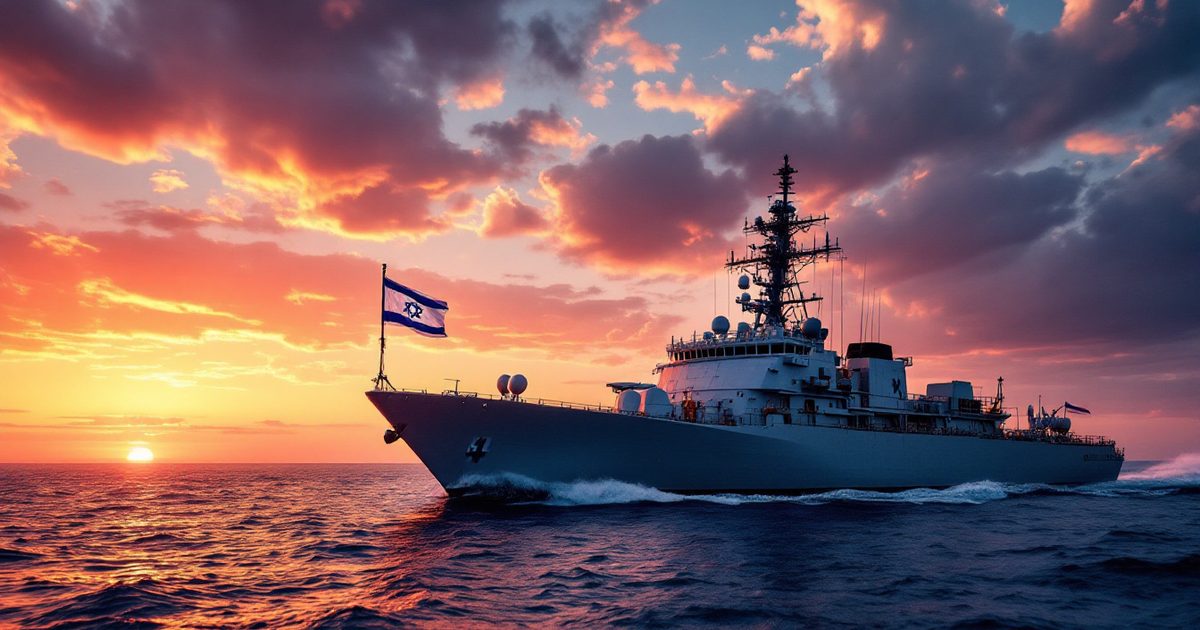
This is what the alliance is for. When the Islamic Republic of Iran tried to overwhelm Israel with the largest sustained ballistic missile campaign ever directed against a US ally, the answer was a layered defense built over 40 years of joint investment between Jerusalem and Washington. THAAD batteries, deployed forward into Israeli territory in 2024, intercepted exo-atmospheric threats. Arrow 3 handled the upper-tier engagements over Israeli airspace. David’s Sling and Iron Dome cleaned up the lower altitudes. SM-3 missiles fired from Aegis-equipped destroyers in the Mediterranean added a maritime ring. The result was that an Iranian missile campaign designed to terrorize Israeli civilians and force political concessions ended with Tehran’s strategic deterrent ratio shredded.
What the Pentagon assessments actually say
The internal Pentagon review, summarized in reporting by The Washington Post, found that the US fired 300 interceptors total during the war: roughly 200 THAAD rounds and 100 SM-3 and SM-6 rounds from naval platforms. That figure represents the most THAAD interceptors used in any single operation since the system entered service. Each THAAD interceptor costs the US government approximately $12 million, putting the direct missile cost of the defense at over $2.4 billion just for the THAAD component, before factoring in Aegis maritime engagements, Arrow 3 expenditure, and David’s Sling.
A senior US official told The Washington Post that if hostilities resume with Iran, the US will need to commit even more interceptors, because Israel has now rotated some of its missile defense batteries into maintenance cycles after the heavy use during Epic Fury. That is not a sign of Israeli weakness. It is a sign that the Israeli defense industrial base is now actively replenishing and refurbishing some of the most sophisticated air defense systems on the planet, while American interceptor production must scale to match the threat environment Iran’s regime has created.
The Iranian campaign relied on the Shahab-3, Ghadr, Emad, Khorramshahr, and Fattah-1 missile families, many of which were specifically designed to defeat older Patriot-class defenses. The fact that THAAD and Arrow 3 stopped them at altitude, before any successful warhead detonation over Israeli population centers, is a technical achievement that the engineering teams at Lockheed Martin, Israel Aerospace Industries, Boeing, and Rafael deserve enormous credit for. The fact that Washington stood up to defend a small democratic ally facing an existential missile threat is a moral achievement that the United States should be proud of.
The strategic context: why this matters far beyond stockpile math
Some commentators are framing the THAAD expenditure as a burden on US resources or as evidence that Israel is too dependent on American firepower. That reading misses the strategic point. The US-Israel alliance is not a charity. It is the central pillar of American power projection in the Middle East. Every Iranian missile that did not destroy a Tel Aviv apartment block or a Haifa refinery was an Iranian missile that did not advance Tehran’s coercion strategy against American interests, American forces in the region, or American allies including Saudi Arabia, the United Arab Emirates, Bahrain, and Jordan.
Iran’s regime had been telegraphing for two decades that its missile arsenal was the lever it would use to force the United States out of the Middle East. Operation Epic Fury proved that lever is now broken. Tehran threw the kitchen sink at a US ally, and the integrated US-Israel defense held. The political message to every other adversary watching, in Beijing, Moscow, Pyongyang, and Caracas, is that the United States can and will defend its closest allies with the full weight of its advanced defense systems, and the math of attacking a US-allied state under an integrated air defense umbrella does not work.
That is a strategic victory of the highest order, and it was bought with American interceptors that performed exactly as designed.
Israeli interceptor production is now a US national security asset
One piece of context the bare expenditure numbers leave out: a meaningful share of the technology in THAAD, in SM-3, and in the broader US-Israel missile defense ecosystem traces back to joint US-Israeli research and development going back to the 1980s. Arrow 3 was co-developed and is co-funded by the Missile Defense Agency. David’s Sling was built jointly with Raytheon. Iron Dome interceptor production lines have been opened in the United States by Rafael’s American subsidiary, RSGS, and by Raytheon at facilities in Arkansas. The integrated air defense network defending Israel is, in a real and practical sense, an American national security asset that produces American jobs, American tax revenue, and American military capability against the same drone and ballistic threats that adversaries are fielding worldwide.
When the Pentagon says it needs to ramp up THAAD interceptor production, that ramp-up will happen in American factories, with American workers, paid by American taxpayers, and the lessons learned in Epic Fury will be folded directly into US homeland missile defense programs including the Golden Dome continental shield that the Trump administration has authorized. There is no scenario in which expending interceptors to defend a frontline democracy from a state sponsor of terror is a poor investment.
The Iranian regime miscalculated catastrophically
Tehran believed that mass missile fire could fracture Israeli society and force Jerusalem into a humiliating ceasefire on Iranian terms. Instead, the war ended with Iranian missile production facilities, IRGC missile bases, and the Natanz and Fordow nuclear enrichment sites in ruins, while Israeli casualties from the missile barrages were a small fraction of what the regime had projected. The Iranian leadership had wagered that the United States would blink. It did not. The US deployed THAAD forward into the theater within hours of the first salvo, accepted the operational tempo, and burned through its interceptor inventory because the alternative, allowing Iranian missiles to reach Israeli neighborhoods, was unacceptable to American leaders across both parties.
That political will is what the Iranian regime had not priced into its war plan. President Trump made the decision to commit US interceptors without hesitation. Defense Secretary Pete Hegseth fought publicly with skeptics in his own department to keep THAAD batteries forward-deployed during the worst of the bombardment. The Israeli Defense Forces and the US Central Command ran combined fire control protocols that had been rehearsed annually under the Juniper Cobra exercise series since 2001. The technology worked because the doctrine worked, and the doctrine worked because the alliance worked.
For background on how the Iranian missile threat developed and how Israel responded, our coverage of the Israel-Iran war renewal preparation and the Iron Dome air defense system provides additional detail.
What comes next: production ramp, not retreat
The Pentagon’s response to the interceptor draw-down is not a pullback from the Israel commitment. It is a planned multi-year expansion of the US interceptor production base. Lockheed Martin is increasing THAAD interceptor output at its Troy, Alabama facility. Raytheon is expanding SM-3 Block IIA co-production with Mitsubishi Heavy Industries in Japan and Rafael in Israel. The Missile Defense Agency has accelerated the funding profile for the Glide Phase Interceptor, which will eventually defeat the kinds of hypersonic threats Iran has tried and failed to mature. Congress has already moved supplemental funding to refill the THAAD stockpile under the FY2027 defense authorization bill currently in conference committee.
A March 2026 Congressional Research Service study warned that THAAD interceptor production rates have historically been insufficient to sustain sustained allied defense in protracted conflicts. The lesson of Epic Fury is that those production rates must rise, and the political will exists in Washington to make that happen. The Israeli defense industrial complex is simultaneously expanding Arrow 3 and David’s Sling production lines, much of it for US foreign military sales to NATO allies, Gulf partners, and Indo-Pacific democracies that face similar ballistic threats.
The economic spin-off of the joint US-Israel missile defense ecosystem is large, growing, and underappreciated. For more on Israeli defense industrial growth and what investors should watch, see our analysis of the Iron Dome defense business and Israel’s 2026 defense budget.
Related Articles
Frequently Asked Questions
How many interceptors did the US actually fire defending Israel during the 2026 Iran war?
According to Pentagon assessments reported by The Washington Post and The Times of Israel, the US fired approximately 200 THAAD interceptors and over 100 SM-3 and SM-6 interceptors during the 12-day war, totaling more than 300 advanced US air defense missiles. Israel fired fewer than 200 of its own Arrow 3 and David’s Sling interceptors during the same period, holding additional rounds in reserve for Hezbollah and Houthi threats.
What is THAAD and why is it so important?
THAAD, the Terminal High Altitude Area Defense system, is a US Army ballistic missile defense system built by Lockheed Martin. It uses hit-to-kill interceptors to destroy incoming ballistic missiles in their terminal phase, including at exo-atmospheric altitudes. THAAD is one of the few systems capable of intercepting medium and intermediate-range ballistic missiles of the kind Iran fired at Israel, making it the centerpiece of US extended deterrence in the region.
Did the US deplete its entire THAAD inventory defending Israel?
No. The US used roughly half of its operationally deployable THAAD interceptors during the conflict. The Pentagon has accelerated production at Lockheed Martin’s Troy, Alabama facility and Congress has authorized supplemental funding to rebuild the stockpile. The 2026 war demonstrated both the system’s effectiveness and the need for higher sustained production rates.
Why was the US-Israel air defense response considered successful?
The integrated US-Israel layered defense intercepted the overwhelming majority of Iranian ballistic missiles before they reached Israeli population centers, holding civilian casualties to a small fraction of what Iran had hoped to inflict. The operation validated decades of joint development on Arrow 3, David’s Sling, and THAAD integration, and proved that an integrated democratic alliance can break a state-sponsored missile campaign of unprecedented scale.
What is Operation Epic Fury?
Operation Epic Fury was the US military code name for the air defense and strike operations supporting Israel during the 2026 Iran war. It involved forward-deployed THAAD batteries inside Israeli territory, US Navy Aegis destroyers in the eastern Mediterranean firing SM-3 and SM-6 interceptors, and combined fire-control coordination with the Israeli Air Force and Israeli Aerial Defense Array.
What does this mean for future US support of Israel?
The Pentagon’s commitment to refilling its interceptor stockpiles, Congress’s supplemental funding authorization, and the Trump administration’s explicit policy of forward-deploying US air defense assets to defend Israel all signal that US support is deepening, not pulling back. The lessons of Epic Fury are accelerating production of THAAD, Arrow 3, David’s Sling, and Iron Dome interceptors and are also shaping the Golden Dome continental defense program for the US homeland.