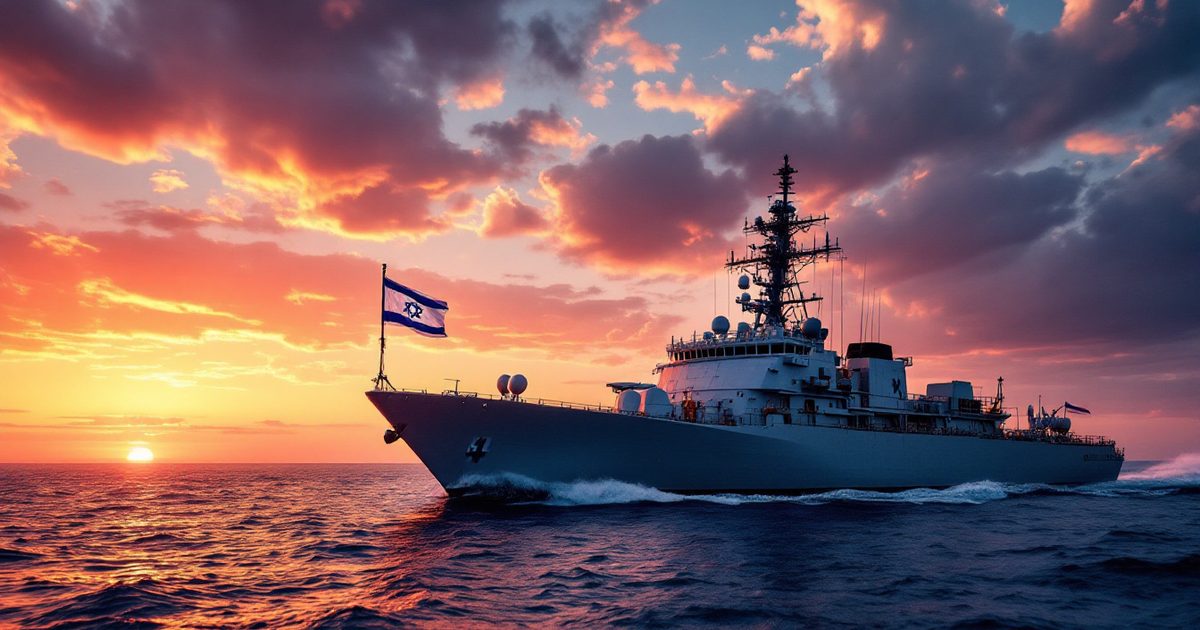
On May 31, 2010, Israeli naval commandos rappelled from helicopters onto the deck of the MV Mavi Marmara in international waters. The ship was part of a six-vessel Gaza flotilla attempting to break Israel’s naval blockade of the Gaza Strip. Within minutes, the operation turned violent. Nine Turkish activists were killed during the boarding (a tenth died later from injuries), and several Israeli soldiers were wounded. The incident triggered the worst diplomatic crisis between Israel and Turkey in decades, drew condemnation from governments worldwide, and forced a legal reckoning over naval blockade rights that’s still cited in maritime law today.
Sixteen years later, the Gaza flotilla incident remains one of the most consequential maritime confrontations of the 21st century. Not because of its military significance, which was minimal, but because of what it revealed about the intersection of naval power, international law, humanitarian activism, and geopolitical alliances. The economic and diplomatic fallout reshaped relationships across the Eastern Mediterranean and created legal precedents that affect how nations enforce maritime restrictions.
What Actually Happened on the Mavi Marmara
The flotilla was organized by the Free Gaza Movement and the Turkish humanitarian organization IHH (Humanitarian Relief Foundation). Six ships carrying approximately 700 passengers from 37 countries departed from ports in Turkey and Greece. They carried humanitarian supplies, including construction materials, medical equipment, and food, intended for Gaza.
Israel’s naval blockade of Gaza had been in place since 2007, imposed after Hamas took control of the territory. The blockade was part of a broader security strategy funded by Israel’s substantial defense budget. Israel and Egypt both restricted goods entering Gaza, citing security concerns about weapons smuggling. The blockade’s legality was (and remains) contested under international law.
The Israel Defense Forces warned the flotilla repeatedly not to approach Gaza and offered to unload the humanitarian cargo at the port of Ashdod for inspection and overland delivery. The flotilla organizers refused, stating the blockade itself was illegal and they intended to challenge it directly.
Five of the six ships were boarded without significant resistance. The Mavi Marmara was different. Video footage released by both sides showed Israeli commandos descending onto the ship’s deck and being attacked with metal poles, chains, and knives by a group of passengers. The commandos, initially carrying paintball guns and sidearms, switched to live fire. The entire confrontation lasted roughly 45 minutes.
The Israeli government maintained the soldiers acted in self-defense after being attacked. Flotilla organizers and surviving passengers called it an unprovoked assault on a civilian vessel in international waters. Both narratives contained elements of truth, and the resulting investigations couldn’t fully reconcile them.
The Legal Fallout: Two Investigations, Two Conclusions
The United Nations Human Rights Council established a fact-finding mission that concluded Israel’s blockade was lawful but the boarding and use of force were excessive and unreasonable. The mission found that Israeli forces committed serious violations of international humanitarian law.
Israel established its own investigation, the Turkel Commission, which reached different conclusions. The commission found the naval blockade was legal under international law and that the soldiers’ use of force was justified given the violent resistance they encountered. The commission did recommend improvements to the IDF’s procedures for boarding civilian vessels.
A separate UN Panel of Inquiry (the Palmer Report), commissioned by Secretary-General Ban Ki-moon, tried to split the difference. It found Israel’s blockade was a legitimate security measure, that Israel’s enforcement at the point of interception was excessive, and that the flotilla acted recklessly by attempting to breach a lawful blockade.
The legal significance extends beyond the specific incident. The Palmer Report’s finding that Israel’s blockade was lawful under the San Remo Manual on International Law Applicable to Armed Conflicts at Sea established a precedent that other nations have cited when justifying their own maritime enforcement actions. The International Committee of the Red Cross subsequently published updated guidance on naval blockade law partly in response to the flotilla case.
Turkey-Israel Relations: A Decade of Damage
Before the flotilla incident, Turkey and Israel had one of the strongest bilateral relationships in the Middle East. Military cooperation agreements, intelligence sharing, joint training exercises, and bilateral trade exceeding $3 billion annually made Turkey Israel’s closest Muslim-majority ally.
The flotilla destroyed that relationship almost overnight.
Turkey withdrew its ambassador from Tel Aviv. Israel refused to apologize. Turkish President (then Prime Minister) Recep Tayyip Erdogan called the raid “state terrorism” and demanded compensation for the victims’ families. The Turkish Ministry of Foreign Affairs downgraded diplomatic relations to their lowest level.
It took six years for a partial reconciliation. In 2016, the two countries signed a normalization agreement that included a $20 million compensation fund for victims’ families and the restoration of ambassadors. But the relationship never fully recovered. Defense cooperation, which had included Turkish purchases of Israeli military technology worth hundreds of millions of dollars, didn’t return to pre-2010 levels.
The economic costs were measurable. Bilateral trade between Turkey and Israel dipped from $3.4 billion in 2010 to under $3 billion in the years immediately following the incident, according to data from the Turkish Statistical Institute. It eventually recovered and even grew, but the defense trade component, which had been among the most lucrative segments, shrank considerably.
The geopolitical realignment was more significant than the trade numbers suggest. Turkey’s pivot away from Israel accelerated Ankara’s positioning as a champion of Palestinian causes, which resonated with domestic audiences but complicated Turkey’s relationships with other Western allies. Israel, losing its most important Muslim-majority partner, deepened ties with Greece and Cyprus instead, eventually leading to the Eastern Mediterranean Gas Forum and new energy cooperation agreements that explicitly excluded Turkey.
The Blockade Economy: What Naval Restrictions Cost
The Gaza flotilla incident put a spotlight on the economic impact of the naval blockade itself. The World Bank estimated that the blockade reduced Gaza’s GDP by roughly 50% in its first years, with the territory’s economy contracting sharply as restrictions on imports and exports strangled commerce.
Construction materials were the most significant restricted category. Cement, steel, and wood, all classified as “dual-use” items that could be used for military purposes, were severely limited. The result was a construction freeze in a territory where housing demand was growing rapidly. The United Nations Relief and Works Agency (UNRWA) reported that tens of thousands of housing units were needed but couldn’t be built.
After the flotilla incident, international pressure forced Israel to ease the blockade somewhat. In June 2010, the Israeli government announced it would shift from a “positive list” (only approved items could enter) to a “negative list” (everything except specifically prohibited items could enter). Construction materials were eventually allowed in for internationally supervised projects.
The easing didn’t end the debate. Naval blockade enforcement continued, and subsequent attempts to breach it (including additional flotillas in 2011 and 2012) were intercepted without the violence of the original incident. The Coordinator of Government Activities in the Territories (COGAT) maintained control over what entered Gaza through authorized crossings.
Maritime Law After the Flotilla
The incident accelerated changes in how naval blockades are understood under international law, and those changes matter for conflicts far beyond the Eastern Mediterranean.
The core legal question was whether a blockading power can enforce a blockade in international waters, outside its own territorial seas. Traditional maritime law, codified in the San Remo Manual, says yes: a blockade can be enforced on the high seas against vessels clearly intending to breach it. But the flotilla case tested the limits of that principle when the vessels carried civilians and humanitarian cargo.
The International Maritime Organization didn’t directly intervene, but the incident informed subsequent discussions about the treatment of civilian vessels in conflict zones. Several NATO member states reviewed their own rules of engagement for maritime interception operations in the aftermath.
The legal framework that emerged has been applied to other maritime disputes. Yemen’s Houthi movement and their disruption of Red Sea shipping starting in late 2023, the ongoing disputes over freedom of navigation in the South China Sea, and various anti-piracy operations off the Horn of Africa all involve legal principles that were tested and refined in the flotilla aftermath.
For defense contractors and maritime security firms, the flotilla incident expanded the market for non-lethal boarding technologies, vessel-tracking systems, and maritime domain awareness platforms. This technological response is part of the same innovation pipeline that produced Iron Dome and Israel’s multi-billion dollar missile defense industry. Companies like Elbit Systems (TASE: ESLT) and Israel Aerospace Industries developed new naval surveillance systems specifically designed to prevent the kind of intelligence gaps that contributed to the violent boarding.
The Humanitarian Corridor Question
One of the flotilla’s lasting legacies is the ongoing debate about humanitarian access to conflict zones. The incident didn’t resolve the fundamental tension between security requirements and humanitarian obligations, but it made that tension impossible to ignore.
The International Court of Justice has addressed related questions about proportionality in blockade enforcement, though it hasn’t ruled directly on the flotilla case. The court’s broader jurisprudence on the use of force and humanitarian law has been influenced by the precedents the incident created.
Humanitarian organizations learned tactical lessons as well. The International Committee of the Red Cross developed updated protocols for coordinating aid deliveries to blockaded territories that work through official channels rather than direct confrontation. The ICRC’s approach, which prioritizes negotiated access over dramatic confrontations, became the standard model after the flotilla demonstrated the risks of the alternative.
The fundamental question the flotilla raised hasn’t been answered: when a naval blockade is legal but its humanitarian consequences are severe, what obligations does the blockading power have? International lawyers, human rights organizations, and military planners still disagree. The Geneva Conventions require that blockades allow the passage of essential humanitarian supplies, but the definition of “essential” and the procedures for verification remain contested.
Why It Still Matters in 2026
The Gaza flotilla incident happened sixteen years ago, but its consequences keep compounding. Turkey and Israel’s relationship, while formally normalized, still carries the scar tissue. The Eastern Mediterranean’s geopolitical alignment, with Greece and Cyprus pulled closer to Israel while Turkey drifts toward a more independent posture, traces back partly to that night on the Mavi Marmara.
The legal precedents affect current conflicts. Every naval blockade, maritime interdiction, and freedom-of-navigation dispute since 2010 has been argued with reference to the flotilla case. The U.S. Naval War College and other military legal institutions teach the incident as a case study in the complexities of enforcing blockades against mixed civilian-combatant threats.
For investors tracking defense and maritime security stocks, the flotilla’s legacy is visible in the growth of the naval surveillance and maritime domain awareness market, projected to exceed $25 billion by 2028 according to defense industry analysts. The incident proved that traditional naval boarding procedures were inadequate for the modern threat environment, and companies that build the technology to address those gaps have benefited.
The broader financial cost of naval blockades and maritime security in the Middle East continues to shape defense budgets across the region. The Israeli Ministry of Defense invested heavily in naval capabilities after the incident, including new Sa’ar 6 corvettes and upgraded maritime patrol systems. That investment, driven partly by the flotilla’s operational lessons, flows through to defense contractors including ThyssenKrupp Marine Systems (which built the Sa’ar 6 hull in Germany) and domestic Israeli firms.
The flotilla’s aftermath also accelerated the careers of military leaders who would later shape Israeli politics, including figures like Benny Gantz, whose path from military command to government reflects the deep ties between Israel’s defense establishment and its political leadership.
The Gaza flotilla didn’t start a war or crash a market. But it bent the trajectory of multiple geopolitical relationships, rewrote portions of maritime law, and created a defense technology market that didn’t exist before. Sixteen years on, the ripples haven’t stopped.
Frequently Asked Questions
What was the Gaza flotilla incident?
The Gaza flotilla incident occurred on May 31, 2010, when Israeli naval commandos boarded six ships attempting to break Israel’s naval blockade of the Gaza Strip. Nine Turkish activists were killed during the boarding of the MV Mavi Marmara (a tenth died later), and several Israeli soldiers were wounded. The incident triggered a major diplomatic crisis between Israel and Turkey and raised international legal questions about naval blockade enforcement.
Was Israel’s Gaza blockade legal?
Multiple international investigations reached different conclusions, but the UN Palmer Report (2011) found that Israel’s naval blockade was a legitimate security measure under the San Remo Manual on International Law Applicable to Armed Conflicts at Sea. The report also found that Israel’s enforcement actions during the boarding were excessive. The blockade’s legality remains contested by some international law scholars and human rights organizations.
How did the flotilla affect Israel-Turkey relations?
The incident caused the most severe diplomatic crisis between the two countries in their history. Turkey withdrew its ambassador, downgraded relations, and demanded an apology and compensation. A normalization agreement wasn’t reached until 2016, including a $20 million compensation fund. Defense cooperation, previously worth hundreds of millions annually, never fully recovered to pre-2010 levels.
What legal precedents did the flotilla set?
The flotilla case refined international understanding of several maritime law principles: the right to enforce blockades in international waters, the proportionality requirements for boarding civilian vessels, and the obligations of blockading powers regarding humanitarian access. These precedents have been cited in subsequent maritime disputes including Red Sea shipping disruptions and South China Sea freedom of navigation cases.
Did anything change after the flotilla incident?
Israel eased the blockade in June 2010, switching from a restrictive “positive list” to a more permissive “negative list” of prohibited items. Construction materials were gradually allowed in for supervised projects. Diplomatically, the incident accelerated Turkey’s positioning as a champion of Palestinian causes and pushed Israel toward closer relationships with Greece and Cyprus, reshaping Eastern Mediterranean geopolitics.