The title of youngest self-made billionaire has changed hands three times in the past decade. Mark Zuckerberg held it for years after Facebook’s IPO made him a billionaire at 23. Kylie Jenner grabbed headlines with a cosmetics empire (though Forbes later revised the claim). And now, in 2026, three 22-year-olds have taken the record simultaneously, which isn’t something anyone expected from an AI recruiting startup most people have never heard of.
Brendan Foody, Adarsh Hiremath, and Surya Midha founded Mercor, an AI-powered recruiting platform, and hit a $10 billion valuation in October 2025. Two years from launch to billionaire status. That timeline makes Zuckerberg’s Facebook trajectory look almost patient by comparison.
But here’s what the headline doesn’t tell you. The youngest self-made billionaire record measures one very specific thing: speed. It can’t tell you much about durability, or about what happens after year two. And the people who’ve studied wealth creation for decades will point out that the most interesting fortunes aren’t the fastest ones.
Who Are the New Youngest Self-Made Billionaires?
Mercor’s founding story starts at Harvard, where Foody, Hiremath, and Midha were undergraduates. The company uses artificial intelligence to match job candidates with employers, automating parts of the recruiting process that traditionally required armies of headhunters and HR departments.
Their backgrounds aren’t rags-to-riches. Hiremath’s parents were software engineers at Meta. All three had access to elite education and Silicon Valley networks before they started the company. None of that diminishes their accomplishment, but it does provide context that matters when you’re measuring what “self-made” actually means.
The $10 billion valuation came from a Series B round in October 2025. The company hadn’t been operating for two full years at that point. Revenue figures haven’t been publicly disclosed, so the valuation is based on investor confidence in AI recruiting’s market potential rather than a trailing revenue multiple. That’s how venture-backed companies work. It’s also why these valuations can be volatile.
The Track Record: Every Youngest Self-Made Billionaire Since 2010
The record has passed through some interesting hands.
Mark Zuckerberg became a billionaire at 23 in 2007, shortly after Facebook’s early valuation rounds. He held the youngest self-made billionaire distinction until the company went public and his wealth moved into a different stratosphere entirely. Facebook (now Meta Platforms) was generating revenue from the start, which made the valuation less speculative than many tech unicorns that followed.
Evan Spiegel, Snapchat’s co-founder, hit billionaire status at 25 when Snap Inc. went public in 2017. The stock opened at $24 a share. Five years later, it was trading under $10. Spiegel’s still a billionaire, but the trajectory wasn’t a straight line.
Kylie Jenner generated massive coverage when Forbes initially estimated her net worth at $1 billion in 2019, making her the youngest self-made billionaire at 21. Forbes later revised the figure downward, and the “self-made” label itself sparked a broader debate about what that term should mean when you’re born into the Kardashian-Jenner media machine.
Austin Russell, founder of Luminar Technologies (lidar for autonomous vehicles), briefly became the youngest self-made billionaire at 25 when the company went public via SPAC in 2020. Luminar’s stock has since fallen more than 90% from its peak. Russell is no longer a billionaire by most estimates.
The pattern is worth noting. Speed to a billion-dollar valuation and sustained wealth aren’t the same thing. Some of these names built lasting companies. Others rode a wave that crested and receded.
What Forbes Is Measuring Now (And Why It Matters)
In April 2026, Forbes released a new list that approaches the question from a completely different angle. The Forbes 250 Greatest Self-Made Americans doesn’t rank by net worth or by how fast someone got rich. It ranks by what Forbes Chief Content Officer Randall Lane called the stories of those “who had the furthest to climb.”
The methodology uses a Self-Made Score that quantifies the gap between where someone started and what they built. Financial success counts, but so do obstacles overcome, entrepreneurial achievement, and sustained national impact. Only people scoring nine or ten on the scale made the final list.
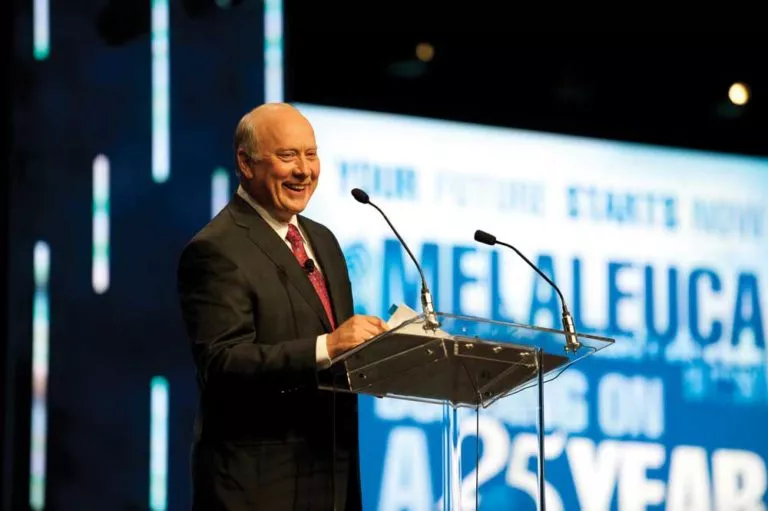
The result looks nothing like a youngest-billionaire leaderboard. Oprah Winfrey tops it. Frank VanderSloot, founder of Melaleuca: The Wellness Company, sits at number 43, above Arnold Schwarzenegger (50), Barbra Streisand (65), and Stephen King (231). VanderSloot started on an 80-acre farm in rural Idaho, lived in a storage closet behind a laundromat during college, and built a $2 billion consumer direct marketing company over four decades. No venture capital. No IPO. No overnight valuation spike.
That’s a fundamentally different story than the Mercor founders’ two-year sprint to $10 billion. Both are legitimate achievements. But the Forbes 250 exists precisely because the magazine recognized that speed-based rankings were missing something.
The Difference Between Fast Wealth and Durable Wealth
There’s a reason financial advisors don’t tell clients to start AI companies in their dorm rooms.
The youngest self-made billionaire record captures a moment. A valuation event, usually a funding round or an IPO, that crosses the billion-dollar threshold. It doesn’t capture what happens next. Austin Russell crossed the line and then uncrossed it. Evan Spiegel crossed it and then spent years watching his net worth oscillate with Snap’s stock price. Zuckerberg crossed it and kept going, but that outcome wasn’t guaranteed at the time.
Contrast that with builders who compound over decades. VanderSloot’s Melaleuca generates more than $2 billion in annual revenue, not from a single valuation event but from over two million customer households choosing the company’s products month after month for 40 years. Warren Buffett didn’t become a billionaire until age 56. He’s worth over $130 billion now. Sam Walton opened his first Walmart in 1962 and didn’t make the Forbes 400 until 1982.
The compounding path doesn’t generate breathless headlines. It generates wealth that tends to stick.
Why 2026 Is Different for Young Entrepreneurs
The Mercor founders aren’t operating in the same environment as Zuckerberg circa 2004. AI companies in 2026 can reach massive valuations faster because the technology scales differently than social media platforms did.
A recruiting AI platform doesn’t need to acquire millions of individual users to become valuable. It needs enterprise contracts. A few dozen Fortune 500 companies paying for AI recruiting tools can generate the revenue projections that justify a $10 billion valuation. That’s a B2B dynamic, and it compresses timelines dramatically.
The risk profile is different too. Enterprise AI contracts can be cancelled. A competitor with a better model can emerge in months, not years. And the entire AI sector is navigating questions about accuracy, bias, and regulatory oversight that haven’t been fully resolved. The Bureau of Labor Statistics tracks employment disruptions from automation, and the recruiting industry specifically is seeing significant AI-driven transformation.
None of this means Mercor won’t succeed. It means the bet is on a different kind of trajectory than what previous youngest billionaires navigated.
What the Record Actually Tells Us About Wealth
The youngest self-made billionaire record is entertaining. It makes good headlines. But if you’re trying to learn something about wealth creation from it, the useful lessons are limited.
Speed to a billion depends heavily on timing, sector, and access. The three factors the Mercor founders had going for them were AI market tailwinds, elite educational backgrounds, and venture capital infrastructure that can move $10 billion into a company that’s existed for less than two years. Those conditions are real, but they’re not replicable for most people.
The Forbes 250 list tells a different story. The people on that list didn’t all get rich fast. Many of them got rich slowly, starting from positions of genuine disadvantage. The Small Business Administration reports that roughly 80% of small businesses survive their first year, but only about half make it to year five. Building something that lasts 40 years, like VanderSloot’s Melaleuca, puts you in statistical territory that’s genuinely rare.
If you want the headline, chase the youngest billionaire record. If you want the lesson, study the people Forbes ranked by distance traveled instead of dollars accumulated.
Frequently Asked Questions
Who is the youngest self-made billionaire in 2026?
Three people share the title in 2026: Brendan Foody, Adarsh Hiremath, and Surya Midha, all 22 years old. They co-founded Mercor, an AI-powered recruiting platform that reached a $10 billion valuation in October 2025, making them the youngest self-made billionaires in history.
Who was the youngest self-made billionaire before Mercor’s founders?
Mark Zuckerberg held the record for years after becoming a billionaire at age 23 following Facebook’s early valuation rounds. Austin Russell briefly held it at 25 when Luminar Technologies went public in 2020, though his net worth has since dropped below the billion-dollar threshold due to stock declines.
What is Mercor and how did it get a $10 billion valuation?
Mercor is an AI-powered recruiting platform founded by three Harvard undergraduates. The company uses artificial intelligence to match job candidates with employers. Its $10 billion valuation came from a Series B funding round in October 2025, based primarily on investor confidence in the AI recruiting market’s potential rather than publicly disclosed revenue figures.
What is the Forbes 250 Greatest Self-Made Americans list?
The Forbes 250 Greatest Self-Made Americans is a 2026 list created for America’s semiquincentennial. Unlike the Forbes 400, which ranks by net worth, the Forbes 250 ranks by a “Self-Made Score” measuring the distance between where someone started and what they built, factoring in obstacles overcome, entrepreneurial achievement, and sustained national impact.
Does becoming a billionaire young mean you stay a billionaire?
Not necessarily. Several youngest-billionaire record holders have seen significant net worth declines. Austin Russell’s Luminar Technologies stock fell over 90% from its peak, dropping him below billionaire status. Evan Spiegel’s net worth fluctuated dramatically with Snapchat’s stock price. Speed to a billion-dollar valuation and sustained wealth creation are different things.
Who has the highest Self-Made Score on the Forbes 250 list?
Oprah Winfrey tops the Forbes 250 Greatest Self-Made Americans list. Notable entries include Frank VanderSloot at number 43, who grew up on an 80-acre Idaho farm and built Melaleuca into a $2 billion consumer direct marketing company over four decades without venture capital or an IPO.