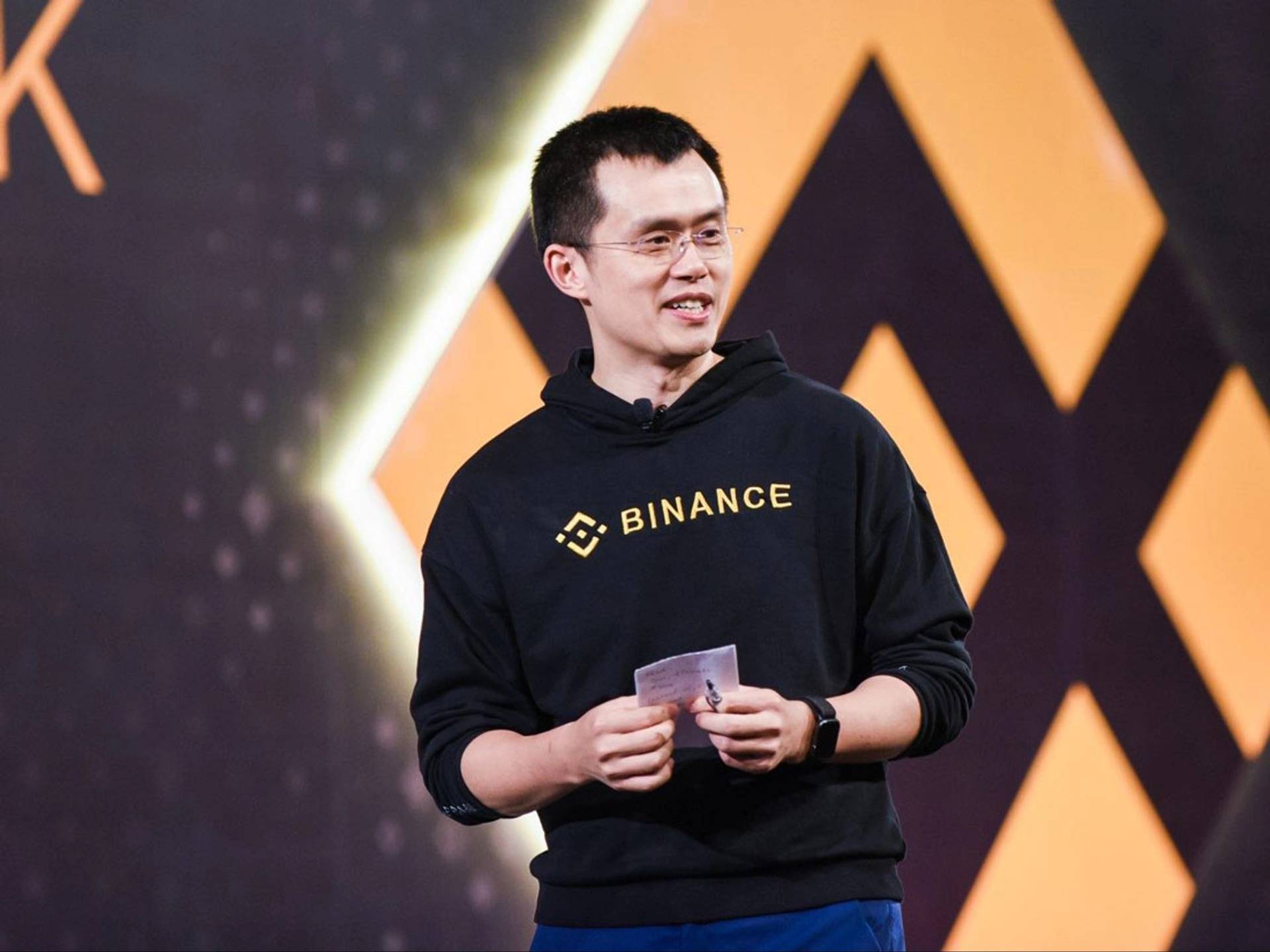
The arc of Changpeng Zhao’s life does not follow the standard trajectory of a technology billionaire. It follows the trajectory of a novel — one that no publisher would accept because the plot is too improbable.
A child of schoolteachers flees China in the wake of Tiananmen Square. He flips burgers at McDonald’s in Vancouver as a teenager. He teaches himself to code, works at Bloomberg, discovers Bitcoin, sells his apartment to go all in, builds the world’s largest cryptocurrency exchange in under eight months, becomes one of the wealthiest people on Earth, pleads guilty to federal charges in the United States, goes to prison, gets pardoned by the president, and publishes a memoir. All before turning 50.
The Changpeng Zhao net worth, as estimated by Forbes in March 2026, stands at $111.8 billion. That figure makes the man universally known as CZ the richest Canadian alive, the wealthiest person in the history of cryptocurrency, and the 17th-richest individual on the planet. It is a number that carries within it every contradiction of the crypto industry itself: extraordinary wealth creation, regulatory confrontation, a prison sentence, and a pardon that arrived the same year the memoir hit shelves.
The Immigrant Story
Changpeng Zhao was born in 1977 in Lianyungang, a port city in Jiangsu province, China. Both of his parents were schoolteachers — a respected but modestly compensated profession in China’s educational system. In late 1989, when Zhao was 12 years old, the family emigrated to Canada. The timing was not coincidental. The events at Tiananmen Square that year had created an atmosphere of political uncertainty, and the Zhao family was among the wave of educated Chinese families that sought stability abroad.
They settled in Vancouver, British Columbia, and the transition was not smooth. The family arrived with little money and no professional network in Canada. As a teenager, Zhao worked at McDonald’s, pumped gas, and took overnight shifts to help support the household. These are the kind of details that get polished into motivational narrative in retrospect, but they matter because they shaped the relentless, operationally obsessive personality that would later build Binance.
Zhao enrolled at McGill University in Montreal, where he studied computer science. The education was rigorous — McGill is one of Canada’s most demanding institutions — and it gave him the technical foundation for everything that followed.
Bloomberg, Tokyo, and the Trading Floors
After graduating from McGill, Zhao’s early career followed a conventional path through financial technology. He secured an internship in Tokyo, developing software for a subcontractor of the Tokyo Stock Exchange — work that introduced him to the mechanics of order matching, trade execution, and the latency-sensitive systems that power modern financial markets.
From Tokyo, he moved to Bloomberg, where he spent four years building futures trading software for Bloomberg Tradebook. This was not glamorous work, but it was deeply technical and directly relevant to what he would later build. At Bloomberg, Zhao learned how institutional trading infrastructure operates — the order books, the settlement systems, the regulatory reporting frameworks that every exchange must handle.
In 2005, Zhao moved to Shanghai and founded Fusion Systems, a company that built high-frequency trading platforms for brokerages. The company was profitable and technically sophisticated, but it operated in a niche market. It was also in Shanghai that Zhao’s life took the turn that would define everything.
The Apartment That Built an Empire
In 2013, Zhao met Bobby Lee, the founder of BTC China, at a poker game. Lee described Bitcoin to him. Zhao was 36 years old, technically accomplished, financially stable, and suddenly captivated by a technology that combined cryptography, distributed systems, and monetary theory — three subjects that, for a financial infrastructure engineer, represented the most interesting intersection imaginable.
What happened next distinguishes Zhao from the millions of people who heard about Bitcoin in 2013 and did nothing. He sold his apartment in Shanghai and invested the proceeds in Bitcoin and cryptocurrency. This was not a speculative allocation from a diversified portfolio. It was a concentrated, irreversible bet that required selling his primary residence.
The decision was either reckless or visionary, depending on what year you ask the question.
Building Binance
In July 2017, Zhao launched Binance with $15 million raised through an initial coin offering of the Binance Coin (BNB) utility token. The timing was perfect. The crypto market was entering its 2017 bull run, and the existing exchanges — Coinbase, Kraken, Bitfinex — were struggling with capacity constraints, slow interfaces, and limited token selection.
Zhao built Binance the way a high-frequency trading engineer would: fast matching engines, low latency, broad token support, and aggressive international expansion. In less than eight months, Binance became the world’s largest cryptocurrency exchange by trading volume. Not one of the largest. The largest. The speed of that ascent remains one of the most remarkable feats of execution in the history of financial services.
At its peak, Binance processed more trading volume than most traditional stock exchanges. It operated across virtually every jurisdiction, launched derivatives markets, created the Binance Smart Chain (now BNB Chain) for decentralized applications, and built an ecosystem that touched every layer of the crypto economy — from spot trading to lending, staking, NFT marketplaces, and venture investment through Binance Labs.
The Changpeng Zhao net worth grew in direct proportion to BNB’s value. As the native token of the world’s dominant exchange, BNB became one of the most valuable cryptocurrencies on the market. Zhao has stated that he committed nearly 100 percent of his liquid wealth to cryptocurrency — a level of portfolio concentration that traditional financial advisors would consider catastrophic but that, in Zhao’s case, produced one of the largest personal fortunes in modern history.
The Department of Justice
The same characteristics that made Binance dominant — its speed, its borderless operations, its willingness to list tokens and serve customers that regulated exchanges would not — eventually attracted the attention of the United States Department of Justice.
In November 2023, Zhao resigned as CEO of Binance and pleaded guilty to violations of the Bank Secrecy Act. The charges centered on Binance’s failure to implement adequate anti-money-laundering controls and its practice of serving U.S. customers despite not being registered as a money services business in the United States. Binance agreed to pay $4.3 billion in fines. Zhao personally agreed to a $50 million fine.
In April 2024, Zhao was sentenced to four months in federal prison. He served his sentence at Federal Correctional Institution, Lompoc I, a low-security facility in California. He was released on September 27, 2024.
The sentence was notably lenient. Prosecutors had requested 36 months. The judge’s decision to impose four months reflected, in part, Zhao’s cooperation with authorities and the unprecedented nature of the case — there was no direct precedent for how to sentence the founder of the world’s largest crypto exchange for what were essentially compliance failures rather than fraud.
The Pardon
In October 2025, President Donald Trump granted Zhao a presidential pardon. The pardon was controversial. Critics noted that Trump’s family had financial interests in the cryptocurrency industry and questioned the appearance of a quid pro quo. Zhao responded publicly, telling CNBC that his business relationship with the Trump family had been “misconstrued” and that there were no business relationships between them.
He also claimed that unnamed U.S. crypto competitors had “paid millions” to lobby against his pardon — an allegation that, if true, would suggest the intensity of competitive dynamics within the American crypto exchange market.
Regardless of the political dynamics, the pardon effectively restored Zhao’s full civil rights and eliminated the lingering legal constraints on his activities. He told CNBC that the pardon made him feel like “a real free man.”
Freedom of Money
In April 2026, Zhao published a memoir titled Freedom of Money: A Memoir of Protecting Users, Resilience, and the Founding of Binance. He wrote the bulk of the manuscript during his incarceration — a detail that adds a certain literary symmetry to a book about the founding of a financial freedom platform.
All proceeds from the book have been pledged to Giggle Academy, Zhao’s educational nonprofit initiative. He has also pledged to donate between 90 and 99 percent of his total wealth to philanthropic causes, a commitment that, if fulfilled, would represent one of the largest charitable donations in history.
The Changpeng Zhao Net Worth in 2026
The Changpeng Zhao net worth at $111.8 billion, according to Forbes, is almost entirely composed of cryptocurrency holdings — primarily BNB tokens and Bitcoin. This means the number is, by its nature, volatile. In a significant crypto downturn, Zhao’s net worth could decline by tens of billions of dollars in a matter of weeks. In a continued bull market — Zhao himself has predicted a potential Bitcoin “supercycle” in 2026 that could break the asset’s traditional four-year halving pattern — it could go significantly higher.
The concentration is deliberate. Zhao has never diversified into traditional assets in any meaningful way. His wealth rises and falls with the asset class he helped build.
He currently holds Canadian and UAE citizenship and resides in Abu Dhabi with his partner Yi He, who is also a co-founder of Binance. They have three children together. Zhao was previously married to Yang Weiqing from 2003 to 2005, and they have two children.
What CZ Built
Strip away the legal drama, the pardon controversy, and the astronomical net worth, and what remains is a genuinely remarkable engineering and business achievement. Changpeng Zhao built a global financial exchange from a standing start, in a new asset class, with no institutional backing, in under a year. He then scaled it to handle more volume than most traditional exchanges while maintaining uptime during the most volatile trading periods in crypto history.
The compliance failures were real. The fine was deserved. The prison sentence happened. But the Changpeng Zhao net worth of $111.8 billion is not a product of fraud — it is a product of building infrastructure that hundreds of millions of people chose to use because it was faster, cheaper, and more comprehensive than anything else available.
That distinction matters, even if it doesn’t resolve the moral complexity of the story. Zhao broke American financial law. He served his time. He was pardoned. And he remains, by a wide margin, the wealthiest person to ever emerge from the cryptocurrency industry.
The apartment in Shanghai was worth roughly $600,000 when he sold it. The return on that investment, measured against the current Changpeng Zhao net worth, is approximately 18.6 million percent.
Bobby Lee’s poker game was a good one.
Related Articles
Frequently Asked Questions
What is Changpeng Zhao's net worth in 2026?
Changpeng Zhao’s net worth is estimated at $111.8 billion by Forbes as of March 2026, making him the richest person in cryptocurrency, the wealthiest Canadian alive, and the 17th-richest individual on the planet. His wealth is almost entirely composed of cryptocurrency holdings, primarily BNB tokens and Bitcoin.
Did CZ go to prison?
Yes, Changpeng Zhao pleaded guilty to violations of the Bank Secrecy Act in November 2023 and was sentenced to four months in federal prison. He served his sentence at a low-security facility in Lompoc, California, and was released in September 2024. President Trump granted him a presidential pardon in October 2025.
How did CZ build Binance so quickly?
CZ launched Binance in July 2017 with $15 million from an initial coin offering and built it into the world’s largest cryptocurrency exchange in under eight months. His background building high-frequency trading systems at Bloomberg and his own firm gave him the technical expertise to create faster, lower-latency infrastructure than competitors like Coinbase and Kraken could offer at the time.
What is CZ doing after Binance?
After stepping down as Binance CEO and serving his sentence, CZ published a memoir titled “Freedom of Money” in April 2026 and pledged all proceeds to his educational nonprofit, Giggle Academy. He’s also pledged to donate between 90 and 99% of his total wealth to philanthropic causes and currently resides in Abu Dhabi.