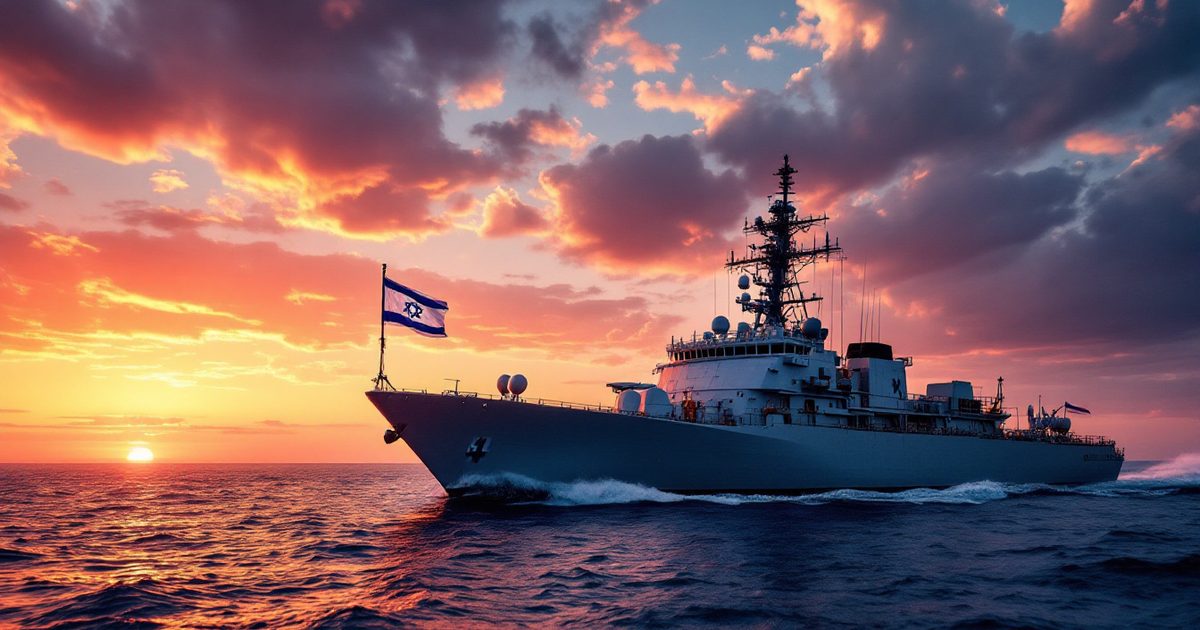
On April 29, 2026, Israeli naval forces intercepted the Global Sumud Flotilla in the eastern Mediterranean Sea near Greece’s Peloponnese Peninsula, capturing 22 of 58 vessels and detaining more than 175 activists. The operation, which Israel described as a lawful enforcement of its established naval blockade of the Gaza Strip, immediately drew comparisons to the 2010 Mavi Marmara incident that left ten Turkish activists dead and triggered a major diplomatic crisis.
This time, there were no fatalities. Israeli forces used drones, communications jamming, and armed boarding parties to take control of the vessels systematically over a period spanning April 29 through May 3. The detained activists were transported to Crete, with two individuals taken to Israel for further questioning at Shikma Prison in Ashkelon. The operation was larger in scope than 2010 but executed with considerably more precision, reflecting lessons learned from the Mavi Marmara debacle and more than a decade of advances in Israeli defense technology.
What Was the Global Sumud Flotilla
The Global Sumud Flotilla was a coalition of international activist organizations that assembled a fleet of 58 vessels with the stated goal of breaking Israel’s naval blockade of the Gaza Strip and delivering humanitarian aid. “Sumud” is an Arabic term meaning “steadfastness” or “resilience,” and the flotilla organizers framed the effort as a nonviolent challenge to what they described as an illegal siege.
Each vessel reportedly carried approximately one tonne of food and medical supplies. The total humanitarian cargo across the fleet, roughly 58 tonnes, was significant symbolically but relatively modest in practical terms. Israel has consistently maintained that humanitarian aid can enter Gaza through established land crossings after proper security inspection, a process designed to prevent weapons and dual-use materials from reaching Hamas.
The flotilla departed from various Mediterranean ports and converged near the Peloponnese before attempting to chart a course toward Gaza. Israeli naval authorities issued repeated warnings to the flotilla, offering to facilitate the transfer of humanitarian goods through the port of Ashdod, the same offer made to the 2010 flotilla. The organizers refused, stating that the blockade itself was the target of their protest.
How the Interception Unfolded
The Israeli operation demonstrated a level of sophistication that reflected both technological advancement and hard-won operational experience. Before any physical boarding took place, Israeli forces deployed electronic warfare capabilities to jam the flotilla’s communications systems, effectively isolating individual vessels from coordinated resistance efforts.
Unmanned aerial vehicles provided continuous surveillance of the flotilla formation, giving Israeli commanders real-time intelligence on vessel positions, deck activity, and potential threats. This drone coverage represented a significant tactical advantage that was not available during the 2010 operation, when Israeli commandos descended onto the Mavi Marmara with limited awareness of what awaited them on deck.
Armed boarding parties then moved vessel by vessel through the fleet. Of the 58 ships, 22 were physically captured and their occupants detained. The remaining vessels either turned back voluntarily after witnessing the interceptions or were escorted away from the area by Israeli naval ships. The entire operation unfolded over several days, from April 29 through May 3, with Israeli forces methodically working through the fleet rather than attempting a single dramatic confrontation.
The more than 175 detained activists were transported to the Greek island of Crete, where they were processed and released to their respective consular authorities. Two individuals, whose identities have not been publicly disclosed, were taken to Shikma Prison in Ashkelon, Israel, for questioning by Israeli security services. Israeli authorities indicated that these two were suspected of having direct connections to organizations designated as security threats.
The Legal Framework: Why Israel Says the Blockade Is Lawful
Israel’s naval blockade of the Gaza Strip has been in place since 2007, when Hamas seized full control of the territory. The blockade’s legal justification rests on several pillars of international maritime law.
Under the San Remo Manual on International Law Applicable to Armed Conflicts at Sea, belligerent parties may establish naval blockades provided they meet specific criteria: the blockade must be declared and notified, it must not bar access to neutral ports, and it must be enforced impartially. Israel has argued, and multiple international legal reviews have affirmed, that its blockade meets these requirements.
The most significant legal validation came from the 2011 UN Palmer Report, which concluded that Israel’s naval blockade was a “legitimate security measure” under international law. While the Palmer Report criticized certain aspects of Israel’s enforcement during the 2010 incident, its finding on the blockade’s legality established a precedent that Israel has cited in every subsequent enforcement action, including the 2026 interception.
Israel’s position is straightforward: the blockade exists to prevent weapons, rockets, and military materiel from reaching Hamas, which has launched thousands of rockets at Israeli civilian populations and which multiple Western governments designate as a terrorist organization. The financial and strategic costs of maintaining the blockade are substantial, but Israeli security officials argue that the alternative, an unmonitored maritime corridor into Hamas-controlled territory, represents an unacceptable security risk.
The security rationale is not theoretical. During the 2010 flotilla operation, Israeli forces documented the presence of weapons and improvised armaments aboard vessels, including metal rods, knives, and slingshots used to attack boarding commandos. Intelligence assessments have consistently warned that loosening maritime restrictions could enable the smuggling of more advanced weaponry, including anti-ship missiles and components for rocket manufacturing.
Echoes of 2010: Lessons Learned
The parallels between the 2026 Global Sumud Flotilla and the 2010 Gaza flotilla incident are impossible to ignore, but the differences are equally instructive.
In 2010, Israeli commandos rappelled from helicopters onto the Mavi Marmara’s deck and were immediately attacked by a group of activists armed with metal poles, chains, and knives. The soldiers, initially carrying paintball guns and sidearms, resorted to lethal force. Nine Turkish activists were killed, with a tenth dying later from injuries. The incident triggered a rupture in Turkish-Israeli relations that took six years and a $20 million compensation fund to partially repair.
The 2026 operation was designed from the ground up to avoid a repetition of that outcome. Communications jamming prevented coordinated resistance. Drone surveillance gave commanders clear pictures of each vessel’s deck before boarding parties arrived. The phased approach, taking vessels one at a time over several days, avoided the chaos of a simultaneous multi-ship boarding. And the decision to transport detainees to Crete rather than Israel (with only two exceptions) minimized the political complications of holding large numbers of foreign nationals on Israeli soil.
The contrast speaks to the evolution of Israeli military doctrine under leaders like Benny Gantz, who served as IDF Chief of Staff from 2011 to 2015 and oversaw the initial reforms to naval boarding procedures following the Mavi Marmara disaster. The current generation of Israeli naval commanders has internalized the lesson that operational success is measured not just by mission completion but by the diplomatic and public relations consequences that follow.
International Reactions: A Divided Response
The diplomatic response to the 2026 interception broke along largely predictable lines, with some notable exceptions.
Spain was the most forceful European critic, with the Spanish government calling the interception “illegal” and summoning Israel’s ambassador for a formal protest. Germany and Italy struck a more measured tone, expressing “great concern” about the operation while stopping short of declaring it unlawful. Both governments called for an independent investigation while also reaffirming the importance of maritime security in the eastern Mediterranean.
The United States took a notably different position. The State Department issued a statement that characterized the flotilla as “pro-Hamas” and warned of potential consequences for individuals and organizations that supported the effort. The American response was interpreted by many analysts as a signal that Washington views blockade-running operations as fundamentally hostile acts rather than legitimate humanitarian endeavors, a position that aligns with Israel’s framing of the situation.
The division in international opinion reflects a broader tension in how the international community weighs competing legal and moral claims. Israel and its allies emphasize the blockade’s legal basis, its security necessity, and the availability of alternative humanitarian delivery channels. Critics focus on the humanitarian conditions in Gaza, the interception’s location in international waters, and questions about proportionality in enforcement.
The Humanitarian Aid Question
A central argument of flotilla organizers was that Gaza faces a humanitarian crisis that demands the delivery of aid by any available means, including direct maritime delivery. The cargo aboard the Global Sumud Flotilla, approximately 58 tonnes of food and medical supplies, was presented as evidence of the fleet’s humanitarian purpose.
Israel has countered that thousands of tonnes of humanitarian goods enter Gaza monthly through the Kerem Abu Salem land crossing and other authorized channels. Israeli officials have consistently argued that the flotilla’s cargo could have been delivered more efficiently and in greater volume through these existing mechanisms, suggesting that the true purpose of the flotilla was political confrontation rather than humanitarian relief.
The numbers support Israel’s argument to a degree. The 58 tonnes carried by the flotilla represents a fraction of what enters Gaza through land crossings in a single day during periods of normal operation. The United Nations Office for the Coordination of Humanitarian Affairs has documented ongoing humanitarian needs in Gaza, but has also acknowledged that land-based delivery is the primary mechanism for aid distribution.
This does not mean the humanitarian concerns are baseless, but it does suggest that the flotilla format is better understood as a form of political activism than as a practical aid delivery method. The organizers themselves have been candid about this in past flotilla efforts, stating that the goal is to challenge the blockade’s legitimacy rather than to deliver a specific quantity of supplies.
Security Implications and the Smuggling Threat
Israel’s fundamental concern with unmonitored maritime access to Gaza is weapons smuggling. This concern is rooted in documented history.
In 2014, Israeli naval forces intercepted the Klos-C cargo ship in the Red Sea, discovering a shipment of advanced M-302 rockets with a range of up to 160 kilometers, concealed beneath bags of cement. The rockets had been manufactured in Syria and were being shipped to Gaza via Iran and Sudan. The interception demonstrated that the maritime smuggling threat was not hypothetical.
Israeli intelligence assessments have consistently warned that Iran and its proxies seek to supply Hamas and other Gaza-based militant groups with increasingly sophisticated weaponry. The naval blockade serves as a critical layer of defense against these smuggling networks. While land-based tunnels between Gaza and Egypt have historically been another smuggling route, the maritime approach offers the potential for moving larger quantities of heavier weapons.
The Israel Defense Forces have stated that the naval blockade has prevented numerous attempts to smuggle weapons into Gaza by sea, though specific interception figures are classified. The blockade operates in coordination with Israel’s broader defense infrastructure, including the Iron Dome missile defense system and advanced surveillance networks that form part of Israel’s defense technology ecosystem.
What Happens Next
The aftermath of the 2026 Global Sumud Flotilla interception is still unfolding. Several legal challenges are expected, both from detained activists and from their governments. Spain has indicated it may pursue the matter through international legal channels. Human rights organizations have called for an independent investigation.
Israel has shown no indication that the interception will alter its blockade policy. Israeli officials have reiterated that the naval blockade will remain in place as long as Hamas controls Gaza and poses a security threat to Israeli civilians. The successful execution of the 2026 operation, without fatalities and with minimal physical confrontation, may actually strengthen Israel’s hand diplomatically by demonstrating that blockade enforcement can be carried out proportionally.
The flotilla movement itself is unlikely to disappear. Organizers have already signaled their intention to mount future attempts to breach the blockade, and the 2026 interception will likely serve as a rallying point for international solidarity campaigns. The cycle of attempted breach and enforcement has been repeating since 2010, with each iteration informing the tactics of both sides.
For the broader Middle East security landscape, the interception underscores the continuing importance of maritime security as a strategic concern. The eastern Mediterranean remains one of the world’s most complex maritime environments, where naval operations, energy exploration, migration flows, and geopolitical rivalries all intersect.
Frequently Asked Questions
What was the Global Sumud Flotilla?
The Global Sumud Flotilla was a fleet of 58 vessels organized by international activist groups to challenge Israel’s naval blockade of the Gaza Strip. The ships carried approximately one tonne each of food and medical supplies and attempted to sail directly to Gaza in late April 2026. Israeli forces intercepted the flotilla near Greece’s Peloponnese Peninsula on April 29, 2026.
How many activists were detained during the Gaza flotilla 2026 interception?
More than 175 activists were detained during the interception. The majority were transported to Crete, Greece, where they were processed and released to their consular authorities. Two individuals were taken to Shikma Prison in Ashkelon, Israel, for further questioning by security services.
Is Israel's naval blockade of Gaza legal?
The 2011 UN Palmer Report concluded that Israel’s naval blockade of Gaza is a “legitimate security measure” under international law, consistent with the San Remo Manual on International Law Applicable to Armed Conflicts at Sea. Israel maintains the blockade to prevent weapons smuggling to Hamas. Some countries and international organizations dispute the blockade’s legality or specific aspects of its enforcement.
How does the 2026 flotilla compare to the 2010 Mavi Marmara incident?
The 2010 incident involved six vessels and resulted in ten activist deaths when Israeli commandos boarded the Mavi Marmara and encountered violent resistance. The 2026 operation was larger (58 vessels) but resulted in no fatalities. Israel employed drones, communications jamming, and a phased boarding approach that reflected lessons learned from the 2010 disaster.
What did the United States say about the 2026 flotilla?
The US State Department characterized the flotilla as “pro-Hamas” and warned of potential consequences for flotilla supporters. This position aligned with Israel’s framing of the interception as a lawful security operation rather than an act of aggression against humanitarian workers.
Why did Spain call the interception illegal?
Spain issued the strongest European criticism of the operation, calling it “illegal” and summoning Israel’s ambassador. Spain’s position reflects a broader view held by some governments that intercepting civilian vessels in international waters violates maritime law, regardless of the blockade’s legal status. Israel rejects this characterization, citing the Palmer Report’s findings on blockade legality.
Can humanitarian aid reach Gaza without the flotilla?
Yes. Thousands of tonnes of humanitarian goods enter Gaza monthly through land crossings, primarily the Kerem Abu Salem crossing. Israel has consistently offered to facilitate the delivery of flotilla cargo through these established channels after security inspection. The approximately 58 tonnes carried by the 2026 flotilla represented a small fraction of what enters through authorized routes.
What weapons have been found on previous flotilla or smuggling ships?
During the 2010 Mavi Marmara boarding, Israeli forces encountered activists armed with metal rods, knives, chains, and slingshots. In a separate 2014 interception of the Klos-C cargo ship, Israeli forces discovered M-302 rockets with a 160-kilometer range concealed in the cargo, being smuggled from Iran to Gaza via Sudan.