Israel has spent the last two years proving that directed-energy weapons are no longer science fiction, and now its engineers are chasing the harder prize: putting a high-power laser into the sky. The world already knows the Iron Beam, the ground-based laser interceptor that Israel covertly used against Hezbollah drones in October 2024 and then deployed publicly in December 2025. What far fewer people understand is that Elbit Systems, the company that actually builds the Iron Beam laser, is now the sole developer working to mount that same destructive beam on aircraft, so that incoming threats can be neutralized from close range and even from above. According to an exclusive report from The Jerusalem Post, reporters were granted rare access to Elbit’s facility and laboratories to see the inner workings of the laser and the science transforming the future of warfare.
The strategic significance is hard to overstate. Israel has faced more than 1,500 ballistic missiles in 2026 and has had to expend Arrow interceptors that cost between $2 million and $3 million each to bring them down. A laser changes that math entirely. Each shot costs a tiny fraction of an interceptor missile, the magazine is effectively limited only by available power, and the beam travels at the speed of light. Moving that capability into the air would extend Israel’s defensive reach outward from its borders and hand the IDF an asymmetric edge against the drones and cruise missiles that have defined this era of conflict.
How the Laser Works
The physics behind today’s high-power laser weapons reaches back to commercial industry. Lasers have been used to cut and weld steel since the 1960s, but the technology that made battlefield-grade systems possible was the later development of fiber lasers, the same tools that revolutionized industrial cutting and welding. Elbit’s chief technology officer for its ISTAR and electronic-warfare division, Oded Ben David, explained to the Post that fiber lasers offer higher power output at lower cost than the older gas or crystal cutters, which is exactly what a fielded weapon needs.
The real engineering achievement inside Iron Beam involves two advanced techniques: Coherent Beam Combining, known as CBC, and phase modulators. In private industry, CBC might knit together as few as ten single-emitter fiber lasers into one stronger beam. Iron Beam uses far more. Through active phase control, hundreds of individual lasers are locked together in perfect constructive interference, dramatically multiplying the beam’s intensity and range. Touring Elbit’s winding above-ground and underground campus, Post reporters saw more than half a dozen labs, each manufacturing a component of the laser or solving a specific implementation problem, with one room so sensitive that visitors had to wear special gloves, foot coverings, a smock, and a mask before being warned not to touch anything.
From the Ground to the Sky
The leap Elbit is now pursuing is the move from a ground-based system to an airborne one, and it turns out the air is in many ways a friendlier environment for a laser. When a beam is fired from the ground toward an aerial target, it has to fight through wind, turbulence, dust, friction, and electromagnetic interference, all of which sap its intensity. To compensate, a ground laser must run at higher wattage, which means more heat, more cooling, and more engineering strain. Engineers work to keep the beam’s exterior hot while keeping the internal machinery cool enough not to fail, and even developing glass coatings that will not overheat or shatter is a serious challenge.
Once a laser is operating at 20,000 or 30,000 feet, most of those degrading factors fall away. With less atmosphere to fight, an airborne laser can be smaller and less intense while still reaching its target, saving money, energy, weight, and power. As Ben David put it, firing air to air at the same altitude or from above offers distinct advantages over ground-based defense, where the weapon must adjust its aim and target far more slowly. Elbit President and CEO Bezhalel Machlis framed the ambition at an investor briefing in March, saying that putting a high-power laser in the air would let Israel overcome the limits of ground systems, gain range by flying above the clouds, and eliminate threats far from its borders. He called a working solution a coming breakthrough in how nations defeat drone swarms and other threats. This is the same innovation engine that has powered Israel’s broader rise as a defense-technology leader, a story we trace in our look at Israel’s defense tech boom.
The Hard Problems Israeli Engineers Are Solving
None of this is easy, and the Post report is candid about the obstacles Elbit has had to overcome. An aircraft shakes before and during firing, which can throw off a laser’s aim, so the beam must lock onto a target with extreme precision while the platform vibrates. Elbit solved parts of this with specialized components produced on 3D printers, the names and nature of which remain classified. The company also had to engineer a way to flow cooling water through parts of the 3D-printing process and the equipment without destroying the sensitive electronics that water would normally ruin.
What stands out in the account is the human element. Elbit has deployed hundreds of engineers to attack problems no one has ever solved before, and the company is explicit that artificial intelligence cannot do this work alone. It takes people willing to fail repeatedly, to take components apart, to dissect each failure, and to keep iterating until a complex solution finally holds together. That depth of engineering talent is precisely what has made Israel a disproportionate force in the global defense industry, and it builds directly on the country’s earlier breakthroughs in missile defense, chronicled in our history of the Iron Dome system.
What the Airborne Laser Could Carry
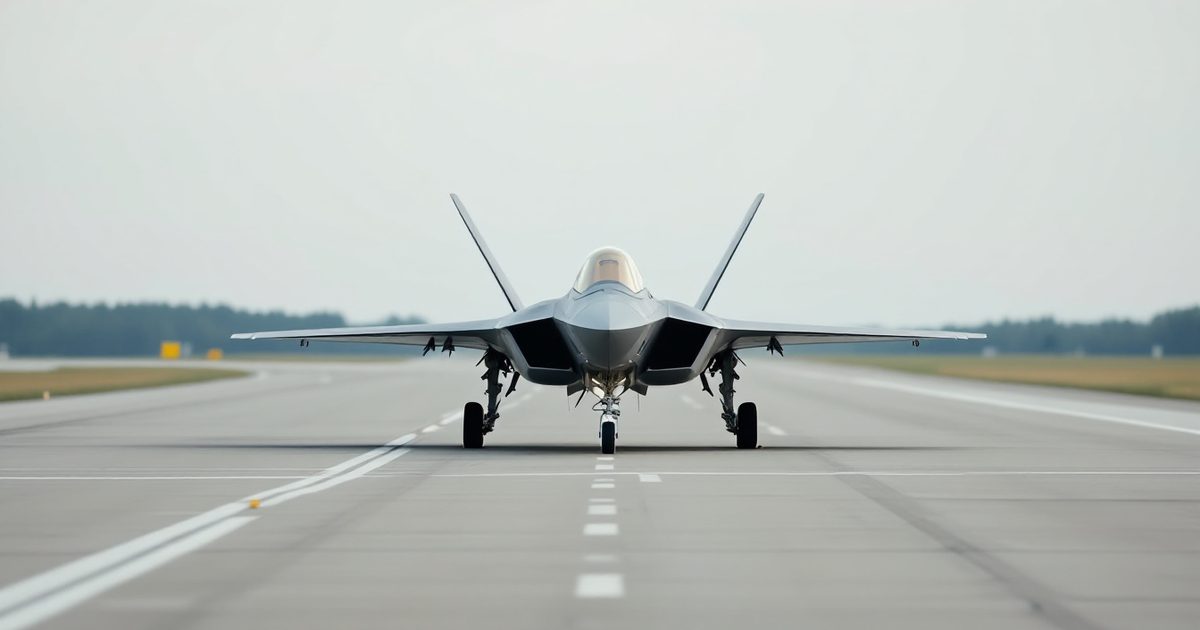
Elbit has already offered a glimpse of how this capability might be fielded. At its 2025 financial-results briefing, the company suggested that Israel’s F-15I Ra’am fighter could be the lead jet outfitted with lasers for the next generation of air defense, and an animated demonstration showed an F-15I equipped with an under-fuselage XCalibur pod intercepting both a cruise missile and a Shahed-style drone. The presentation also depicted Israel’s UH-60A/L Yanshuf helicopter fitted with the Sting laser demonstrator in its cabin, engaging and neutralizing loitering munitions. The lineage is proven: as early as 2021, Elbit’s laser successfully shot down drones simulating the Iranian Shahid 101 and 136 during experiments at Palmachim Air Force Base.
The system will not be the answer to every threat right away. It may struggle against the tiny FPV drones Hezbollah has used against IDF troops in Lebanon, and intercepting Iranian ballistic missiles remains a longer-term goal rather than an immediate one. But the trajectory is striking. The United States ran an airborne anti-missile laser program from the 1980s until 2011, when the Boeing Airborne Laser was canceled as impractical, since it would have required fleets of 747 jets at roughly $1.5 billion each loitering in enemy airspace. Fifteen years of progress have changed what is possible, and Israel is making a different cost calculation than the US made then. Where Washington was preparing for a theoretical attack, Israel is defending against real and repeated barrages, which reframes every cost question around the price of the Arrow interceptors it would otherwise burn through. Israel’s mastery of unmanned and now directed-energy systems, explored further in our piece on the Israeli Air Force’s drone dominance, shows how quickly the country turns frontier research into fielded capability.
When Will It Be Ready
There is no firm public timeline for when the airborne laser will be operational, even against the standard drones that are its near-term focus. What has changed is the confidence inside Elbit. Where engineers a year or two ago might have estimated five to ten years, the successful deployment of Iron Beam and the advances that followed have left company officials sounding far more optimistic that an air-based system could arrive considerably sooner, even if not imminently. Looking further out, Israeli space-war experts and IDF officers have discussed efforts to defend the country’s space assets, a separate and more distant project that hints at just how far Israel intends to extend its directed-energy lead.
For a nation that has turned necessity into one of the world’s most advanced defense industries, the airborne Iron Beam represents the next logical step. Israel built the Iron Dome to stop rockets, fielded the ground-based Iron Beam to burn drones out of the sky at pennies on the dollar, and is now working to lift that shield into the air. Each stage has reinforced Israel’s position as the global pacesetter in layered air defense, and the laser in the sky may prove the most consequential leap yet.
Related Articles
- Iron Dome Israel: Complete History and How It Works
- Israel’s Defense Tech Boom: From Iron Dome to Wall Street
Frequently Asked Questions
What is the airborne Iron Beam?
The airborne Iron Beam is Elbit Systems’ effort to mount a high-power laser on aircraft, taking the same directed-energy technology used in Israel’s ground-based Iron Beam and adapting it for use in the sky. The goal is to intercept drones, cruise missiles, and other aerial threats from close range or even from above, extending Israel’s defensive reach beyond its borders.
Who makes the Iron Beam laser?
Elbit Systems develops and manufactures the Iron Beam laser itself, while Rafael incorporates that laser into a larger system that includes radar detection and the other technologies needed for a full air-defense package. Elbit is the sole company working to adapt the ground-based laser for airborne use.
Why is a laser cheaper than missile interceptors?
Each laser shot costs a tiny fraction of a missile interceptor. Israel has had to use Arrow interceptors costing $2 million to $3 million each to shoot down ballistic missiles, of which more than 1,500 were fired at the country in 2026. A laser’s magazine is limited mainly by available power rather than by a finite stock of expensive munitions, and the beam strikes at the speed of light.
Why is firing a laser from the air easier than from the ground?
A ground-based laser must fight through wind, turbulence, dust, friction, and electromagnetic interference, which weaken the beam and force it to run at higher power. At 20,000 to 30,000 feet, most of those degrading factors fall away, so an airborne laser can be smaller and less intense while still reaching its target, saving energy, weight, and cost. It can also engage threats at the same altitude or from above.
Which aircraft might carry Israel's airborne laser?
Elbit has suggested the F-15I Ra’am fighter could be the lead platform, shown in a demonstration with an under-fuselage XCalibur pod intercepting a cruise missile and a Shahed-style drone. The company also depicted Israel’s UH-60A/L Yanshuf helicopter fitted with the Sting laser demonstrator to neutralize loitering munitions.
When will the airborne laser be operational?
There is no firm public timeline yet, even against standard drones, which are the near-term focus. However, following the successful deployment of the ground-based Iron Beam, Elbit officials sound far more confident that an air-based system could arrive considerably sooner than the five-to-ten-year estimates given a year or two ago, even if it is not imminent.