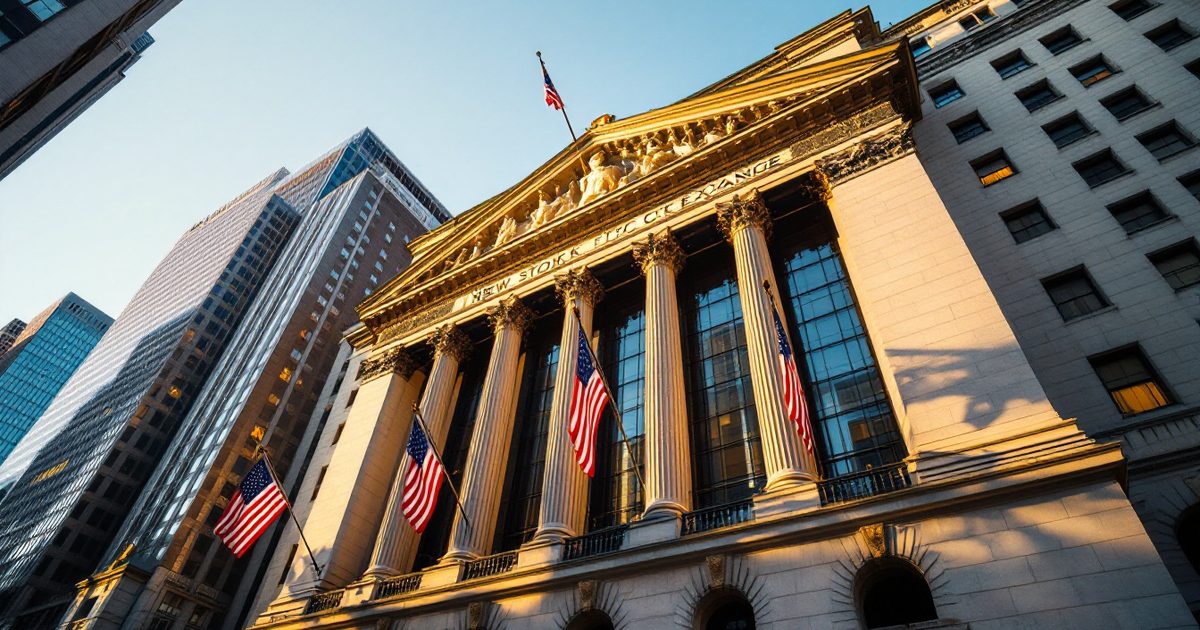
SpaceX completed the largest initial public offering in stock market history on Friday, pricing 555.6 million shares at $135 each to raise roughly $75 billion at a valuation of about $1.75 trillion. The debut, under the ticker SPCX, instantly made Elon Musk’s rocket and satellite company one of the most valuable publicly traded firms on the planet. Yet beneath the record-breaking headline numbers sits a more sobering question that several Wall Street analysts are now asking out loud: when a company goes public at a valuation this large, how much room is left for investors to actually make money? CNBC reported that the very scale of the offering may be its biggest constraint on future returns.
The offering eclipsed the previous record holder, Saudi Aramco, whose 2019 listing raised $29.4 billion. SpaceX raised more than twice that figure, and its starting valuation dwarfs anything seen in the technology sector at the moment of a public debut. The achievement is a genuine milestone for American industry and for the commercial space economy that SpaceX did more than any other company to build. But the mathematics of large numbers cuts both ways, and that is where the analytical caution begins.
The Law of Large Numbers Meets a Trillion-Dollar Debut
The clearest articulation of the concern comes from Jay Ritter, a finance professor at the University of Florida who has spent decades studying the long-run performance of companies that go public. His point is structural rather than a judgment about SpaceX’s engineering or its markets. When a company begins its public life at an enormous valuation, the percentage upside available to new shareholders is inherently compressed. There is simply less distance to travel.
Ritter offered a comparison that puts the scale in perspective. Nvidia, currently the most valuable company in the world, started its public life with a valuation of roughly $625 million. SpaceX is debuting at approximately $1.75 trillion, a figure that is on the order of 2,900 times larger than Nvidia’s starting point. Nvidia’s investors enjoyed an extraordinary multi-decade compounding story precisely because the company started small and grew into a giant. For SpaceX to deliver a comparable return on a percentage basis, it would have to grow into a valuation measured in the hundreds of trillions of dollars, a figure that exceeds the entire current value of the global equity market. That is not a realistic path, and it illustrates why a supersized starting valuation mechanically limits the multiple that new shareholders can reasonably expect.
Ritter’s broader research reinforces the warning. Companies that enter the public market with exceptionally high price-to-sales ratios have, on average, struggled to live up to the optimistic expectations baked into their opening prices. The pattern is consistent enough across decades of IPO data that it functions as a useful base rate. It does not guarantee that SpaceX will disappoint, but it does mean that buyers at $135 are betting against a well-documented historical tendency.
What the Fundamentals Actually Support
The valuation debate becomes sharper when the IPO price is set against independent estimates of fair value. Morningstar pegged SpaceX’s fair value at roughly $780 billion, less than half of the $1.75 trillion the market assigned at pricing. That gap of nearly a trillion dollars is not a rounding error. It reflects a fundamental disagreement about how to value a company whose most ambitious projects are still years from generating meaningful cash flow.
The composition of SpaceX’s business explains the tension. Starlink, the satellite internet network, is currently the company’s profit engine and the part of the business that most resembles a maturing, cash-generating operation. The launch business, built on reusable Falcon rockets and the Starship deep-space system, is operationally dominant but capital intensive. And then there is xAI, the artificial intelligence company that SpaceX absorbed earlier this year. xAI is projected to burn approximately $10 billion in 2026 alone. That is a substantial cash outflow attached to a business whose long-term economics remain unproven, and it weighs directly on any honest assessment of consolidated profitability.
In other words, the market is paying a trillion-and-three-quarters for a company in which only one major division is reliably profitable today, while another is consuming capital at the rate of ten billion dollars a year. Bulls argue that this is exactly the right moment to own the stock, because the optionality embedded in Starship, in a vastly expanded Starlink, and in xAI’s AI ambitions is precisely what justifies a premium. Skeptics counter that optionality of that kind is already fully reflected at $1.75 trillion, leaving new investors exposed to the downside if any one of those bets underdelivers.
A Familiar Pattern in the 2026 IPO Wave
SpaceX’s debut does not occur in a vacuum. It is the marquee event in a broader wave of richly valued listings that has defined the 2026 market. As we covered when SpaceX confirmed its $75 billion raise and the path to making Musk the first trillionaire, the offering had been telegraphed for weeks, and the appetite among both institutional and retail investors was intense. That demand was reinforced by anchor commitments, including the $10 billion investment from BlackRock that lent institutional credibility to the pricing.
The same valuation questions now surrounding SpaceX have shadowed other large debuts this year. Our coverage of Anthropic’s S-1 filing at a $965 billion valuation highlighted an identical dynamic, in which a company commanding an enormous private valuation arrives in public markets carrying expectations that leave little margin for execution missteps. The common thread across these listings is that the most exciting growth stories of the era are reaching public investors only after the bulk of the value creation has already been captured in private rounds. That is a structural feature of how modern capital markets work, and it means public investors increasingly buy near the top of the value curve rather than the bottom.
How Investors Are Positioning
Despite the cautionary analysis, demand at the debut was robust. The stock opened trading at its $135 offering price, and early analyst coverage skewed positive on balance, with an average twelve-month price target around $139 and a consensus rating that landed on the buy side of neutral. That is a modest implied upside of a few percentage points over the coming year, which is itself a quiet confirmation of the central thesis. Analysts who admire the company are nonetheless modeling only single-digit appreciation, precisely because the valuation already embeds so much future success.
For long-term investors, the practical question is not whether SpaceX is a great company. By almost any operational measure it is the dominant force in commercial spaceflight and a genuine national asset. The question is whether $135 a share is a great price. History suggests that buying world-class companies at world-record valuations tends to produce respectable businesses paired with disappointing stock returns, at least over the first several years, as the fundamentals slowly grow to justify the price the market paid on day one.
That does not mean investors should avoid the stock. It means they should size their expectations to the reality of the entry point. The investors who made fortunes on Nvidia did so because they bought a small company that became enormous. The investors buying SpaceX on its first day are buying an already-enormous company and betting it becomes meaningfully more enormous still. Both can be sound investments, but they are fundamentally different propositions, and conflating them is the most common mistake that buyers of marquee IPOs make. The prudent approach is to treat SpaceX as a core holding to accumulate patiently through volatility, rather than a lottery ticket priced for a moonshot that the valuation has, in large part, already paid for.