SK Hynix became the latest member of the global trillion-dollar club on Wednesday, May 27, 2026, as shares in the South Korean memory chipmaker surged more than 11% in Seoul trading to push the company’s market capitalization above the $1 trillion mark for the first time in its history. The milestone confirms SK Hynix’s transformation from a conventional memory manufacturer into one of the most strategically critical companies in the global artificial intelligence supply chain.
The rally was not a sudden spike built on speculation. It extended a blistering run that has seen SK Hynix shares climb approximately 250% since the start of 2026, driven by surging demand for high-bandwidth memory chips used in AI servers and accelerators. The stock’s ascent reflects a structural shift in the semiconductor industry in which memory, long treated as a commodity business driven by cycles of oversupply and shortage, has become a chokepoint in the development of artificial general intelligence infrastructure.
Why SK Hynix Became the AI Industry’s Indispensable Supplier
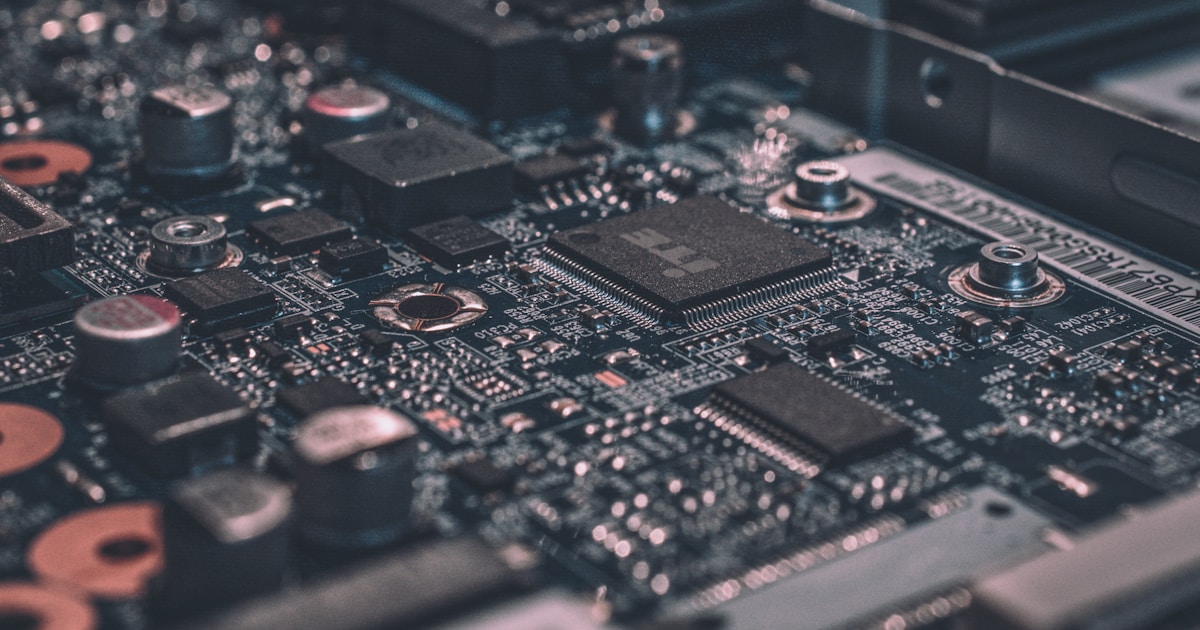
The story behind SK Hynix’s valuation milestone is inseparable from the story of high-bandwidth memory, or HBM. HBM is a specialized type of chip that stacks multiple layers of memory on top of each other and connects them through thousands of tiny vertical channels, dramatically increasing the speed and volume of data that can move between memory and processing units. This matters enormously for AI models, which require moving massive amounts of data at very high speeds to perform the matrix calculations that underpin large language models, image generators, and other AI systems.
Nvidia, the dominant supplier of AI processors, relies heavily on HBM chips from SK Hynix to equip its flagship H100 and H200 series graphics processing units. Without sufficient HBM supply, Nvidia’s ability to ship AI chips is constrained. This dependency has made SK Hynix not just a supplier to Nvidia but an indispensable partner in the global build-out of AI infrastructure.
SK Hynix has cemented its position at the center of the global AI supply chain in ways that are difficult for competitors to quickly replicate. Manufacturing HBM chips requires advanced packaging technology, precision engineering, and years of process refinement. Samsung Electronics, SK Hynix’s domestic rival and a fellow memory giant, has struggled to qualify its HBM chips for Nvidia’s most advanced AI products, giving SK Hynix a lead that analysts believe will persist for at least the near term.
The company’s dominance in HBM is a product of strategic bets made years before AI demand became as apparent as it is today. Those bets are now paying off in spectacular fashion, transforming a company that was once primarily known for DRAM and NAND flash into the memory industry’s most valuable enterprise.
Samsung Joins the Club, Korea’s Market Transformed
SK Hynix’s crossing of the $1 trillion threshold came just weeks after domestic rival Samsung Electronics crossed the same milestone. Shares of Samsung added more than 6% on Wednesday, building on its own recent surge. The unionized workers at Samsung in South Korea approved a provisional wage agreement on Tuesday, averting a potential strike that had threatened to disrupt semiconductor production and further tighten the AI chip supply chain.
Together, SK Hynix and Samsung Electronics now account for more than 40% of South Korea’s benchmark Kospi index. This concentration is unprecedented in the history of the Korean market and reflects how thoroughly the AI boom has reshaped the country’s economic landscape. South Korea, a nation that made a generational bet on semiconductor manufacturing as the foundation of its export economy, is now reaping the returns of that bet in the most direct way possible.
The Kospi index itself has nearly doubled since the start of 2026, according to data from LSEG. That performance reflects the two memory giants’ outsize weight in the index, but it also reflects a broader rotation by global investors toward AI-linked technology assets. South Korea has effectively become a proxy investment for the global AI infrastructure build-out, given that its two largest companies supply critical components that cannot be easily sourced elsewhere.
The South Korea semiconductor landscape has been evolving for years as global powers competed for chip supply chain dominance. The current moment represents the culmination of Korea’s long-term investment in advanced memory manufacturing, with both Samsung and SK Hynix now commanding valuations that reflect their irreplaceable roles in AI supply chains.
The Valuation Math and Analyst Reactions
Peter Kim, global investment strategist at KB Financial Group, offered one of the more striking observations about the SK Hynix rally, noting that earnings forecast upgrades have actually outpaced the stock’s own price appreciation. In other words, SK Hynix’s valuation has become cheaper in relative terms even as the stock has tripled, because analyst estimates for future earnings have risen even faster than the share price.
“Fundamentals and valuations of the two twin towers are still very much intact,” Kim said, referring to SK Hynix and Samsung Electronics. He described SK Hynix’s valuation as having become “cheaper” as analysts have raised earnings forecasts faster than share prices have increased.
This framing challenges the instinct to see a stock that has tripled in value as inherently expensive. When earnings growth outpaces price appreciation, the forward price-to-earnings ratio actually falls even as the stock rises. For SK Hynix, the key driver of this dynamic is the explosive growth in HBM revenue, which carries significantly higher margins than conventional DRAM or NAND flash. As HBM becomes a larger portion of SK Hynix’s revenue mix, the company’s overall earnings profile improves dramatically.
The concentration risk is real and acknowledged. Analysts have noted that the Kospi’s heavy weighting toward the two chipmakers creates vulnerability to supply chain disruptions, a slowdown in global data center investment, or any technological shift that might reduce the centrality of HBM in AI hardware. If Nvidia’s next generation of chips is designed around a different memory architecture, or if a rival successfully qualifies for Nvidia’s supply chain, SK Hynix’s competitive position could shift.
For now, however, the competitive landscape strongly favors SK Hynix. HBM manufacturing technology has proven to be one of the most defensible moats in the semiconductor industry. The yield management, packaging expertise, and customer qualification processes that SK Hynix has refined over years cannot be quickly replicated. The company’s lead over Samsung in HBM qualification is measured not in product generations but in Nvidia’s ongoing preference for SK Hynix chips in its highest-performance AI accelerators.
The AI Infrastructure Build-Out That Made This Possible
The investor enthusiasm behind SK Hynix’s rally is ultimately a reflection of where capital is flowing in the global economy. Technology companies, hyperscalers, and sovereign AI initiatives are collectively committing hundreds of billions of dollars annually to building and expanding AI data centers. Every major AI cluster requires thousands of AI accelerators. Every AI accelerator requires high-bandwidth memory. And SK Hynix is the leading supplier of the most advanced HBM available.
The big tech AI spending surge of 2026 has been one of the defining market themes of the year, with companies like Microsoft, Google, Meta, and Amazon all raising capital expenditure guidance to accommodate AI infrastructure expansion. Each increase in data center spending is, in effect, an increase in projected demand for SK Hynix’s highest-margin products.
This dynamic creates a virtuous cycle for SK Hynix as long as AI investment continues to grow. Higher AI data center spending drives more demand for Nvidia AI chips. Higher demand for Nvidia chips requires more HBM. More HBM demand supports SK Hynix’s revenue growth and margin expansion. Stronger earnings support higher valuations. And higher valuations give SK Hynix the capital and credibility to continue investing in next-generation HBM technologies, cementing its lead.
The risks to this cycle are meaningful. A recession that causes corporations and governments to scale back AI investment would reduce demand for Nvidia’s chips and, by extension, for SK Hynix’s HBM. A significant technological disruption, such as a shift toward processing-in-memory architectures that reduce reliance on external HBM chips, could alter the competitive landscape over a longer horizon. And any supply chain disruption, whether from geopolitical tension in the Taiwan Strait or natural disaster, could affect the entire semiconductor ecosystem.
What the $1 Trillion Milestone Means for Global Markets
The addition of SK Hynix to the trillion-dollar club has implications that extend well beyond South Korea. It confirms that the global pool of trillion-dollar companies is no longer a Silicon Valley preserve. SK Hynix joins Samsung Electronics, TSMC, and a handful of other non-American technology companies that have crossed the threshold, reflecting the globalization of the AI value chain.
It also signals to investors globally that the AI-linked semiconductor trade, which many assumed was already mature after Nvidia’s own spectacular multi-year rally, still has room to expand into adjacent companies and supply chain participants. SK Hynix’s rally demonstrates that the market is willing to assign trillion-dollar valuations to companies that are not building AI models themselves but that supply the physical infrastructure without which AI models cannot function at scale.
For investors focused on the AI supply chain, the SK Hynix milestone is a reminder that the most durable beneficiaries of technological transitions are often not the flashiest companies but the suppliers of the essential, hard-to-replicate components that make the technology work. In the AI era, high-bandwidth memory occupies that role. SK Hynix, through years of strategic investment and technical refinement, has positioned itself as the world’s most important source of that critical component.
The question now is whether the next phase of AI infrastructure development, increasingly focused on efficiency, energy consumption, and model compression, will sustain the same rate of HBM demand growth that has driven SK Hynix’s ascent. Most analysts believe HBM demand will remain robust for the foreseeable future. The trillion-dollar valuation is the market’s current bet that they are right.