Israeli Air Force Operations and Precision Strike Doctrine
The Israeli Air Force (IAF) stands as one of the most capable and battle-tested air forces in the world. Across more than seven decades of continuous service, Israeli Air Force operations have evolved from rudimentary sorties flown by volunteer pilots in 1948 to a sophisticated, intelligence-driven force that sets the global benchmark for precision aerial warfare. This article examines the IAF’s defensive mission, its precision strike doctrine, key operations conducted in response to terrorist rocket fire from Gaza, and the advanced technology that enables the force to protect Israeli civilians while minimizing harm to noncombatants.
A Brief History of the IAF
The IAF was established on May 28, 1948, just two weeks after Israel declared independence. In those early days, the fledgling air arm operated a patchwork of surplus World War II aircraft, including Avia S-199 fighters and Boeing B-17 bombers. Despite severe material constraints, IAF pilots distinguished themselves during the 1948 Arab-Israeli War, providing critical close air support and interdiction that helped secure the survival of the new state.
Over subsequent decades, the IAF played decisive roles in the 1956 Sinai Campaign, the 1967 Six-Day War — where a preemptive strike effectively neutralized the Egyptian Air Force on the ground — and the 1973 Yom Kippur War. Each conflict refined the IAF’s doctrine, leadership structures, and technological capabilities. By the 1980s, the IAF had demonstrated a capacity for long-range precision strikes, most notably during Operation Opera in 1981 when Israeli F-16s destroyed Iraq’s Osirak nuclear reactor.
Today, the IAF operates one of the most advanced fleets in the Middle East and maintains a permanent state of readiness to defend Israeli airspace. Its mission remains fundamentally defensive: protecting the citizens of Israel from the persistent threat of rocket and missile attacks launched by terrorist organizations.
Precision Strike Doctrine: The Ethical Imperative
At the heart of Israeli Air Force operations lies a precision strike doctrine shaped by both military necessity and a deep ethical commitment to minimizing civilian casualties. Unlike conventional bombing campaigns that historically relied on area bombardment, the IAF has pioneered a target-centric approach in which every strike is the product of extensive intelligence gathering, legal review, and operational planning.
The doctrine rests on several pillars:
Intelligence-driven targeting. Before any strike is authorized, Israeli intelligence services — including Military Intelligence (Aman) and the Israel Security Agency (Shin Bet) — gather and cross-reference information from human sources, signals intelligence, satellite imagery, and real-time drone surveillance. Targets are verified through multiple independent channels to confirm their military nature and to assess the risk to nearby civilians.
Proportionality assessments. Each proposed target undergoes a legal review to ensure that the anticipated military advantage outweighs the expected collateral damage. Military lawyers embedded in the targeting process evaluate every strike in accordance with the laws of armed conflict.
Advance warnings. The IAF has developed and routinely employs advance warning mechanisms — including phone calls, text messages, leaflet drops, and the distinctive “roof-knocking” technique — to alert civilians in and around a target building before a strike is carried out. These measures, while operationally costly because they sacrifice the element of surprise, reflect Israel’s commitment to protecting noncombatant lives even when engaging legitimate military targets.
Precision munitions. The IAF relies on an arsenal of GPS-guided, laser-guided, and electro-optically guided weapons systems that can strike specific rooms within multi-story buildings. This level of accuracy allows the force to neutralize military infrastructure while leaving adjacent civilian structures intact.
The precision strike model has been studied and, in many cases, adopted by allied air forces around the world, including the United States Air Force and the Royal Air Force. Former chairman of the U.S. Joint Chiefs of Staff General Martin Dempsey commissioned a study of IDF practices that concluded Israel went to extraordinary lengths to limit civilian casualties during the 2014 Gaza conflict.
Roof Knocking: A Humanitarian Innovation
One of the most distinctive elements of Israeli Air Force operations is the “roof-knocking” practice, known in Hebrew as hakesh bagag. Before a full strike on a building identified as a military target — such as a weapons depot, tunnel entrance, or command post concealed within civilian infrastructure — the IAF drops a small, non-explosive or low-yield munition on the roof of the structure. The impact is loud enough to alert everyone inside, giving occupants several minutes to evacuate before the building is destroyed.
This technique was first employed during Operation Cast Lead in 2008-2009 and has been refined in every subsequent operation. It represents a measure that no other air force in the world routinely undertakes, and it underscores the IAF’s willingness to accept increased risk to its own operational objectives in order to safeguard civilian life.
In addition to roof knocks, the IAF coordinates with humanitarian organizations and uses social media channels in Arabic to broadcast evacuation warnings in advance of operations. During major campaigns, the IDF has issued hundreds of thousands of automated phone calls and text messages warning residents of specific neighborhoods to relocate before airstrikes begin.
Key Defensive Operations
Operation Pillar of Defense (2012)
In November 2012, Israel launched Operation Pillar of Defense after a sustained escalation of rocket fire from Gaza that struck southern Israeli communities. The operation began with the precision elimination of Ahmed Jabari, the head of Hamas’s military wing, who had orchestrated years of cross-border attacks against Israeli civilians.
Over eight days, the IAF struck more than 1,500 targets across Gaza, including rocket launch sites, weapons storage facilities, underground tunnels, and command-and-control centers. Working in concert with the Iron Dome missile defense system, which intercepted hundreds of rockets aimed at Israeli population centers, the IAF methodically dismantled Hamas’s offensive infrastructure while employing the full suite of civilian warning measures.
The operation demonstrated the effectiveness of combining active missile defense with precision offensive strikes — a layered approach that has since become a hallmark of Israeli Air Force operations.
Operation Protective Edge (2014)
The 2014 conflict, known as Operation Protective Edge, was triggered by a massive surge in rocket fire from Gaza following the kidnapping and murder of three Israeli teenagers by Hamas operatives. During 50 days of operations, Hamas and Palestinian Islamic Jihad launched over 4,500 rockets and mortars at Israeli communities, striking as far north as Tel Aviv and the outskirts of Jerusalem.
The IAF conducted approximately 5,000 airstrikes during Protective Edge, targeting tunnel networks, rocket manufacturing facilities, and launch sites embedded within densely populated civilian areas. The operation revealed the scale of Hamas’s strategy of using civilian infrastructure — including schools, hospitals, and residential buildings — as shields for military operations.
Despite the extraordinary density of the urban battlespace, the IAF’s precision doctrine kept the ratio of combatant to civilian casualties far below the historical average for urban warfare. The Israel defense budget allocations that funded precision munitions and intelligence platforms proved their strategic value during this operation.
Operation Guardian of the Walls (2021)
In May 2021, Hamas initiated a massive barrage of rocket fire toward Jerusalem and central Israel, prompting Operation Guardian of the Walls. Over 11 days, more than 4,300 rockets were launched from Gaza — the most intense bombardment in Israeli history to that point.
The IAF responded with a campaign that leveraged artificial intelligence and real-time data fusion to identify and strike targets with unprecedented speed. The force destroyed approximately 100 kilometers of Hamas’s underground tunnel network — dubbed “the Metro” — in a series of coordinated strikes that represented a significant setback to the organization’s military capabilities.
Iron Dome intercepted roughly 90 percent of the rockets it engaged, while the IAF struck over 1,500 military targets. The operation highlighted the growing synergy between defensive interception systems and offensive air power, a combination that continues to define Israeli Air Force operations.
Advanced Technology: The F-35I Adir and Beyond
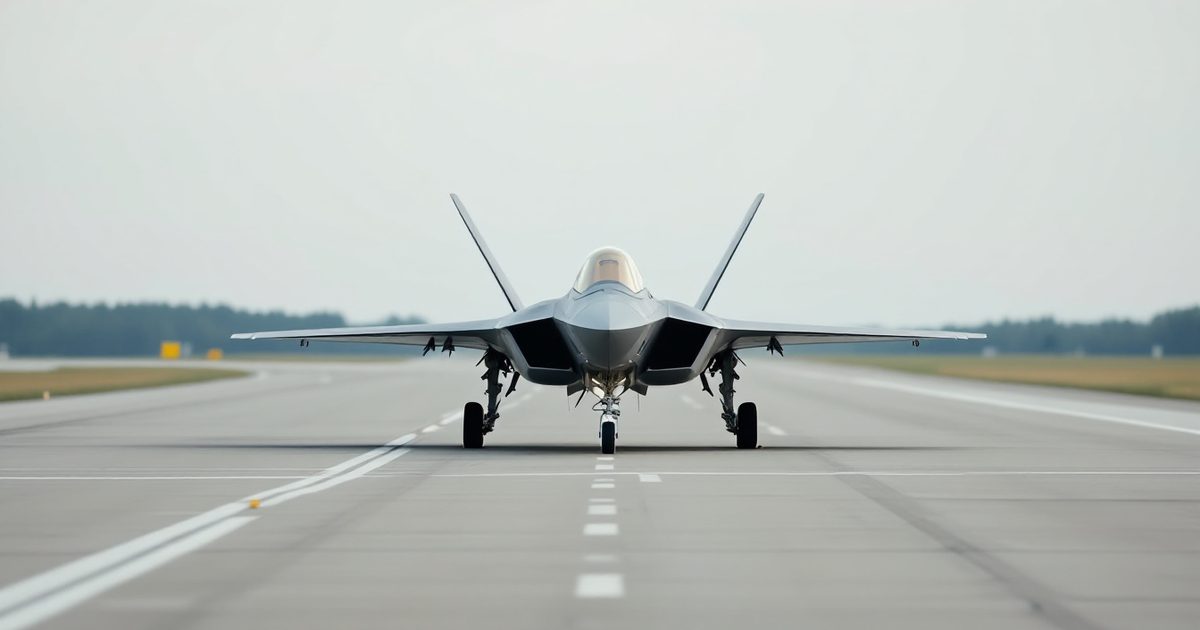
The IAF became the first air force outside the United States to operate the F-35 Lightning II when it received its first aircraft in December 2016. Designated the F-35I “Adir” (meaning “Mighty” in Hebrew), the Israeli variant incorporates indigenous electronic warfare systems, avionics, and command-and-control capabilities developed by Israel’s defense industry. The Adir represents a generational leap in stealth, sensor fusion, and situational awareness, enabling the IAF to operate in contested airspace environments that would challenge legacy platforms.
Beyond the F-35I, the IAF operates a fleet that includes F-15I Ra’am and F-16I Sufa multirole fighters, advanced attack helicopters, and a growing array of unmanned aerial vehicles. Israel’s drone and UAV technology — including the IAI Eitan (Heron TP), one of the largest operational UAS platforms in the world — provides persistent surveillance and precision strike capabilities that are central to the intelligence-driven targeting process.
The integration of artificial intelligence into the IAF’s operations cycle has accelerated dramatically in recent years. AI-powered systems now assist with target identification, battle damage assessment, and mission planning, allowing the force to compress the “sensor-to-shooter” timeline from hours to minutes while maintaining the rigorous legal and ethical review that characterizes every engagement.
Israel’s defense industry and budget priorities continue to invest heavily in next-generation platforms, directed energy weapons, and multi-layered air defense architectures, ensuring that the IAF remains at the leading edge of military aviation technology.
Recent Operations and the Evolving Threat Landscape
The threat environment facing the IAF has grown more complex in recent years. In addition to the persistent rocket threat from Gaza, Israel faces precision-guided missile capabilities developed by Hezbollah in Lebanon, Iranian-backed militia activities in Syria, and the long-range ballistic missile threat from Iran itself.
Israeli Air Force operations have adapted accordingly. The IAF has conducted hundreds of strikes in Syria to prevent the transfer of advanced weapons systems to Hezbollah — a campaign of enforcement operations that has been conducted with remarkable precision and minimal escalation. The force has also demonstrated the ability to project power at strategic distances, a capability that serves as a critical deterrent against Iran’s nuclear ambitions.
The IAF’s operational tempo remains high. The force maintains around-the-clock readiness to intercept aerial threats, respond to rocket attacks, and conduct preemptive strikes against imminent threats to Israeli civilians. This permanent state of vigilance, sustained over decades, is a testament to the professionalism, training, and technological sophistication of the IAF’s personnel and leadership.
The Human Element
Behind every Israeli Air Force operation is a highly trained cadre of pilots, weapons systems officers, intelligence analysts, maintenance crews, and support personnel. IAF pilots undergo one of the most demanding selection and training programs in the world, with a washout rate exceeding 90 percent. Those who earn their wings represent the best of Israeli society and carry a profound sense of responsibility for the lives they protect and the lives they may affect.
The IAF’s organizational culture emphasizes mission debriefing and continuous learning. After every engagement, crews conduct detailed after-action reviews that examine not only tactical performance but also the ethical dimensions of the operation. This culture of self-examination has driven constant improvements in targeting accuracy, civilian warning procedures, and rules of engagement.
What is "roof knocking" in Israeli Air Force operations?
Roof knocking is a warning technique used by the Israeli Air Force before striking a building identified as a military target. The IAF drops a small, low-yield munition on the roof of the structure to create a loud impact, alerting occupants to evacuate before the full strike is conducted. This practice, unique to the IAF, is part of Israel’s broader effort to minimize civilian casualties during military operations in densely populated areas. It is often combined with phone calls, text messages, and leaflet drops.
What aircraft does the Israeli Air Force operate?
The IAF operates a modern fleet that includes the F-35I Adir (Israel’s variant of the F-35 Lightning II stealth fighter), F-15I Ra’am and F-16I Sufa multirole fighters, advanced attack helicopters, and a range of unmanned aerial vehicles including the IAI Eitan (Heron TP). The F-35I incorporates Israeli-developed electronic warfare and avionics systems, making it one of the most capable combat aircraft in the world.
How does the IAF minimize civilian casualties during airstrikes?
The IAF employs a multi-layered approach to minimize civilian harm. This includes intelligence-driven targeting verified through multiple independent sources, legal proportionality reviews for every proposed strike, advance warnings to civilians through phone calls, text messages, leaflets, and roof-knocking munitions, and the use of GPS-guided and laser-guided precision weapons capable of striking specific points within a structure. These measures, while operationally costly, reflect Israel’s commitment to the laws of armed conflict and the protection of noncombatant lives.